

With thousands of cultivars ranging from tiny sweet bite-sized gems to heavy heritage beefsteaks, tomatoes are among the most versatile staples in any kitchen. However, harvesting or buying a great tomato is only half the battle. How you store, preserve, and handle tomatoes directly dictates their texture, aroma, and flavor profile.
Understanding the structural differences and flavor profiles of popular tomato types helps ensure you select the best variety for your specific culinary application.
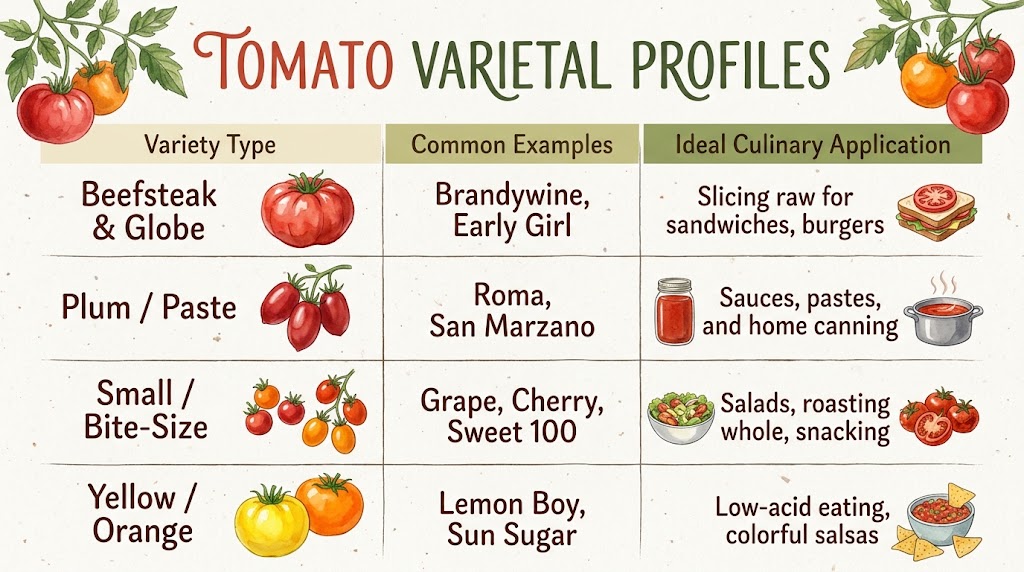
Acidity and Flavor Dynamics
-
Red Strains: Contain higher concentrations of natural citric and malic acids, providing the classic sharp, balanced bite.
-
Yellow and Golden Strains: Typically possess lower acidity levels. While exceptionally sweet and mild, they lack the deep punch of classic red varieties.
2. How to Select the Best Fresh Tomatoes
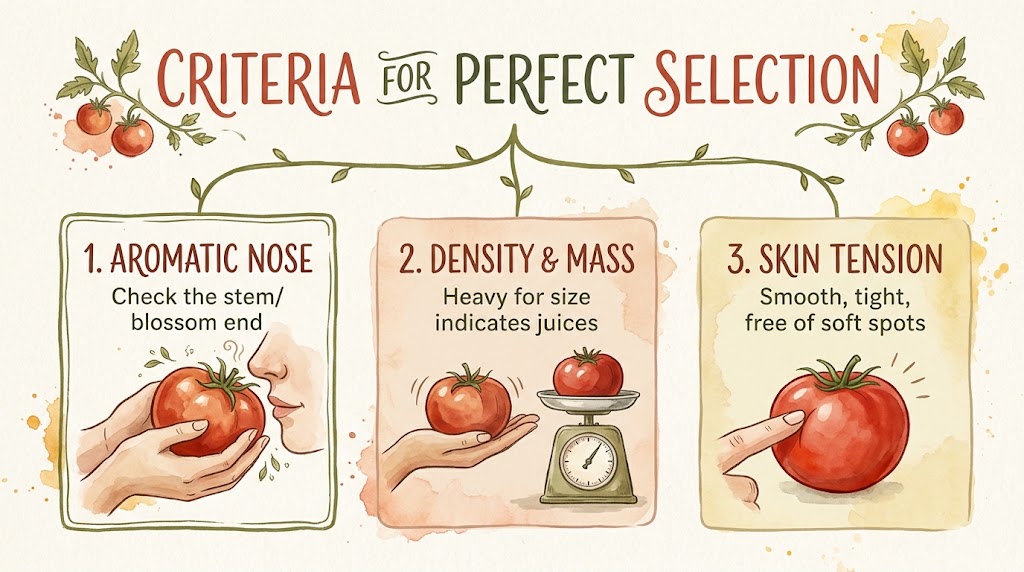
Finding an exceptional tomato requires using multiple senses rather than relying solely on visual appearance.
-
The Aroma Test: Smell the stem junction or blossom end. A flavorful tomato emits an earthy, herbal, sweet scent. A complete lack of aroma indicates a bland fruit.
-
Weight and Firmness: Choose specimens that feel heavy and dense for their overall size, yielding slightly to gentle pressure without feeling soft.
-
Skin Texture: Look for smooth, taut skin free of deep cracks, soft spots, or wrinkles.
Supermarket Tip: Beware of commercial “vine-ripened” labels. Many factory-farmed tomatoes are picked green and artificially reddened using ethylene gas during transport, leaving them structurally firm but low in aromatic compounds.
3. Storage Science: Why Refrigeration Ruins Fresh Tomatoes
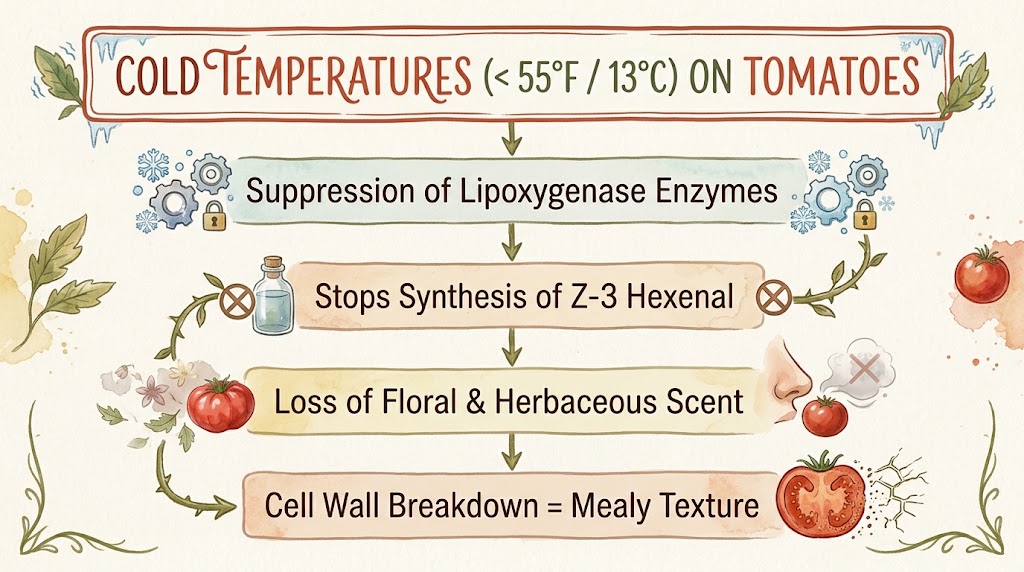
Cold storage actively destroys the flavor compounds and cell structure of fresh tomatoes.
The Role of Volatile Compounds
The signature aroma of a fresh tomato comes from volatile organic compounds, primarily Z-3-hexenal.
-
When temperatures drop below 55°F (13°C), the enzymatic reactions that convert linolenic acid into Z-3-hexenal shut down completely.
-
Prolonged exposure to cold damages the fruit’s cell walls, causing liquid loss and creating a mushy, mealy texture.
-
Correct Room-Temperature Storage
-
Position: Place fresh, ripe tomatoes stem-side down on a flat surface. This prevents air from entering the stem scar and stops moisture from escaping.
-
Environment: Store in a single layer in a dark, well-ventilated spot away from direct sunlight.
-
Cold Emergency Recovery: If you must refrigerate a tomato to prevent spoilage, bring it back to room temperature for at least 60 to 90 minutes before slicing to reactivate remaining aromatic enzymes.
4. Ripening Green End-of-Season Tomatoes Indoors
Before the first autumn frost hits, green unripened fruit can be saved and ripened indoors using simple ambient controls.
-
Preparation: Gently harvest firm, undamaged green tomatoes. Clean and dry them completely.
-
The Newspaper Wrapping Method: Wrap individual tomatoes in single sheets of newspaper and pack them no more than two layers deep inside a cardboard box.
-
Environmental Parameters: Keep the storage box in a cool location maintained between 55°F and 70°F (13°C to 21°C).
-
Maintenance: Inspect the box every few days. Remove any soft or decaying fruit immediately, and harvest those turning red for cooking.
5. Utilizing Commercial Canned Tomatoes
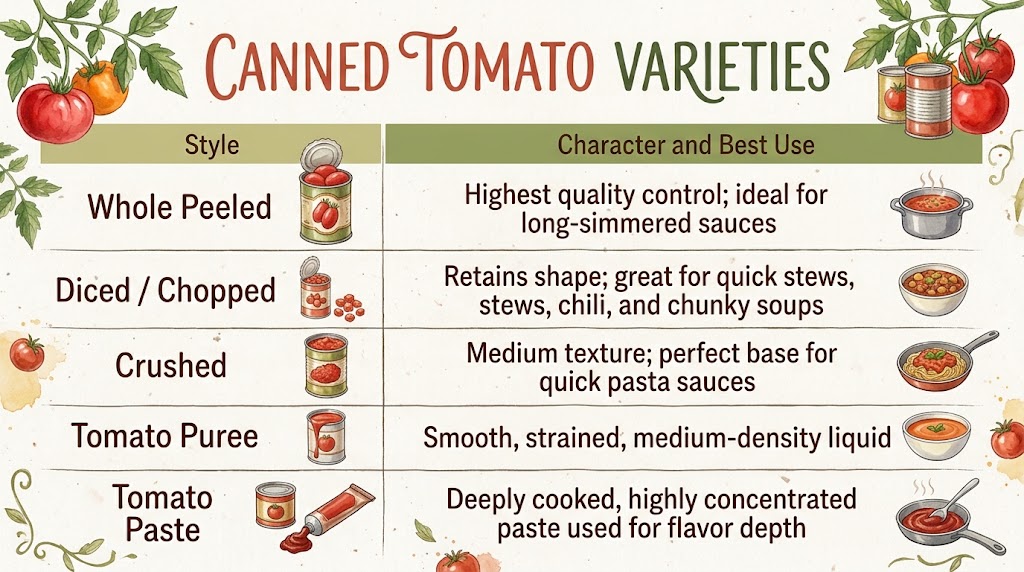
Canned tomatoes offer consistent acidity and concentrated flavor year-round.
Best Practices for Storage and Freezing
-
Unopened Cans: Store in a cool pantry and use within six to twelve months for peak quality.
-
Opened Cans: Transfer unused portions into glass or food-safe plastic containers. Seal tight and refrigerate for up to 7 days. Never store opened acidic food directly inside metal cans.
-
The Ice Cube Tray Hack: Scoop leftover tomato paste into 1-tablespoon portions in a clean ice cube tray. Freeze solid, pop the cubes out into an airtight freezer bag, and store for up to 2 months. Drop frozen paste cubes directly into simmering soups or sauces without thawing.
6. How to Freeze Fresh Tomatoes
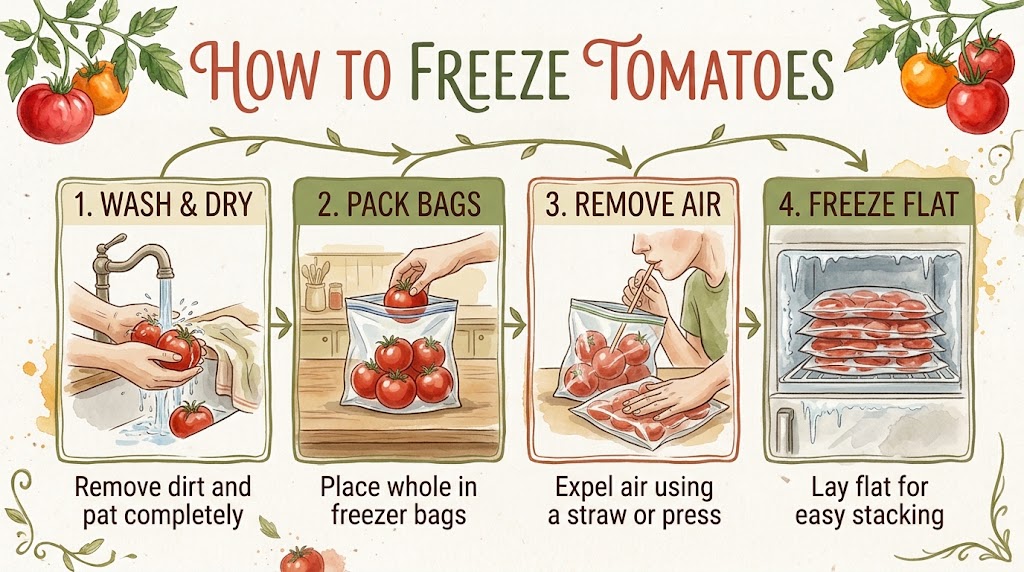
If home canning feels overly complex, freezing offers a quick alternative that preserves fresh flavor and natural sugars.
-
No Blanching Required: You do not need to peel or scald tomatoes prior to freezing.
-
Easy Skin Removal: When thawed, the expanding ice crystals break the outer skin cell structures. Running a frozen tomato under warm water allows the skin to slide off instantly.
-
Culinary Use: Frozen tomatoes lose their structural crispness upon thawing, making them suitable for cooked soups, braises, and simmered marinara sauces rather than raw salads.
Key Takeaways for Quick Reference
-
Store fresh tomatoes stem-side down at room temperature (above 55°F / 13°C).
-
Cold storage blocks Z-3-hexenal production—destroying the tomato’s flavor—while structurally breaking down its cell walls to cause a dry, mealy texture
-
Freeze whole raw tomatoes without peeling for fast use in winter sauces and soups.
-
Portion excess tomato paste into 1-tablespoon ice tray cubes for easy cooking additions.