

Water pollution poses a significant threat to ecosystems, human health, and global water supplies. From industrial runoff to everyday household habits, contaminants like chemicals, plastics, and nutrients can degrade rivers, lakes, oceans, and groundwater. Fortunately, individual actions can make a substantial difference. By adopting simple lifestyle changes, we can collectively minimize pollution and protect our water resources. Drawing from expert insights and authoritative sources, here are 20 practical ways to reduce water pollution.
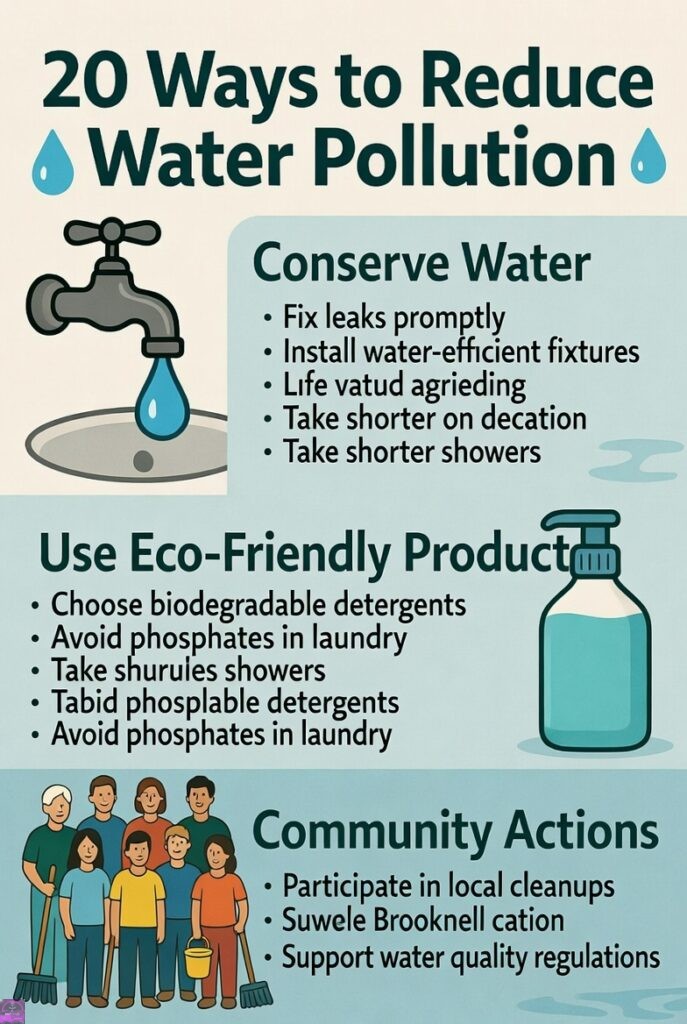
- Install water-efficient fixtures: Switch to low-flow toilets, showerheads, and faucets to conserve water and reduce the strain on wastewater systems, preventing overflows that pollute waterways.
- Use nontoxic household products: Opt for eco-friendly cleaning supplies, paints, and insecticides to avoid introducing harmful chemicals into drains and sewers.
- Properly dispose of hazardous waste: Contact local authorities for collection days to safely discard items like paints, oils, and cleaners, keeping them out of landfills and waterways.
- Conserve water in daily routines: Run dishwashers and washing machines only when full, fix leaks, and avoid letting water run while brushing teeth to minimize wastewater generation.
- Recycle household waste: Properly sort and recycle materials to prevent them from ending up in storm drains or landfills that leach pollutants into groundwater.
- Avoid flushing medications: Dispose of unused drugs at take-back programs or in the trash instead of flushing them, as treatment plants can’t fully remove them from water.
- Don’t pour chemicals down drains: Never dump oil, solvents, or cleaners into household or storm drains to prevent direct contamination of local water bodies.
- Recycle used motor oil: Take old oil to recycling centers or auto shops rather than pouring it down drains, as even small amounts can pollute vast quantities of water.
- Use commercial car washes: Wash vehicles at facilities that treat and recycle wastewater, avoiding runoff from home washing that carries pollutants into storms drains.
- Direct rainwater to permeable areas: Channel roof runoff to lawns or gardens instead of streets to filter pollutants naturally and recharge groundwater.
- Apply natural fertilizers: Use compost, manure, or mulch on lawns to nourish soil without chemical runoff that causes algal blooms in waterways.
- Plant native and drought-tolerant species: Landscape with plants that require less water, pesticides, and fertilizers, reducing chemical pollution from yards.
- Collect and reuse rainwater: Install rain barrels or gardens to capture runoff, preventing polluted water from entering streams while conserving resources.
- Pick up litter and pet waste: Clean up trash and dog poop to stop bacteria and debris from washing into storm drains and contaminating water supplies.
- Sweep fertilizers back onto grass: If granules land on pavement, brush them back to the lawn to avoid them washing into drains during rain.
- Compost yard waste: Mulch or compost clippings and leaves instead of blowing them into streets, preventing nutrient overload in waterways.
- Wash vehicles on grassy areas: Direct soapy water to permeable surfaces where soil can filter pollutants before they reach storm systems.
- Reduce plastic consumption: Reuse, recycle, or avoid single-use plastics to minimize ocean and river pollution from microplastics and debris.
- Plant trees and riparian buffers: Add vegetation along waterways and in yards to absorb pollutants, reduce runoff, and stabilize soils against erosion.
- Educate and volunteer in your community: Share knowledge about pollution prevention, join cleanups, and advocate for better practices to amplify impact.
By implementing these strategies, you can contribute to cleaner water for future generations. Start small—perhaps by assessing your home’s water use or organizing a local cleanup—and build from there. Remember, collective action driven by informed choices is key to combating water pollution effectively.
Click to view References
https://www.epa.gov/urbanwaterspartners/how-you-can-help
https://www.epa.gov/aboutepa/about-office-water#wetlands
Kathryn Kellogg. Environmentalist. Expert Interview
https://www.epa.gov/urbanwaterspartners/how-you-can-help
Kathryn Kellogg. Sustainability Specialist. Expert Interview
https://raleighnc.gov/stormwater/services/spot-report-and-stop-water-pollution/6-ways-prevent-water-pollution
https://www.nrdc.org/stories/water-pollution-everything-you-need-know#prevent
https://www.nrdc.org/stories/6-ways-you-can-help-keep-our-water-clean
https://www.cityofdubuque.org/DocumentCenter/View/400/EPA-Water-Pollution-Prevention?bidId=
Kathryn Kellogg. Sustainability Specialist. Expert Interview
https://www.nrdc.org/stories/6-ways-you-can-help-keep-our-water-clean
https://education.nationalgeographic.org/resource/great-pacific-garbage-patch/
https://www.epa.gov/plastics/what-you-can-do-reduce-plastic-waste
https://groundwater.org/what-is-groundwater/
https://groundwater.org/threats/contamination/
https://www.nrdc.org/stories/water-pollution-everything-you-need-know#prevent
https://www.dep.pa.gov/Citizens/RecyclingDisposal/MotorOil/Pages/default.aspx
Kathryn Kellogg. Sustainability Specialist. Expert Interview
https://www.epa.gov/urbanwaterspartners/how-you-can-help
https://extension.psu.edu/the-role-of-trees-and-forests-in-healthy-watersheds
https://www.canr.msu.edu/news/yard_waste_practices_impact_water_quality
https://www.epa.gov/sourcewaterprotection/how-can-you-help-protect-source-water
https://www.nrdc.org/stories/water-pollution-everything-you-need-know
https://www.nrdc.org/stories/water-pollution-everything-you-need-know
https://www.nrdc.org/stories/water-pollution-everything-you-need-know
https://www.nrdc.org/stories/water-pollution-everything-you-need-know#effects
