

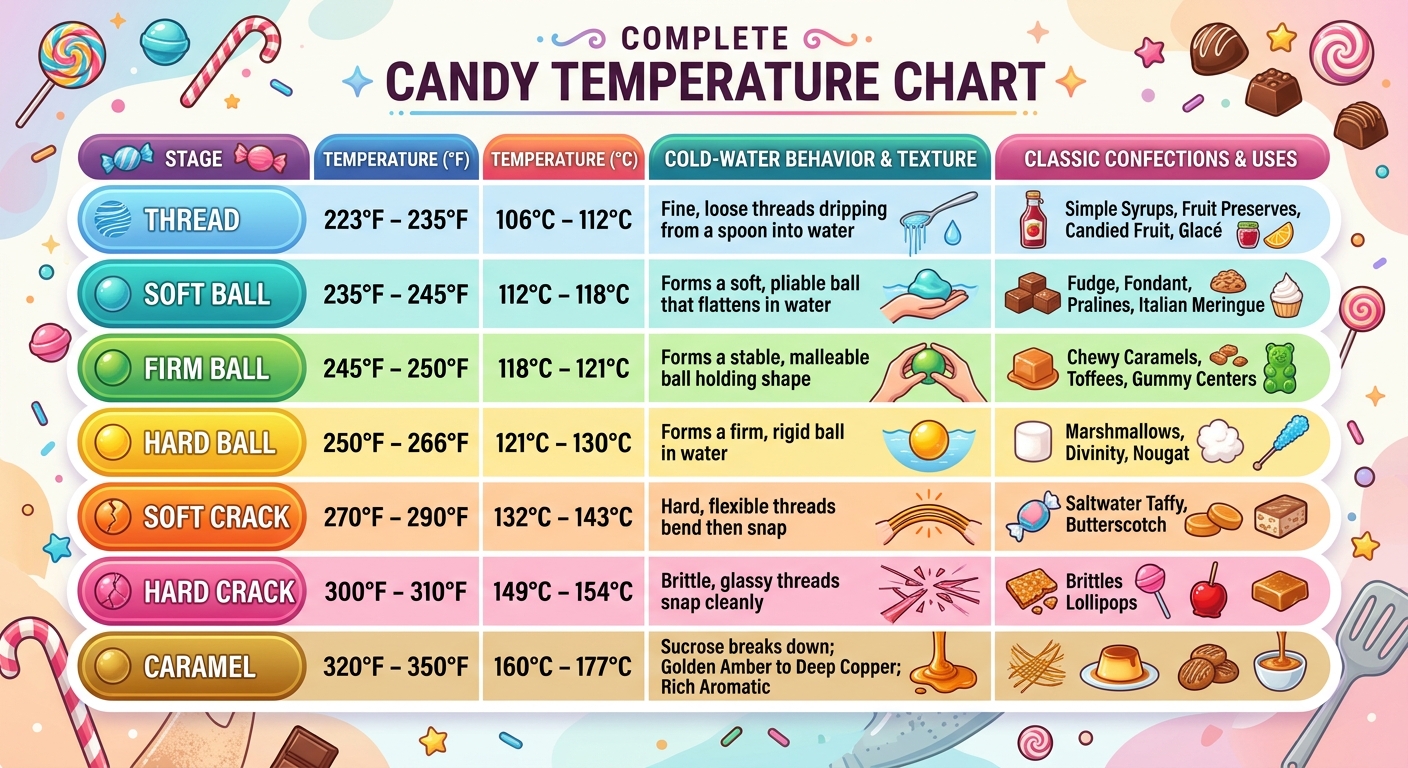
Making homemade confections comes down to one core physical reaction: boiling off moisture to concentrate sugar. Because water evaporates at predictable rates as concentration rises, the boiling point of the syrup tells you the exact sugar concentration and the final texture of your candy.
Whether using a digital candy thermometer or testing by touch with the classic cold-water method, this guide breaks down every candy stage, temperature range, and culinary application.
How to Test Sugar Syrup Without a Thermometer (Cold-Water Method)
The cold-water method uses sensory feedback to gauge syrup concentration by rapidly chilling a small sample of hot sugar.
-
Prep the cold bath: Fill a clean, deep bowl with ice water and place it right next to your stovetop.
-
Remove from heat: Always pull your saucepan off the burner before testing. Sugar syrup heats exponentially faster as moisture drops; leaving it on the flame while you test can overshoot your target stage by 10 degrees.
-
Drop the sample: Dip a clean metal spoon into the boiling syrup and drop approximately 1/2 teaspoon into the ice water.
-
Inspect and mold: Let it sit submerged for 3 to 5 seconds to cool. Reach into the water, collect the sugar blob between your thumb and index finger, and evaluate its firmness against the chart above.
High-Altitude Adjustment: For every 500 feet you are above sea level, subtract 1°F from target temperatures (or subtract 2°F per 1,000 feet). Water boils at lower temperatures under reduced atmospheric pressure, meaning sugar stages are reached at proportionally lower readings.
Critical Kitchen Safety: Preventing Sugar Burns
Molten sugar behaves like culinary napalm: it clings instantly to skin, does not rinse away with a quick brush of a towel, and continues transferring intense heat directly into skin tissue.
-
Clear your station: Keep children, pets, loose dish towels, and jewelry away from your work zone before turning on the heat.
-
Tie back hair: Never lean over a boiling sugar pot with unrestrained hair or loose sleeves.
-
Keep an ice bath ready: Keep a bowl of clean ice water within arm’s reach exclusively for skin emergencies. If hot sugar contacts your skin, submerge the affected area immediately in cold water rather than trying to wipe the molten syrup off with a cloth.
-
Use deep cookware: Choose a heavy-bottomed stainless steel or copper pot with tall sides. Sugar syrup bubbles vigorously and can quickly foam up to twice its resting volume.
The video at the top of the article demonstrates how sugar transforms through each stage and how the cold-water test looks in practice.