If you are (or know someone who is) gluten intolerant and finding this recipe has been a blessing. The whole family enjoys this and many other gluten free items. The instructions are perfect! Even xanthan gum! It is a dry ingredient so should go in with the dry ingredients. Very straight forward recipe and instructions!
This butter-rich gluten-free pie crust is easy to make using a food processor. Use it for all types of pies, savory tarts and quiche fillings.
The recipe makes two 9-inch pie crusts.
Tip: A tart pan with a removable bottom makes shaping and cutting pies much easier. You can find tart pans at most large cookware stores or online.
3tablespoonsice watermore OR less - just enough water to make the ingredients bind together when squeezed in your hand Tip: Add the water slowly, just a little at a time until the mixture holds together when squeezed
1large egg
12tablespoonscoldcubed butter (6 ounces)
Method
Food Processor Method - A Fast and Easy Way to Make Pie Crust
Measure dry ingredients into a large mixing bowl. Use a whisk to thoroughly blend ingredients.
Pour the dry ingredients into a food processor bowl, fitted with a metal blade.
Add the cold butter cubes and pulse until the butter cubes are reduced to the size of peas and the mixture looks crumbly.
Add the egg and pulse just until egg is incorporated into the flour-butter mix.
Add ice water, one tablespoon at a time and pulse several times. Add just enough water to get the ingredients to completely hold together when squeezed in your hand.
If the dough is too crumbly and dry, add additional ice water and pulse several more times. Check the consistency of the dough again. If the dough holds together and you can form a ball don't add more water. Adding too much water will make the dough sticky and harder to roll out and shape.
Scrape the dough, which will look a bit crumbly, on a clean, gluten-free work surface covered with waxed paper. Gather the crumbly dough into a ball.
Divide the dough in two pieces and flatten into discs. Place each disc in a plastic bag and refrigerate for at least one hour before rolling out the dough.
Note- At this stage, the dough can be frozen. Place wrapped dough in a freezer bag, label and freeze for future use.
To Roll Dough: Remove dough from refrigerator and place dough between two sheets of waxed paper. Let dough sit just until it's soft enough to roll. When workable, roll from the center outward, working to make a circle about 10-inches in diameter and about 1/8-inch thick. If the dough should get too warm and sticky, place it in the freezer for several minutes and then continue rolling it.
Peel top sheet of wax paper from the dough and carefully flip the dough still on the remaining piece of waxed paper over a 9-inch pie plate. Gently peel the waxed paper from the dough.
Gently fit the dough into the pie plate.
Trim edges with knife and crimp edge with a fork or using your favorite method.
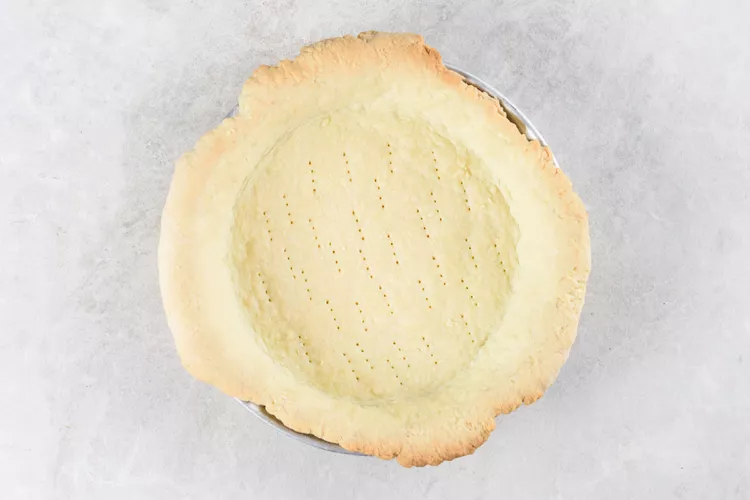
Pie crust is ready to fill or parbake (partially bake) as desired.
To parbake the crust, preheat oven to 350 degrees. Use a fork to pierce the crust- this will prevent the crust from bubbling up while baking. Or, line the dough with parchment paper and fill the plate with dry beans or pie weights. Bake the crust for about 15 minutes, or until lightly golden.
Bonus use for leftover dough: Roll out leftover dough scraps, butter and sprinkle with cinnamon and sugar for an old-fashioned treat.
Notes
Reminder: Always make sure your work surfaces, utensils, pans and tools are free of gluten. Always read product labels. Manufacturers can change product formulations without notice. When in doubt, do not buy or use a product before contacting the manufacturer for verification that the product is free of gluten.
YOUR ORIGINAL SAVED STORIES
Your reading list is empty. Click the button above to save this story!
♥
Want more stories like this? Tip Salty Vixen!US & UK Readers:Cash AppCanada, Mexico & International:PayPal
To provide the best experiences, we use technologies like cookies to store and/or access device information. Consenting to these technologies will allow us to process data such as browsing behavior or unique IDs on this site. Not consenting or withdrawing consent, may adversely affect certain features and functions.
Functional
Always active
The technical storage or access is strictly necessary for the legitimate purpose of enabling the use of a specific service explicitly requested by the subscriber or user, or for the sole purpose of carrying out the transmission of a communication over an electronic communications network.
Preferences
The technical storage or access is necessary for the legitimate purpose of storing preferences that are not requested by the subscriber or user.
Statistics
The technical storage or access that is used exclusively for statistical purposes.The technical storage or access that is used exclusively for anonymous statistical purposes. Without a subpoena, voluntary compliance on the part of your Internet Service Provider, or additional records from a third party, information stored or retrieved for this purpose alone cannot usually be used to identify you.
Marketing
The technical storage or access is required to create user profiles to send advertising, or to track the user on a website or across several websites for similar marketing purposes.