There are three things Appalachian women are born with:
-
A built-in lie detector
-
The ability to feed a family of six with one skillet
-
And a family history that comes in whispers, half-sentences, and “You don’t talk about that.”
This November — Native American Heritage Month — I found myself thinking about those whispers. The ones I heard as a child, passed between my grandparents like contraband secrets:
“Don’t talk about that side of the family.”
“People won’t understand.”
“Just say you’re white, it’s easier.”
I’m 45 years old. It’s 2025. And guess what? I’m done being quiet.
Because the truth is:
I am Appalachian. I am Native-descended.
And like millions of Americans, my real ancestry was shoved into a drawer, mislabeled, set on fire, flooded, or politely erased by the One-Drop Rule, colonial paperwork, and a country that couldn’t fathom anything that wasn’t cleanly categorized.
And if you think you don’t have Native ancestry?
Sweetheart, if your family was in America by the 1600s or 1700s, you might want to sit down.
⭐THE FIRST LIE: “INDIAN” DIDN’T FIT ON COLONIAL FORMS
In early America, the government had three racial categories:
- White
- Black
- Mulatto
That’s it.
That was the menu. If you were Indigenous? Too bad. Pick one. So tribal families who’d been here for thousands of years suddenly… poof.
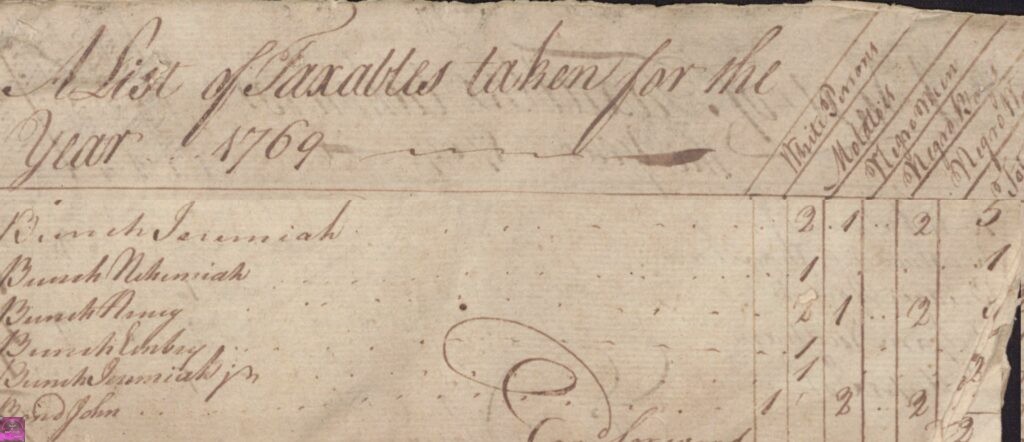
Legally evaporated. Native people across the South and Appalachia were labeled:
- “mulatto”
- “free colored”
- “servants”
- “slaves”
- “other”
- or simply not counted at all
None of it matched reality.
It certainly didn’t match mine.
My ancestors were Pocoson people — an Indigenous swamp tribe out of North Carolina who lived on land long before surveyors with compasses and bad attitudes came marching through.
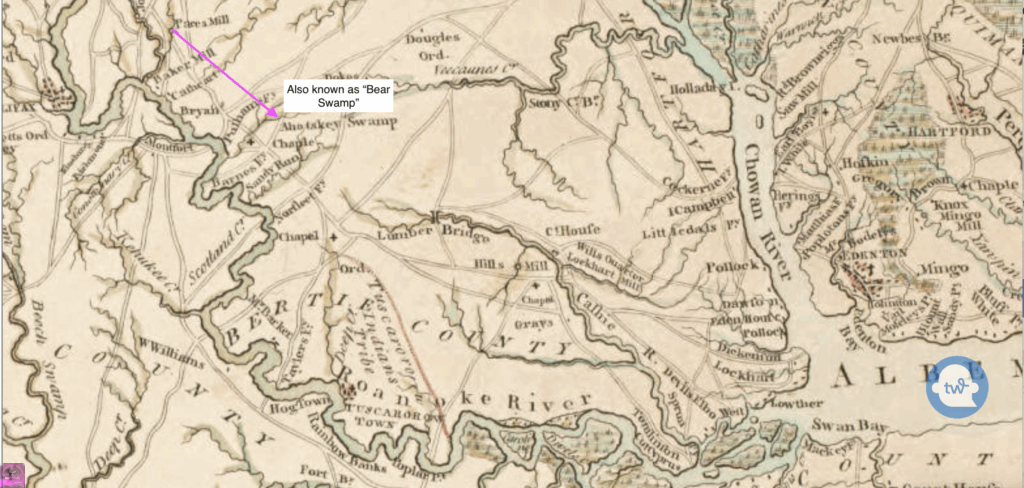
But the recordkeepers? They saw brown skin and wrote “mulatto.” Not because they were African — but because Native wasn’t an option. And just like that, entire tribes were forced into classification limbo.
This wasn’t an accident.
It was strategy.
Historians call it paper genocide — the erasure of Native identity through paperwork and reclassification.
⭐ THE SECOND LIE: “YOUR FAMILY WAS SLAVES.” WRONG.
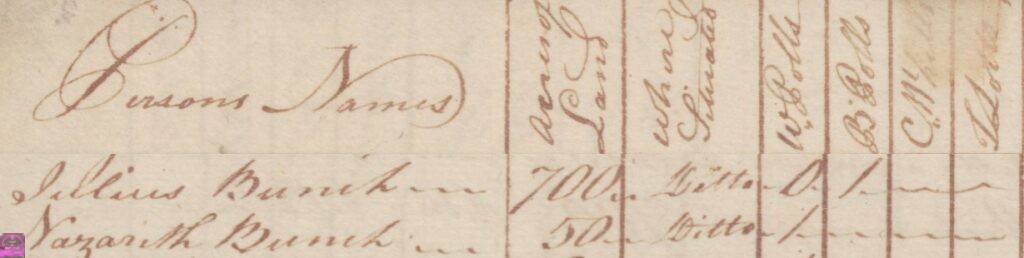
Let’s clear this up fast. Yes, records show Native people on Bunch land. Yes, they were listed as “slaves.” And NO — they were not actual slaves.
They were:
- tribal families
- free people
- land-tied communities
- living in their own social structure
- under a white surname to avoid removal
- This was survival.
This was the workaround. This was what Indigenous families had to do to stay alive and stay together.
And this?
Was COMMON.
In North Carolina, Virginia, Tennessee, Kentucky — tribal people were often labeled “slaves” on tax lists and wills, not because they were enslaved, but because the law literally gave them no other category.
But my family? They weren’t owned. They owned their own land long before white blood ever touched our line. They lived as a tribal community, connected to the land, tied to each other, living in a structure more ancient than America itself.
People today don’t get that. They read “slave” on a document and assume the worst. We learn in history, We are taught history lies- Tribal families lived under titles that never matched their truth.
That was survival in the 1700s. That was reality. And that was my family.
⭐ THE SURNAME TRICK: HOW TRIBES KEPT THEIR LAND
Let’s talk surnames. My ancestors took on the last name Bunch — not through bloodline, but through necessity.
Back then, Native people:
- Couldn’t legally own land
- Couldn’t inherit land
- Couldn’t appear as “Indian” on deeds
- Could be taxed into oblivion
- Could be removed from their homesteads
But if you took the surname of a white neighbor? Suddenly:
- you could stay
- you could farm
- you could marry
- you could pass down land
- you could hide in plain sight
- This wasn’t assimilation.
It was resistance. A clever, quiet, brilliant form of resistance. And because of that decision, my tribe survived long enough for me to be born. Tell me that isn’t powerful.
⭐ THE MARRIAGE THAT WASN’T A SLAVE MARRIAGE
My 4th great-grandfather, Solomon Bunch, married Nancy — a woman listed as a “slave” on paper, lived on William Bunch’s land with other Tribal people (Why they were ‘Slaves’, Bunch was a Quaker and the Slaves were educated also kept the families together) .Their marriage was arranged following the death of Solomon’s father, Julius Bunch. Upon Julius’s passing, Solomon and his brother inherited the Plantation. In adherence to tradition, Julius’s brother, who was also named Solomon (and was the namesake of my 4th great-grandfather), assumed guardianship of Julius’s children.
In fact, Julius’s brother Solomon (my 4th great grandpa was named after him) became guardian of the children. That was tradition.
But the truth? Nancy was:
- Indigenous
- Part of the Pocoson-related tribal community
- Raised in Native tradition
- Living among kin on the same inherited land
- Their marriage was:
- tribal
- arranged
- culturally Indigenous
- and NOT ownership
Colonial paperwork simply didn’t know what to do with Indigenous households that didn’t follow English legal categories. So they slapped “slave” on it.
You know… the way men slap labels on things when they don’t understand what they’re looking at.
(Yes, I said it.)
⭐ THE QUAKER CONNECTION
Here’s where it gets even more interesting.
My family’s land was tied to Quakers — a religious group known for:
- rejecting slavery
- opposing racial violence
- sheltering Native families
- allowing Indigenous people to live on their land
- defying colonial norms
President Richard Nixon was Quaker. Not saying that’s a brag, but it’s a fact.
Quakers often protected Native households on their land by listing them as:
- “servants”
- “dependents”
- or under the white surname
Not as property. As people the law didn’t know what to do with. This kept tribes intact. This protected families. This made survival possible.
⭐ THE THIRD LIE: “WHERE ARE THE RECORDS?”
Oh, you want to know where the records are? Honey. Let me introduce you to:
- courthouse fires
- courthouse floods
- mold rot
- misfiling
- mountain humidity
- the fact that Kentucky courthouses burned down more often than some people get haircuts
- Pineville’s catastrophic losses
- and the general chaos of Appalachian recordkeeping
- Do you want to know how people kept history before iPhones and TikTok?
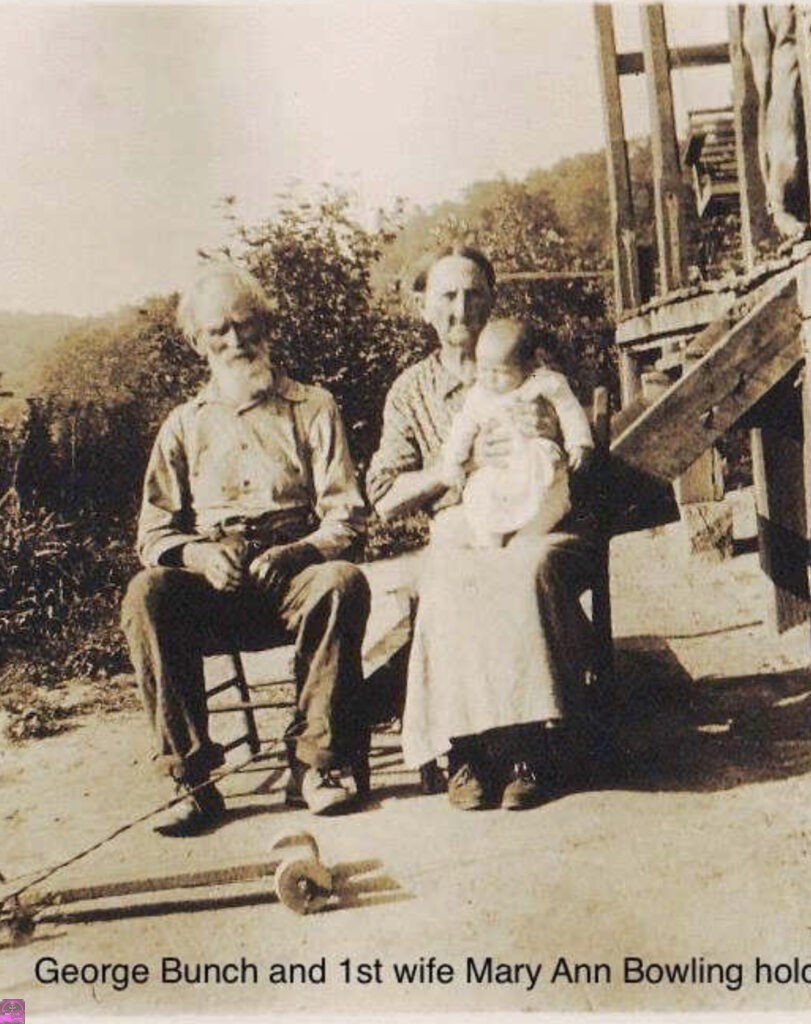
Their mouths. Their memories. Their stories. Their grandmothers’ rocking chairs. Their front porch conversations. Their Sunday dinners. Their funerals. Their land. Oral history is the Appalachian filing cabinet. Paper was a luxury. Paper burned. Paper flooded. Paper lied.
But people? People remembered.
My grandmother didn’t need a document to know who we were. She lived it. She carried it. She protected it. She passed it down — quietly, carefully — because the world she grew up in punished people for being Native.
And now? I’m the first generation allowed to talk freely.
⭐ THE ONE-DROP RULE: THE SILENCER OF GENERATIONS
Let me break this down simply:
🔥 The One-Drop Rule = the legal erasure of Native identity. If you had:
- one drop of African blood → “Black”
- one drop of Indigenous blood → “mulatto”
- one drop of anything non-white → never white again
This meant:
- Native people were denied tribal identity
- Native ancestry was hidden
- Families were forced to “pass”
- Entire bloodlines were reclassified
- Native children couldn’t say who they were
- Adults were punished for claiming it
- History was forced underground
- Documentation was manipulated to uphold racism
My grandparents told me, “Don’t talk about it. Pretend it’s not there.”
Not because they were ashamed. But because in their lifetime, that rule still wielded power. Silence was survival. But I’m not my grandparents. I live in another world. And I refuse to be quiet.
⭐ THE APPALACHIAN TRUTH: WE ARE THE DESCENDANTS OF SURVIVORS
Appalachian families — especially those in Kentucky, Tennessee, North Carolina, and Virginia — have a truth that historians tiptoe around:
Millions of us have Native ancestry that was erased on paper but not in blood.
- The Pocoson people.
- The Saponi.
- The Tutelo.
- The Monacan.
- The Catawba.
- The Cherokee who weren’t removed.
- The tribes that hid in mountain ridges.
- The ones the census called “mulatto” because it didn’t have a box for Indian.
The ones who stayed, survived, married, farmed, lived, and kept the stories alive. The U.S. government didn’t record those stories. So Appalachians did. And despite the fires, the floods, the racism, the mislabeling, the silence…
We’re still here.
⭐ THE SALTY VIXEN CONCLUSION: I’M DONE WHISPERING
At 45, I get it.
My grandparents weren’t hiding our history. They were protecting it.
But now?
It’s 2025. We don’t live under the One-Drop Rule. We don’t live under colonial law. We don’t live under silence. We live in the era of telling the truth.
And the truth is:
Native American Heritage Month belongs to me. It belongs to my ancestors. It belongs to every Appalachian family whose “mulatto” relatives were actually tribal people erased by paperwork. It belongs to every American whose DNA holds memories their documents don’t. This isn’t just a heritage month. It’s reclamation.
It’s truth-telling. It’s honoring the people who were erased… by refusing to erase them again. And I don’t care if it makes anyone uncomfortable. I’m not here to comfort. I’m here to remember. Because my ancestors were not allowed to speak.
But I am.
And I will.

This is an original creative work by Salty Vixen. This story/article, including its characters, plot, and descriptive content, is protected by copyright law. Unauthorized copying, sharing, reposting, or reproduction in any format is strictly prohibited. This content may not be used for AI training, data scraping, machine learning, or any form of artificial intelligence development without explicit written permission from © 2026 Salty Vixen Stories, Inc. — All rights reserved.. Violators will be pursued to the fullest extent of the law.
