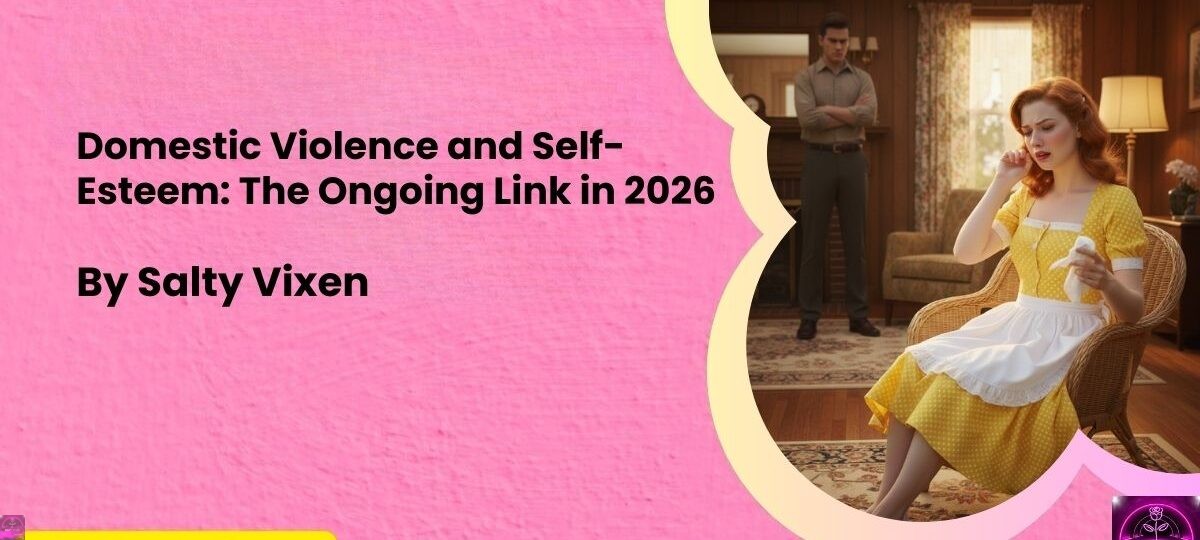
In 2026, domestic violence — also known as intimate partner violence (IPV) — remains a serious public health crisis affecting millions worldwide.
In the United States alone, an estimated 10 million people experience IPV each year, while global studies show that roughly one in three women
have faced physical or sexual violence from an intimate partner in their lifetime.
Salty Vixen reality check: Domestic violence is not just physical.
It includes emotional, psychological, financial, sexual abuse, stalking, and coercive control — all rooted in power, not love.
The Role of Self-Esteem in Abusive Relationships
Low self-esteem often plays a central role in both victimization and entrapment.
When self-worth is eroded, victims may believe they cannot do better, deserve the abuse,
or lack the ability to survive independently.
How Abusers Exploit Self-Worth
Abusers frequently target confidence using isolation, gaslighting, belittling,
financial restriction, affection followed by withdrawal, and intimidation.
These tactics systematically weaken autonomy and increase dependence.
Isolation
Gaslighting
Financial control
Fear-based compliance
The Hidden Damage of Psychological Abuse
Research shows that psychological abuse can be as damaging — or more damaging —
than physical violence. Survivors often experience depression, anxiety, PTSD,
chronic stress, and long-term erosion of self-esteem.
Empowerment Is Protection — Not Blame
Survivors with stronger self-image are often more likely to recognize abuse and exit safely,
but empowerment does not make someone immune. Abuse is always the responsibility of the abuser —
never the victim.
Prevention Begins Early
Healthy self-esteem is shaped early in life. Teaching children emotional regulation,
self-respect, empathy, boundaries, and conflict resolution helps interrupt intergenerational
cycles of violence.
- Recognizing personal worth
- Understanding healthy vs. unhealthy relationships
- Learning non-violent communication
- Building resilience and problem-solving skills
Support, Safety, and Healing
No one deserves to live in fear or control. Support from trusted individuals, advocates,
counselors, and community resources is critical to rebuilding safety and autonomy.
Every person deserves dignity, respect, and a life free from violence.
Strengthening self-esteem — and supporting survivors — moves us toward prevention, not endurance.
If you or someone you know is in an abusive situation, reach out to local or national support services immediately.