
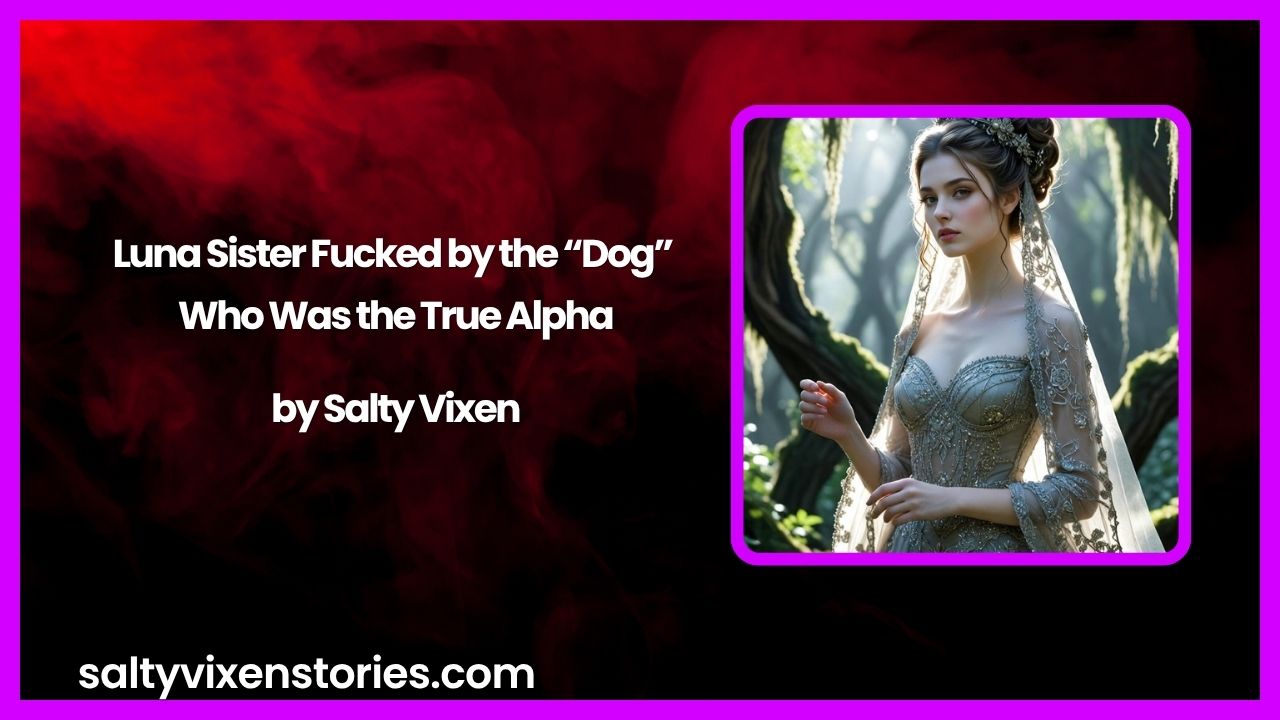
The pack called him Dog before they called him anything else.
Not a name. A station. The lowest male on the northern ridge, the one who slept in the kennel hall with the working hounds, who ate after the warriors, who was sent to haul carcasses and clean the blood pits when the hunts came home. His wolf was large and silent and ugly in the way unclaimed males got ugly—scarred muzzle, one ear notched, coat the color of wet ash. He did not speak in the hall. He did not lift his eyes when the Alpha’s heir passed. The heir’s name was Cael, and Cael was beautiful the way princes are beautiful: gold at the throat, clean hands, a smile that made the unmated females bare their necks without being asked.
His sister was not beautiful. That was the sentence the pack had agreed on years ago, and they repeated it until it became weather.
Mara was twenty-three. Tall where the fashion was small, broad through the shoulders from years of carrying water and mending fences the stewards forgot, with a mouth that did not soften when she was looked at. A fever in childhood had left a pale seam down her left cheek. Her wolf was plain brown. She kept her hair braided tight so it would not catch in the looms. When suitors came for Cael’s political marriages, they looked through her as if she were a door.
The old Alpha was dying. Everyone knew it and no one said it cleanly. His lungs rattled in the longhouse at night. Cael stood at the foot of the bed and received the elders one by one, and the elders spoke of succession, of bloodlines, of the southern packs that would test a new king the moment the pyre went cold. They also spoke of Mara.
A king’s sister unmated was a lever. An ugly sister was a cheaper lever. The lowest match would do: no alliance worth guarding, no male with the standing to make demands. Dog had no standing. Dog had no sire the pack would name. He had been found as a boy at the tree line after a border fight, half-dead, and raised on scraps because throwing him out would have been waste. Binding Mara to him would close the question of her body and insult no one who mattered.
Cael did not argue it in front of her. He told her in the weaving room, with the door shut, voice low the way he used when he wanted to sound kind.
“It keeps you here,” he said. “It keeps you fed. He won’t touch you if you don’t want it. He’s a dog. He knows his place.”
Mara looked at her brother’s clean hands. “And if I say no.”
“Then the elders will say it for you, and it will be worse.” He almost reached for her shoulder. He didn’t. “I’m sorry. When I’m Alpha I’ll find you something better. This is only until the rites settle.”
She nodded because nodding ended the conversation. That night she did not sleep. She lay on the pallet and listened to the hounds in the lower yard and tried to picture the man who slept among them. She had seen him. Everyone had. He was taller than the warriors pretended, and when he lifted a quartered elk his arms corded and did not shake. His eyes, when they accidentally met hers across the yard, were not a dog’s eyes. They were pale, almost silver, and they did not drop fast enough.
The binding was not a ceremony. It was a sentence read at dusk in the yard, with the pack arranged in a loose ring so they could watch and later say they had watched. Mara wore a gray dress that had been her mother’s. Dog wore what he always wore: leather trousers, a shirt gone thin at the elbows, bare feet on the cold stones. The elder tied their wrists with a cord of undyed wool. Cael stood at the Alpha’s right because the Alpha could not stand, and he did not look at either of them.
“You are matched,” the elder said. “The female to the male. The house to the house. Until the Moon releases you or death does.”
Someone in the ring laughed, short and mean. Dog’s jaw moved once. He did not look at Mara’s face. He looked at the cord.
When it was cut, Cael said, “Take her to the kennel hall. That’s where he sleeps. She can learn the work.”
A few of the younger males whistled. Mara felt heat crawl up her throat, not quite shame, closer to anger that had nowhere to go. Dog turned without speaking and walked. She followed because the alternative was standing alone in the ring while they looked at her.
The kennel hall smelled of straw, iron, and clean dog. The working hounds lifted their heads when he entered and did not bark. He had a corner walled off with rough planks: a cot, a chest, a basin, a hook for a coat. A small window high up. He lit a tallow lamp and set it on the chest.
“You can have the cot,” he said. His voice was low and unused, rough at the edges. “I’ll take the floor.”
“I don’t need charity from you.”
“It isn’t charity. The floor is warmer near the hounds.” He glanced at her, brief. “They won’t bother you. They know me.”
She sat on the edge of the cot because her legs had started to shake and she did not want him to see it. The wool cord had left a red line on her wrist. Outside, the pack was already drinking. She could hear Cael’s laugh, bright and public.
“What’s your name,” she said.
He was quiet long enough that she thought he would not answer. “They don’t use one.”
“I’m asking.”
Another pause. “Rook.”
She repeated it once, under her breath, and did not know why it settled something in her chest. He blew out the lamp without being asked. In the dark she listened to him lie down on the straw beyond the plank wall, and to the hounds settling around him, and she hated her brother with a cleanliness that almost felt like relief.
The days after were work. Rook rose before dawn and she rose because lying still made the thoughts louder. He showed her the runs, the feeding order, the way to check a hound’s paw without getting bitten. He did not touch her. He did not joke. When warriors came down to jeer—Cael’s friends, mostly, bored and cruel—he stood between her and them without making a show of it, and they got bored faster than they wanted. At night he slept on the floor. She lay awake and listened to his breathing and told herself the heat in her stomach was anger.
On the seventh night the Moon was high and thin. Mara woke to the sound of the plank door opening. Rook was gone from the straw. She sat up. The hounds were awake but calm, eyes reflecting the little light from the window. She pulled on her boots and went out.
He was at the edge of the training yard, where the ground turned to trees. He had stripped his shirt. In the moonlight the scars on his back were a map: old claw, old blade, a burn along the ribs that looked like it should have killed him. He did not know she was there. Or he did, and he did not care. His head was tipped back. The shift took him between one breath and the next—not the stumbling, painful change she had seen in young males, but a clean fold of body into body. The wolf that stood where he had stood was not the scarred ash-colored animal the pack described when they wanted to diminish him. This one was black as the spaces between stars, taller at the shoulder than any wolf she had seen, with a pale blaze at the throat and those same silver eyes.
He looked at her.
Mara’s mouth went dry. Every story she had been told about the lowest male rearranged itself and did not fit. She should have gone back inside. She stepped closer instead, until she could see the rise and fall of his ribs. The wolf lowered his head. Not submission. Invitation, or warning, or both. She put her hand on his muzzle because she was tired of being afraid of the wrong things. The fur was dense and warm. He made a sound in his chest that was not a growl.
“Rook,” she said.
He pressed into her palm. Then he turned and vanished into the trees, and she stood in the yard with her hand still lifted, shaking, until the cold drove her in.
She did not tell Cael. She did not tell anyone. In the days that followed she watched Rook differently, and he knew it. He still slept on the floor. He still did not touch her. But when he passed her the water bucket their fingers met, and neither of them moved away as fast as before. When she bathed at the creek he did not come down, but she felt the weight of the tree line and did not hate it.
The night it broke was a storm night. Rain on the kennel roof, the hounds restless, the longhouse lit for another council she had not been invited to. She was mending a tear in her dress by the lamp when the door opened and Rook came in soaked, blood on his forearm from a snare he had cut a hound out of. He peeled his shirt off to rinse the cut in the basin. She watched the water run over the scar on his ribs and felt the decision happen in her body before it reached her mouth.
“You don’t have to sleep on the floor,” she said.
He went still. “Mara.”
“I’m not asking for kindness. I’m asking because I want you in the cot. If you don’t want it, say so and I’ll stop.”
He looked at her for a long time. Rain ticked on the roof. “I want it,” he said. “I’ve wanted it since they tied the cord. I didn’t touch you because they gave you to me like a punishment. I won’t be that.”
“Then don’t be that.” She stood and pulled the dress over her head. The air was cold on her skin. She did not cover the scar on her cheek or the breadth of her shoulders or any of the things the pack had named ugly. “Come here.”
He crossed the little room. His hands, when they settled on her waist, were careful and shaking. He kissed her like a man who had decided he would be hanged for it and would do it properly first. She pulled him down onto the cot. The frame creaked. Outside, thunder rolled over the ridge and covered the sound she made when his mouth moved to her throat, her breast, the soft inside of her thigh.
He was not rough. That surprised her more than the want. He learned her with his hands and then with his mouth until she was clutching the blanket and saying his name, the real one, the one the pack did not use. When he pushed into her she was already wet and open and the stretch still made her gasp. He held still until she rolled her hips. Then he moved, deep and steady, forehead against hers, breath broken. She came with her teeth in his shoulder. He followed a moment later, hips stuttering, a low sound against her neck that might have been her name.
They lay tangled while the storm moved east. His hand rested on her stomach, proprietary and unsure.
“They’ll smell it,” he said.
“Let them.”
She meant it. She did not yet know what it would cost.
Cael came at midmorning with two of his seconds. The kennel hall still smelled of rain and sex and the iron of Rook’s blood. Cael’s face did the thing it did when a plan slipped: pleasant, then blank, then something colder underneath.
“I told you he wouldn’t touch you,” he said to Mara, as if Rook were not standing three feet away with his shirt half-buttoned and Mara’s scent all over his skin.
“I touched him,” she said.
One of the seconds laughed. Cael didn’t. “Get dressed. The elders want this witnessed and ended. A dog doesn’t get the Alpha’s sister. We’ll annul it. You’ll stay in the longhouse until I decide what’s next.”
Rook stepped forward. Cael’s seconds shifted their weight. Mara put a hand on Rook’s arm and felt the muscle locked under her palm.
“No,” she said.
Cael’s smile was thin. “You don’t get to say no. You never did. Look at yourself. Look at him. The pack already thinks you’re desperate. Don’t make it worse by being loyal to a mutt.”
Something in the yard moved. Not the hounds. The air itself, pressure dropping the way it did before a shift that was not ordinary. Rook’s eyes had gone silver all the way to the rims. When he spoke, the voice was his and not his.
“Say that again.”
Cael opened his mouth. He did not finish. The black wolf was there between one heartbeat and the next, and the seconds went for their knives and thought better of it when the wolf’s head turned. He was larger than he had been at the tree line. The blaze at his throat caught the thin sun. Power rolled off him in a wave Mara felt in her teeth, the old power, the kind the stories said had left the ridge when the true line broke three generations back.
Cael took a step back. His face had lost its color.
The wolf looked at Mara. She understood, with a clarity that felt like falling, that he was asking. She nodded.
He shifted back. Not into the man the pack had named Dog. Into the man he had been hiding: taller, the scars still there but the posture different, the set of his shoulders the set of someone who had been born to a hall and had chosen a kennel. On his chest, above the burn, a birthmark the old books called the king’s brand—a pale crescent no lowborn male could fake. Mara had seen the drawing in her mother’s chest. She had thought it was a story.
“Your father knew,” Rook said to Cael. Quiet. Final. “He found me after the border fight. He knew the brand. He raised me as nothing so his own son could inherit a throne that wasn’t his. The elders who are still alive will remember the crescent if you put me in front of them. Or you can try to kill me here. You won’t manage it.”
Cael’s throat worked. One of the seconds had already dropped his knife.
Mara looked at her brother and felt the last of the old obedience leave her. “You sold me to punish a king,” she said. “You didn’t even know that’s what you were doing.”
“I was protecting the pack,” Cael said, but the words had no floor under them.
“You were protecting yourself.” She turned to Rook. The yard had begun to fill—warriors, stewards, females from the looms—drawn by the power that had rolled out of the kennel hall like a bell. They saw the brand. They saw the wolf’s size still ghosted in the shape of the man. They saw Mara standing at his side with her hair loose and her chin up, and the story they had told about her ugliness failed in their mouths.
Rook took her hand in front of them. His palm was warm. “The binding stands,” he said, loud enough for the ridge. “Not because you gave her to me. Because she chose, and I chose, and the Moon already knew.” He looked at her, and the silver in his eyes had softened back toward the man who had slept on the floor so she could have the cot. “If you’ll have me as I am. Not their dog. Not their king, unless you want the hall. Just me.”
“I already had you,” she said. “The rest is noise.”
Cael left the yard before the elders arrived. By nightfall the old Alpha had been told, and the old Alpha had wept, and the brand had been witnessed by three males who had fought beside Rook’s father before the line was declared broken. The annulment was never read. The pack found new sentences. They were not all kind. Some still whispered about the kennel, about what they had heard under the storm, about a Luna who had opened her legs for the male they had called Dog.
Mara let them whisper. She had been ugly in their mouths for twenty-three years; she could survive being wanted in them. In the longhouse, in the room that had been her mother’s, Rook traced the seam on her cheek with his thumb and told her it had never been the thing he saw. She pulled him down into the bed that was too large and too soft and learned the sounds he made when no one was listening to punish them. When he shifted for her, later, in the private dark of the tree line, it was not degradation. It was the other half of the male she had chosen, black fur under her hands, silver eyes, the living proof that the lowest place in the pack had been a lie told by frightened men.
She was Luna because the power recognized her, not because a hall voted. She was beautiful because she had stopped asking the pack to confirm it. And when the Moon rose full over the ridge and the true Alpha ran at her side, the only name that mattered was the one she had asked for in the dark, and been given.


This is an original creative work by Salty Vixen. This story/article, including its characters, plot, and descriptive content, is protected by copyright law. Unauthorized copying, sharing, reposting, or reproduction in any format is strictly prohibited. This content may not be used for AI training, data scraping, machine learning, or any form of artificial intelligence development without explicit written permission from Salty Vixen Publishing LLC. Violators will be pursued to the fullest extent of the law.
