

Whether you are concealing a minor daily quirk (e.g., “I can’t handle dairy without consequences”) or guarding a deeply personal detail you simply aren’t ready to share yet (e.g., “I still sleep with my childhood stuffed animal”), knowing when and how to reveal personal information in dating can feel like navigating a minefield.
Popular relationship advice often preaches that total, unvarnished vulnerability is required right from day one. We are told that “true intimacy” means laying all your cards on the table immediately, stripping away every boundary, and offering an open-door policy into your inner world. But for those of us who naturally value our independence, space, and self-protection, that approach doesn’t just feel uncomfortable—it feels reckless. Rushing revelation rarely builds authentic intimacy; more often than not, it creates premature exposure, artificially inflated expectations, and unnecessary anxiety.
Pacing is everything. Finding the right timing for each revelation is rarely obvious, and learning to protect your boundaries while getting to know someone is an essential skill.
The Myth of Instant Vulnerability and the Power of Pacing
In the early stages of getting to know someone, it helps to remember that you do not owe a relative stranger full access to your private life, your history, or your deepest vulnerabilities. Dating research consistently reveals a clear divide in how quickly people want to move. While some people rush to define a relationship or lay out their entire background within the first few dates, a significant portion of daters—especially women and those who prioritize personal autonomy—feel much more comfortable taking things slowly.
When you look at initial digital interactions, the specific words and details you lead with can dramatically alter the dynamic. High-stakes labels, financial signals, or heavy personal declarations right out of the gate often cause potential partners to pull back. On the other hand, lighter, low-stakes disclosures—like sharing your love for pets, your favorite foods, or minor lifestyle preferences—tend to build rapport naturally without triggering alarm bells.
Does this mean your initial conversations should strictly revolve around your pet cat and your minor dietary restrictions?
Of course not. The deeper lesson here isn’t about avoiding real conversation forever; it is about protecting your boundaries and being intentional with what you choose to share when a relationship is brand new.
The Social Media Trap: Digital Clinginess and Illusions of Availability
That boundary protection extends far beyond what you talk about on a first date—it directly applies to how you handle digital space and social media.
Modern dating platforms and smartphones have quietly conditioned society to expect 24/7 access to other human beings. We have been trained to mistake constant contact for genuine care, creating an unhealthy impulse toward digital clinginess. Checking up on a new partner’s social media activity, tracking their “last active” status, or analyzing their posting habits during the early stages of dating is one of the fastest ways to breed manufactured anxiety and destroy a budding dynamic.
When you notice that someone is active on social media while they haven’t replied to your latest text message, your mind might instantly jump to negative conclusions: Are they ignoring me? Are they losing interest? Are they talking to someone else?
In reality, these fears are almost always groundless projections:
-
Social Media Is Downtime, Not Intimacy: Scrolling through feeds, watching short videos, or reading articles requires zero emotional energy. Replying to a text, on the other hand, requires focus and intentionality. Expecting someone to give you focused emotional energy every single time they unlock their phone is unrealistic and exhausting.
-
Surfing Is Not Cheating: Seeing someone online usually just means they are mindlessly decompressing after a long day. It does not mean they are entertaining other romantic options or pushing you away.
-
Not Everyone Is a Constant Texter: People have different communication styles and varying levels of daily bandwidth. Some people prefer to save meaningful conversation for when you are face-to-face rather than tethering themselves to a screen all day.
People naturally need space and breathing room to exist as independent individuals. Wanting a moment to themselves—or choosing to quietly browse the internet without engaging in a full conversation—does not mean they don’t like you. Space is not a sign of rejection; it is a prerequisite for a healthy, sustainable connection.
Protecting Your Sanity and Building Real Trust
When you let go of the urge to constantly monitor someone online or overshare too early, you give both yourself and your partner room to breathe. Intense, high-stakes, or deeply emotional topics—along with obsessive digital checking—are best kept entirely out of the initial dating phase.
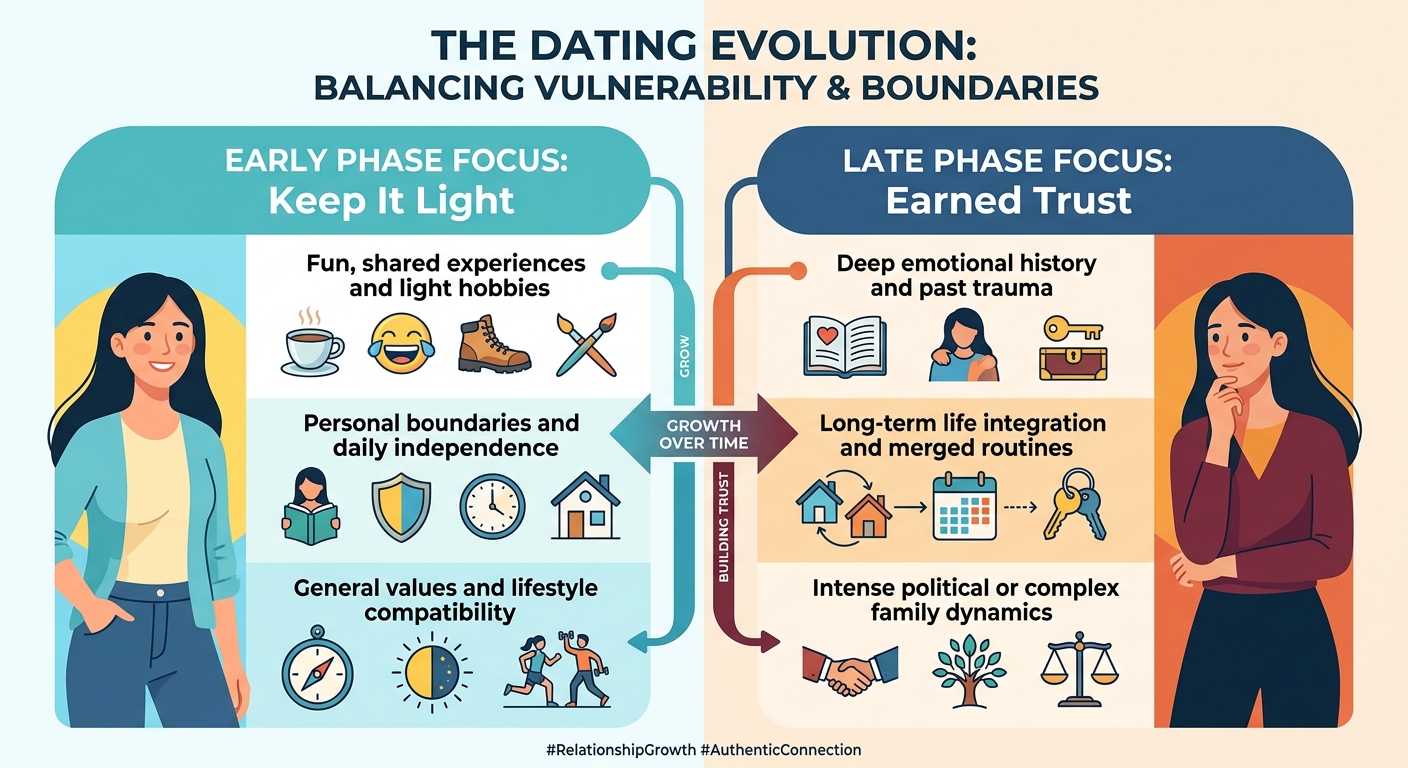
Giving a relationship physical and digital space allows you to observe a person with clarity. It gives you the time necessary to evaluate whether they are truly safe, reliable, and worthy of getting to know the real, deeper parts of you. Real trust is not built overnight through constant texting or intense early confessions; it is built steadily over time through consistent, respectful, and grounded actions.
By keeping your boundaries intact, honoring your need for independence, and resisting the modern trap of digital hyper-availability, you protect your peace of mind while creating the exact kind of calm, low-pressure environment where a genuine connection can actually grow.


This is an original creative work by Salty Vixen. This story/article, including its characters, plot, and descriptive content, is protected by copyright law. Unauthorized copying, sharing, reposting, or reproduction in any format is strictly prohibited. This content may not be used for AI training, data scraping, machine learning, or any form of artificial intelligence development without explicit written permission from Salty Vixen Publishing LLC. Violators will be pursued to the fullest extent of the law.
