

Auditioning is brutal. You spend weeks prepping monologues, researching the project, perfecting your headshot, and practicing in front of mirrors, friends, and sometimes your cat—only to walk into a room (or a Zoom square) where you have roughly 90 seconds to prove you’re the one. The nerves are real. The stakes feel sky-high. And the worst part? Most actors never get honest feedback. They walk out wondering what went wrong, then repeat the same small mistakes audition after audition.
If you’ve ever left an audition thinking, “Did I talk too fast? Was my outfit distracting? Did I stand there awkwardly after my piece?”, you’re not alone. The truth is: talent gets you in the door, but professional etiquette keeps the door open.
This is not another recycled “wear black and smile” list from 2010. This is the 2026 update—expanded, modernized, brutally honest, and built for today’s hybrid in-person + self-tape world. Whether you’re auditioning for drama school, regional theater, TV pilots, indie films, commercials, voice-over, or musical theater, these are the exact behaviors that separate the callbacks from the polite “thanks, we’ll be in touch” emails.
By the end of this guide you’ll know:
- Exactly what to wear in 2026 (and why certain “rules” are now outdated)
- How to own the room (or the frame) from the second you walk in
- What casting teams are secretly judging in the first 10 seconds
- How to end a monologue so they remember you for the right reasons
- Self-tape etiquette that makes directors hit replay instead of delete
- How to handle rejection without burning bridges (because the industry is tiny)
- The little things that make directors think “I want to work with this person again”
Let’s dive in.
1. Mindset Before You Even Leave the House
The audition starts in your head, not in the room.
Casting directors aren’t just looking for the best actor—they’re looking for the best colleague. Someone reliable, prepared, low-maintenance, and pleasant to be around for six weeks of rehearsal or six months of shooting. Your talent is table stakes; your vibe is what gets you hired.
Top mindset shifts for 2026:
- This is not a judgment day. It’s a job interview for a creative collaboration.
- You are not begging for a role. You are offering your unique interpretation of a character.
- Rejection is data, not personal failure. Every “no” is practice for a bigger “yes.”
- The panel wants you to succeed. They are tired, overworked, and desperate for someone to blow them away so they can stop watching tapes at 2 a.m.
Pro tip: Before you walk in (or hit record), say out loud:
“I am prepared. I am enough. This is just one audition in a long career.”
It sounds cheesy. It works.
2. What to Wear in 2026 – The New Rules
The old advice was simple: “Wear all black, nothing distracting.” That advice is now outdated in many rooms.
Casting directors in 2026 want to see you—your body shape, your movement, your energy—not a silhouette swallowed by shapeless black. But they still don’t want your outfit to steal focus.
Current best practices (updated from conversations with CDAs, agents, and recent audition workshops):
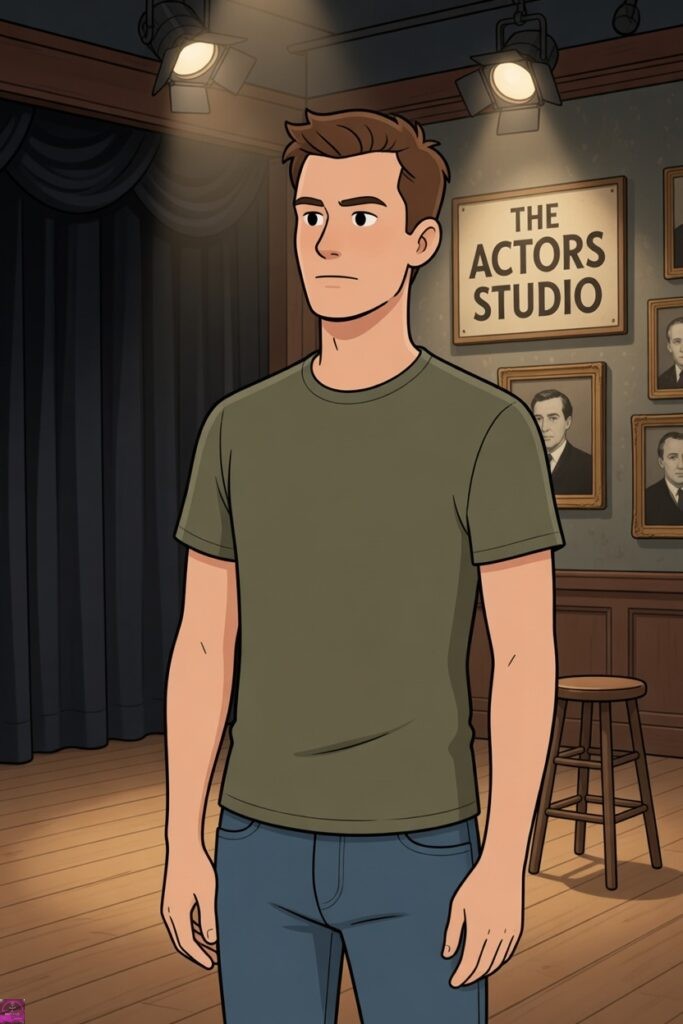
General Rule #1: Dress like the character on a normal Tuesday—not in costume, but in the character’s casual world.
- Reading for a corporate lawyer? Smart casual: tailored trousers, button-down, blazer (no tie unless specified).
- Reading for a quirky barista? Jeans, clean sneakers, a fun but not loud top.
- Reading for Lady Macbeth? Dark, elegant, structured clothing that suggests power and intensity (deep jewel tones over plain black).
- Musical theater callback? Fitted clothing that shows your body line and movement capability (leggings + fitted top for dancers, character-appropriate casual for non-dance roles).
General Rule #2: No logos, no slogans, no loud patterns.
Your T-shirt that says “World’s Okayest Actor” might get a laugh from friends, but it’s a distraction in the room. Same for bright graphics, tie-dye, animal prints, or anything with visible brand names.
General Rule #3: Color is allowed—and encouraged—if it serves the character.
Black is safe but boring. A soft blush pink, forest green, or charcoal gray can make your skin tone pop and help you stand out without screaming. Avoid:
- Neon anything
- White (can wash you out on camera and reflect light)
- Red (very bold, can read aggressive unless the character calls for it)
General Rule #4: Footwear is non-negotiable.
Flat shoes only. Clean sneakers, jazz shoes, character boots (if appropriate), or simple flats.
Never wear:
- High heels (you will be asked to take them off, and you’ll lose precious seconds)
- Flip-flops (instant “unprofessional” flag)
- Heavy boots that clomp loudly
General Rule #5: Grooming matters more than the outfit.
Hair clean and styled (away from face for monologues so they see your expressions). Makeup natural (unless the role requires bold choices). Nails clean. No overpowering perfume/cologne—many rooms are small and scent-sensitive.
Self-Tape Specifics (2026 Reality):
- Shoot against a plain wall (light gray, soft blue, or off-white). Avoid busy backgrounds.
- Wear the same thing you’d wear in-person—no pajamas or hoodies.
- Test lighting so your face is evenly lit (ring light or two soft sources). No backlighting or harsh shadows.
Quick checklist before you leave the house or hit record:
- Outfit matches character world?
- No logos/patterns?
- Flat, quiet shoes?
- Hair out of face?
- Grooming on point?
- Feeling like yourself, but the best version?
If yes → you’re ready.
3. The Audition Starts the Second You Enter the Building (or Join the Zoom)
Casting teams notice everything.
They watch how you greet the monitor, how you sign in, how you sit in the waiting area, how you interact with other actors, how you speak to the reader. They’re not being mean; they’re assessing whether you’re pleasant to work with for 8 shows a week or 14-hour shoot days.
Do:
- Arrive 10–15 minutes early (shows respect for their time).
- Smile and say “Good morning/afternoon” to the monitor or casting assistant.
- Be polite to other actors (no trash-talking the role or the project).
- Silence your phone and keep it away.
- Bring a small bag only—no giant backpacks that bang into chairs.
- Fill out forms neatly and legibly.
Do not:
- Complain about traffic/parking in the waiting room (they hear it all day).
- Scroll TikTok with sound on.
- Over-rehearse loudly in the hallway.
- Ask the monitor “How many people are ahead of me?” repeatedly.
On Zoom/self-tape:
- Test tech 24 hours in advance.
- Log in 5 minutes early.
- Have your name clearly visible in the frame (slate first).
- Look at the lens, not your own face.
- Have a clean, quiet space—no pets jumping in, no roommates walking through.
4. The Introduction: 10 Seconds That Matter More Than You Think
You walk in. The room is quiet. Three tired faces look up.
This is your moment to set the tone.
Do:
- Make eye contact with everyone (even if it’s just a quick sweep).
- Stand tall, shoulders relaxed, hands visible (no crossed arms or hands in pockets).
- Speak clearly and warmly:
“Hi, I’m [Your Full Name], and today I’ll be performing [Character Name] from [Play Title] by [Playwright].”
Do not:
- Rush it.
- Mumble or look at the floor.
- Say “Um… hi… okay so…” (instant nerves flag).
- Start the monologue without the intro unless they specifically say “just go.”
Pro tip: Practice the intro so it feels like breathing. It’s your first acting choice.
5. The Monologue: First 10 Seconds + Strong Finish
Casting directors make 70–80% of their decision in the first 10 seconds.
They’re not judging your talent in that moment—they’re judging your presence, your focus, and whether you look like you belong in the room.
Opening tableau:
- Take a full breath before you begin.
- Create a clear physical shift into character (even if it’s subtle).
- Hold it for one beat—let them see the transformation.
- Then speak.
During the piece:
- Commit 100%. No half-measures.
- Stay in the scene—don’t glance at them for approval.
- Use the space (if allowed), but don’t wander aimlessly.
- Keep volume appropriate (no screaming unless required).
- End with intention—don’t trail off.
The finish is everything:
- Freeze in character for one full second after the last line.
- Release the character slowly (let them see the shift back to neutral).
- Make eye contact with the panel.
- Say clearly and warmly: “Thank you.”
Then step back to neutral and wait for their response.
Do not:
- Immediately drop character and grin.
- Say “That’s it!” or “I’m done!”
- Stand in awkward silence for 10 seconds.
- Apologize (“Sorry, I rushed that…”).
6. Self-Tape Etiquette – 2026 Edition
Self-tapes are now 80–90% of first-round auditions.
Casting directors watch hundreds a day. Make yours the one they remember for the right reasons.
Technical checklist:
- Frame: Head and shoulders + upper chest (unless otherwise specified).
- Lighting: Even, front-facing (ring light or two soft lamps). No window behind you.
- Sound: External mic if possible (phone mic is okay if quiet room).
- Background: Plain wall (light gray or soft blue works best).
- Slate: Full name, role you’re submitting for, height, and any special notes (e.g., “British accent”). Look directly at lens.
- File name: FirstLast_Role_ProjectName_self-tape.mp4
- Format: MP4, under 500MB, H.264 codec.
Performance tips:
- Treat it like a live audition—same energy, same commitment.
- Do multiple takes, but choose the one with the strongest opening and finish.
- Watch back on a different device to check lighting/sound.
- Send exactly what was requested—no extra monologues unless asked.
Follow-up: If no response in 2–3 weeks, one polite email is okay. After that, move on.
7. Handling Rejection Like a Pro
You will get rejected. A lot. It’s not personal; it’s the business.
But how you handle “no” determines whether doors stay open or slam shut.
Do:
- Smile, say “Thank you for the opportunity,” and leave gracefully.
- Send a brief thank-you email if you have the contact (within 24 hours).
- Ask for feedback politely (some CDs will give it; most won’t).
- Journal what went well and what to adjust next time.
- Celebrate showing up—auditions are reps, not verdicts.
Do not:
- Argue with the casting director.
- Post vague, bitter social media rants (they see them).
- Badmouth the project or team.
- Ghost callbacks or ghost agents.
The industry is small. Reputation is currency. Be the person everyone wants to call back.
Audition Checklist
Send this to yourself since copy/print is disabled.
- ✅ Outfit: Character-appropriate, no logos.
- ✅ Slate: Rehearsed, clear, confident.
- ✅ Monologue: Strong start & clean finish.
- ✅ Mindset: “I’m prepared. I’m enough.”
- ✅ Tech: Sound, light, and framing.
- ✅ Attitude: Pro from the first moment.
You’ve got this.
Auditioning is hard. But when you combine talent with preparation and professionalism, you become undeniable.
Go in there and show them who you are.
They won’t forget you.
