
Enslaved Africans and African Americans resisted the brutal institution of chattel slavery in the United States from the arrival of the first Africans in Virginia in 1619 through emancipation in 1865. Resistance was not sporadic or exceptional—it was a constant, adaptive, and courageous response to a system that stripped people of freedom, family, dignity, and humanity. While enslavers used whips, patrols, laws, and terror to maintain control, enslaved individuals and communities fought back through overt violence, flight to freedom, and subtle, everyday subversion that eroded the system’s efficiency and profitability.
This expanded exploration builds on foundational accounts of resistance by examining the three major categories—armed rebellions and conspiracies, running away and self-emancipation, and day-to-day or ordinary acts of resistance—with greater historical depth, regional variations, gender dynamics, cultural dimensions, primary source insights, and long-term legacies. Drawing from historians like Herbert Aptheker (who documented over 250 revolts), Deborah Gray White (on women’s resistance), Stephanie Camp (on hidden landscapes of defiance), and Eugene Genovese (on the “world the slaves made”), it shows how resistance was both a survival strategy and a moral assertion of humanity.
The Broader Context: Slavery as a Contested Institution
Chattel slavery in British North America (later the United States) evolved into a racialized, hereditary system by the late 17th century. Laws such as Virginia’s 1662 statute declaring that children inherited their mother’s enslaved status ensured generational bondage. By the antebellum era (1820–1860), nearly 4 million people were enslaved, primarily in the cotton, tobacco, rice, and sugar economies of the South. Enslavers enforced control through physical brutality (whippings, mutilation), psychological terror (family separations, sexual violence against women), legal restrictions (anti-literacy laws in most Southern states after Nat Turner’s 1831 rebellion, pass systems requiring written permission to travel), and slave patrols of armed white men.
Yet resistance was inevitable because slavery violated fundamental human impulses for autonomy, kinship, and dignity. Enslaved people created resilient communities through family networks, secret religious gatherings (often blending African spiritual traditions with Christianity), folktales (like Br’er Rabbit stories symbolizing cunning against power), and coded spirituals that conveyed hope and escape plans. As Aptheker emphasized, resistance ranged from “petit marronage” (temporary flight) to grand conspiracies, all contributing to the institution’s inherent instability. The Haitian Revolution (1791–1804), which created the first Black republic, inspired both hope and terror among enslavers across the Americas.
▼
Antebellum Resistance FAQ (Click to Expand)
1. Armed Rebellions and Conspiracies: Direct Confrontations with Power
Overt, organized violence against enslavers represented the most radical form of resistance, aiming to overthrow the system or at least inspire widespread uprising. These events were infrequent due to overwhelming odds—whites typically outnumbered enslaved people in most areas, possessed firearms, and benefited from rapid militia response—but when they occurred, they shook Southern society to its core.
Stono Rebellion (1739, South Carolina): The largest and most successful colonial revolt. On September 9, 1739, about 20 enslaved Africans, led by a man named Jemmy (or Cato), seized weapons from Hutchenson’s store near the Stono River. They killed the owners and marched southward toward Spanish Florida, where a 1733 edict promised freedom to runaways who converted to Catholicism. The group burned plantations, killed 20–25 whites, and grew to 60–100 recruits. Colonial militia ambushed them, killing most rebels and executing survivors. The rebellion prompted South Carolina’s 1740 Negro Act, which restricted assembly, education, and movement.
Gabriel Prosser’s Conspiracy (1800, Virginia): A literate blacksmith inspired by the Haitian Revolution planned to seize Richmond with 1,000+ enslaved and free Black allies on August 30, 1800. They intended to kill enslavers, capture the arsenal, and negotiate or fight for freedom. Torrential rain delayed the march; two enslaved men informed authorities. Virginia hanged 27 conspirators, including Gabriel, and tightened restrictions on free Blacks.
Denmark Vesey’s Plot (1822, Charleston, South Carolina): Free Black carpenter and AME church leader Denmark Vesey organized what may have been the largest planned revolt, involving hundreds to thousands. Vesey used church networks and Haitian examples to recruit. Betrayed by an informant, authorities arrested and hanged 35 (including Vesey); dozens more were sold South or deported.
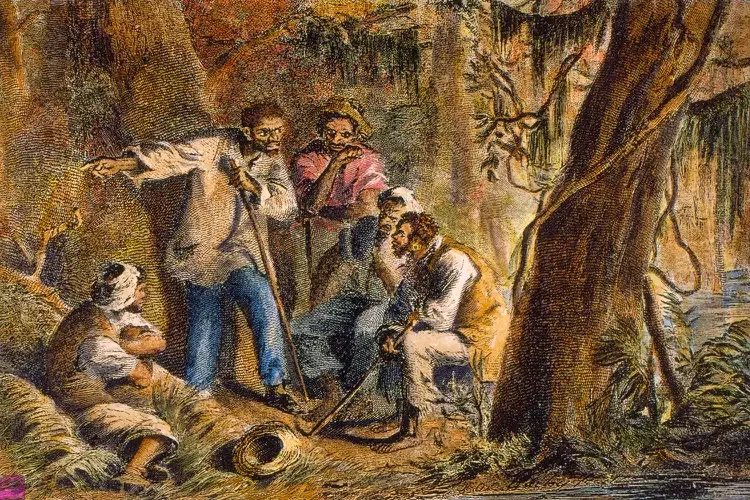
Nat Turner’s Rebellion (1831, Southampton County, Virginia): The bloodiest U.S. slave revolt. Enslaved preacher Nat Turner, believing divine visions commanded him, launched an attack on August 21, 1831. With 60–70 followers, he killed 55–65 whites (including families) over two days, aiming to capture Jerusalem and spark a broader uprising. Militia crushed the rebels; Turner evaded capture for 70 days. He was tried, convicted, and hanged November 11, 1831. Retaliatory white mobs killed 100–200 innocent Black people. The event led to nationwide bans on Black preaching, education, and assembly.
These rebellions, though suppressed, demonstrated enslaved people’s willingness to risk everything for collective freedom and forced enslavers to confront the system’s volatility.
2. Running Away and Self-Emancipation: Claiming Personal Liberty
Flight was the most direct path to individual freedom, though temporary escapes outnumbered permanent ones. Runaways rejected ownership by physically removing themselves from enslavers’ control.
Patterns and Risks: Most escapes were short-term—hiding in woods, visiting kin on nearby plantations, or protesting punishment. Permanent escapes were harder in the Deep South due to distance from free states. Upper South runaways (Virginia, Maryland) succeeded more often. Young men escaped most frequently: mobile (hired out, sent on errands), less encumbered by family. Women faced barriers: pregnancy, childcare responsibilities, sexual violence risks.
The Underground Railroad: By the 1830s, a decentralized network of abolitionists (free Blacks, Quakers, white sympathizers) provided safe houses (“stations”), transportation, and guidance. Spirituals like “Follow the Drinking Gourd” encoded directions (Big Dipper pointing north). Harriet Tubman, escaped in 1849, returned ~13 times, rescuing ~70 people (family and others). Estimates of permanent escapes: 30,000–100,000 over the 19th century.
Methods and Consequences: Runaways fled on holidays for head starts, used pepper to foil dogs, stole boats/horses, or hid in attics (Ellen Craft’s 1848 cross-dressing escape). Captured runaways faced whipping, branding, or sale South. The 1850 Fugitive Slave Act intensified Northern risks.
Flight weakened slavery economically (lost labor) and ideologically (proved freedom attainable), fueling abolitionist narratives.
3. Day-to-Day Resistance: The Persistent Erosion of Control
The most common and sustained form was subtle, low-risk defiance—sabotage, slowdowns, feigned illness—that preserved energy while undermining productivity.
Sabotage and Property Damage: Enslaved people broke tools, damaged crops, set fires, or ruined goods. A North Carolina cook recalled deliberate contamination of food as revenge.
Work Slowdowns and Feigning Illness: “Soldiering” (deliberate slowness), misunderstanding instructions (exploiting stereotypes), or faking sickness gained rest. Women leveraged reproductive value—enslavers hesitated to punish potential breeders harshly.
Reproductive Resistance: Women resisted forced breeding. Deborah Gray White documents herbal birth control, abortion, or infanticide to deny enslavers more “property.” Enslavers feared and punished suspected practices.
Cultural and Psychological Defiance: Spirituals, folktales, secret meetings fostered identity. Poisoning (rare, documented cases) targeted enslavers directly.
These acts forced concessions (better rations, lighter punishments) and sustained morale.
Gender, Regional Variations, and Cultural Dimensions
Women resisted through household sabotage, reproductive control, and poisoning (e.g., 1755 Charleston case). Men dominated armed revolts and long-distance escapes. Upper South offered more escape opportunities; Deep South rebellions were rarer due to isolation.
Cultural resistance—ring shouts, coded songs, Br’er Rabbit tales—preserved African heritage and mocked power.
Legacy and Historical Significance
Resistance exposed slavery’s contradictions, inspired abolitionists (Douglass, Jacobs), and contributed to its collapse. Post-emancipation, these traditions informed civil rights activism.
Enslaved people’s defiance affirmed humanity against dehumanization, shaping America’s moral reckoning.
Conclusion
Enslaved people resisted relentlessly—through blood-soaked rebellions, daring escapes, and quiet daily defiance—proving that no system of oppression can fully extinguish the human spirit. Their courage helped end slavery and continues to inspire struggles for justice.
▼
Additional References (Click to Expand)
- 1. Ford, Lacy K. Deliver Us From Evil: The Slavery Question in the Old South, 1st edition, Oxford University Press, 2009.
- 2. Franklin, John Hope. Runaway Slaves: Rebels on the Plantation. Loren Schweninger, Oxford University Press, 2000.
- 3. Raboteau, Albert J. Slave Religion: The ‘Invisible Institution’ in the Antebellum South, Updated edition, Oxford University Press, 2004.
- 4. White, Deborah Gray. Let My People Go: 1804-1860 (The Young Oxford History of African Americans), 1st edition, Oxford University Press, 1996.
- 5. Gibson, Campbell and Kay Jung. “Historical Census Statistics on Population Totals by Race, 1790 to 1990”. Population Division Working Paper 56, U.S. Census Bureau, 2002.
- 6. Larson, Kate Clifford. “Harriet Tubman Myths and Facts.” Bound for the Promised Land: Harriet Tubman, Portrait of an American Hero.
- 7. Banks, James A. and Cherry A. March Toward Freedom: A History of Black Americans, 2nd edition, Fearon Publishers, 1974.
