
Restaurants use a lot of tricks to give you that perfect steak. You can pay a lot of money or you can stay home and make it yourself. While some restaurants use some underhanded tricks, this is the best method for the best steak money can buy and without paying a penny more than necessary.
What you will need:
- A good steak
- A cast iron skillet
- A gas grill with side burner
- Butter
- High-temperature oil like Avocado Oil
- Salt and pepper
- A pair of long handle tongs
- An instant-read digital thermometer
Talk to your butcher about getting a good steak. I prefer a boneless rib eye steak for this method. The bone can reduce contact with the pan and, therefore, reduce the amount of caramelization. Look for a “choice” or “prime” grade steak, though prime grade will cost a lot more.
WARNING: This method uses extreme temperatures that can melt through oven mitts so be very careful!
1. Oiling the Steak – Cooking the Perfect Restaurant Steak
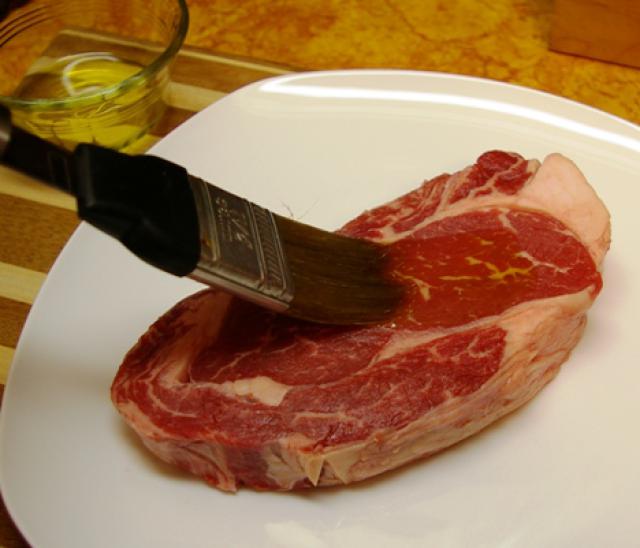
Once you have your steak, lightly coat it with oil. Choose an oil with a high smoke point. Oil breaks down at high temperatures. Oils, like Avocado Oil, which I recommend, can take a much higher temperature than most. It is very important that each side is well coated with oil, but there is no need to worry about the sides. While the steak won’t stick, you need the lubrication to conduct the heat from the pan to the meat as fast as possible.
This method is all about speed so stay close at hand.
2. Season the Steak – Cooking the Perfect Restaurant Steak
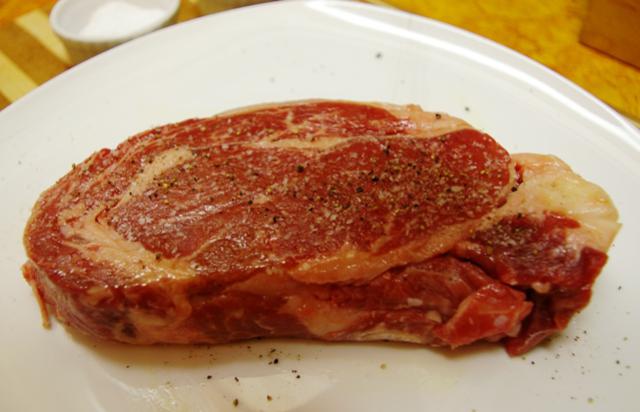
Now it’s time to season the steak. Typically this includes coarsely ground black pepper and a coarse sea or Kosher salt. The oil is going to hold the seasonings in place and if you choose to make a sauce in the pan later, this will provide the extra flavor.
Apart from salt and pepper, many restaurants add dried parsley or other herbs to the mixture. You can use anything you like, but keep it light.
We want to maximize the flavor of the steak, not the seasonings.
If nothing else, you need the salt to react with the surface of the meat to produce the right flavor. Let the salt sit on the steak for a good 15 minutes before cooking so it has time to absorb into the surface.
3. Preheat Grill – Cooking the Perfect Restaurant Steak
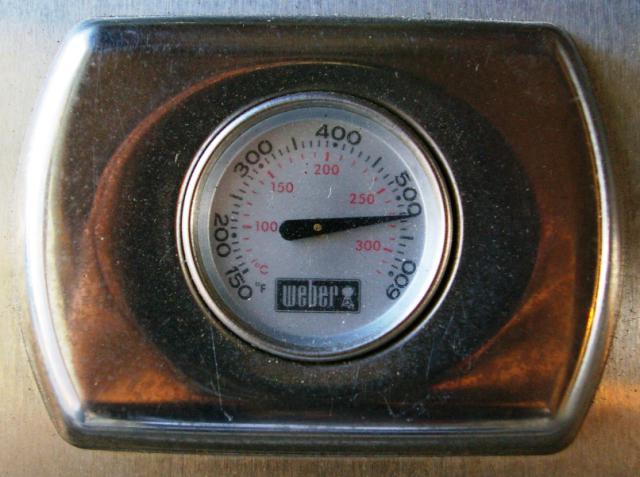
This process can be done with a stove top and an oven or a side burner and grill. You need the burner to heat the skillet and start the steak cooking and the grill or oven to complete the process. Either way, the grill or oven needs to be preheated to a high temperature. I shoot for around 500 degrees F. (260 degrees C.), but any temperature around 400 degrees F. (205 degrees C.) or higher will do.
This process creates a good deal of smoke. You won’t notice it much on the patio, but your fire alarm will probably notice if you choose to do this indoors. If you are doing this in the kitchen, you might want to turn off the fire alarm for the duration and open a window or two.
4. Preheat Cast Iron Skillet – Cooking the Perfect Restaurant Steak
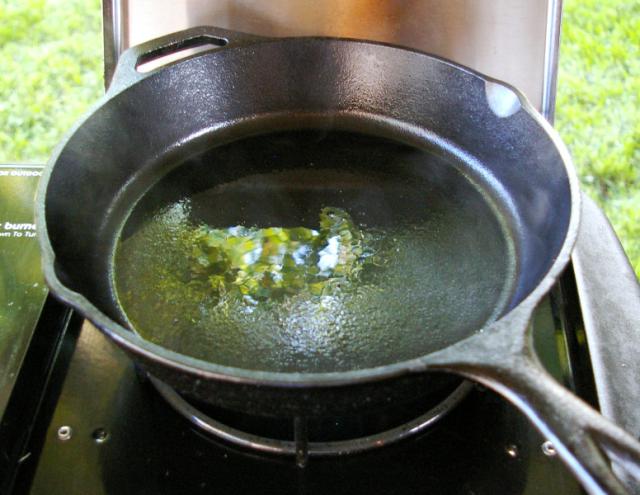
To make this whole process work you need a smoking hot cast iron (or heavy duty) skillet. When I say smoking hot, I mean smoking hot. It also needs to be clean and without any oil (other than what a good cast iron skillet is seasoned with) or cooking spray. All the oil you need is already on the surface of the steak.
To test the heat, place a single drop of water on the pan. If it dances for a second before disappearing, the pan is hot enough.
Make sure to have the steak, a clean plate, a heavy-duty grill mitt, a pat of butter and a pair of tongs ready. You won’t have a chance to step away once you start the cooking process.
5. Place Steak in the Hot Skillet – Cooking the Perfect Restaurant Steak
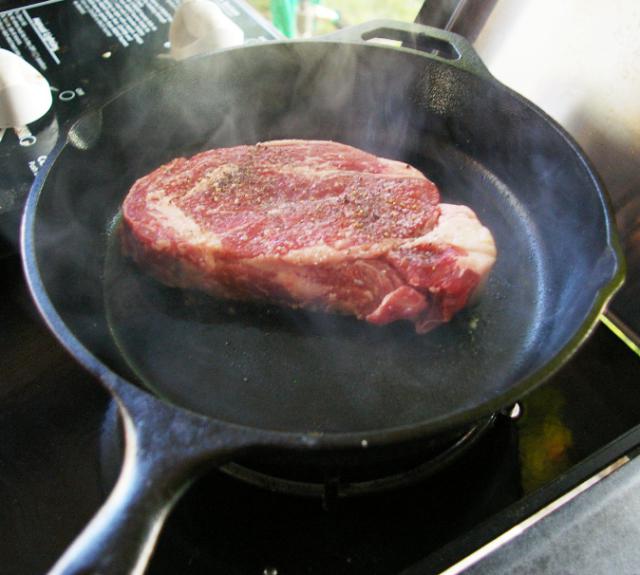
Place the steak in the center of the hot skillet. It is important that most of the steak is in contact with the metal as possible, so never use a steak bigger than your pan.
This will generate a good deal of smoke, popping, and sizzling, but you must wait exactly two minutes before moving the steak. You might think it is burning, but I promise that everything is fine (unless flames are shooting towards the sky, then turn off the gas and run).
Be patient and watch the clock closely.
6. Turn the Steak Over
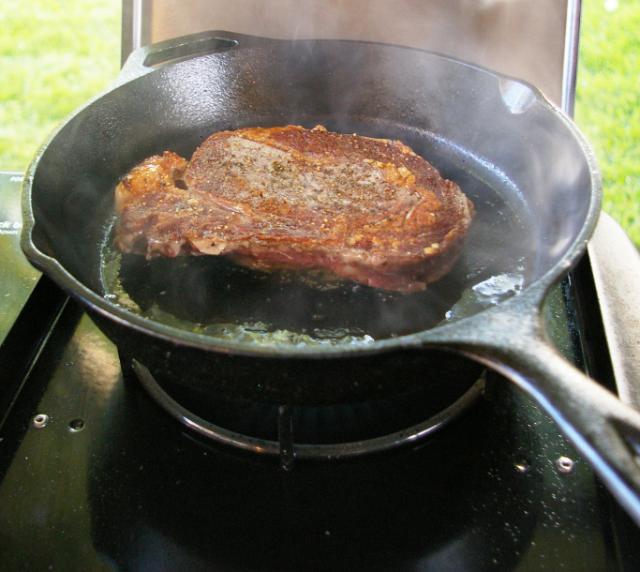
After two minutes, turn the steak over placing it exactly where it was, making sure it is well seated in the pan.
Continue cooking the steak for an additional two minutes. Take time to admire just how beautiful this steak looks now. Notice the rich deep brown (not black) color of the cooked surface. Beautiful isn’t it.
Again, be patient and let the steak continue (burner still on high)to cook. During this time, make sure you have your grill (or oven) mitt on.
This needs to be a good mitt since the metal you are about to pick up is nearly 500 degrees F. and heavy.
7. Top Steak with Butter and Move to the Grill (Oven)
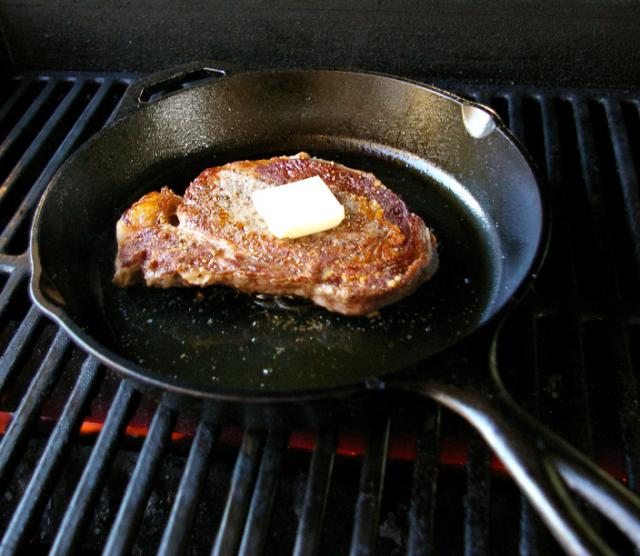
The steak has been cooking for four minutes now and if you want it very rare it’s time to take it off the heat. If you want it more cooked than this, transfer the skillet to preheated grill (or oven). Set the temperature above 400 degrees F. (205 degrees C.).
In addition, before closing down the lid, drop a pat of butter on the top of the steak right in the middle. This butter will melt quickly and pour down over the steak giving it an extra rich, caramelized nutty flavor.
To get a precise temperature reading on this steak, use an oven-safe thermometer or polder style thermometer (the kind with the remote unit so you can read the temperature without opening the lid).
8. Testing the Temperature
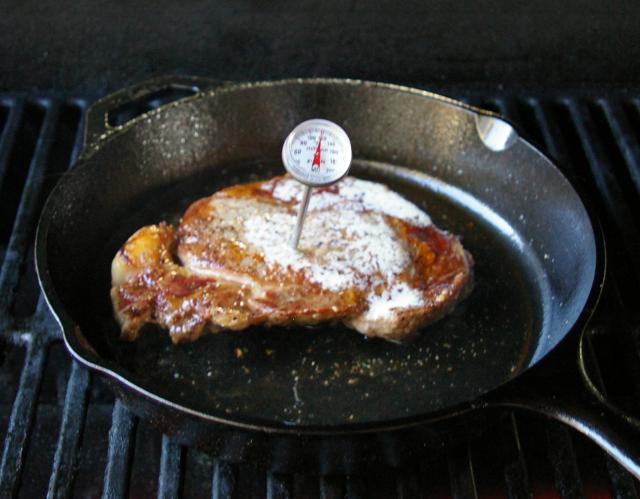
Testing for doneness is both an art and a science. If using a thermometer, you should be able to closely gauge the doneness of the steak. Remember that you need to remove it 5 degrees F. (2.7 degrees C.) below the target temperature. The steak will continue cooking for a few minutes after it is removed from the heat.
Say you want a medium rare steak (about 130 degrees F or 55 degrees C.) then you need to get that steak out of the grill and off the skillet when the center of the meat reaches 125 degrees F.
(52 degrees C.)
9. Rest – Plate – Serve
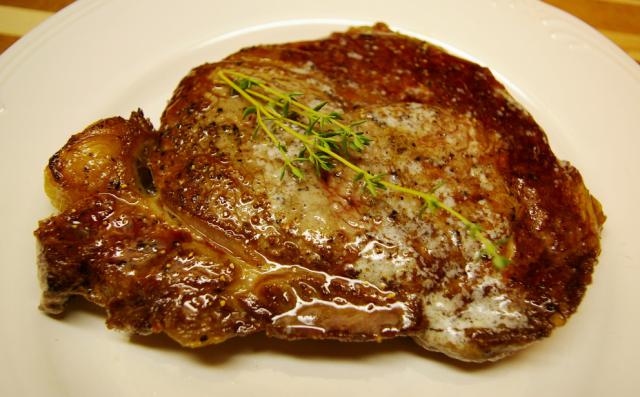
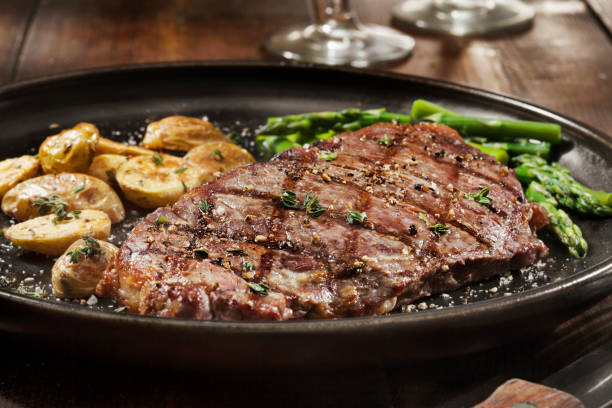
When the steak is ready to be removed from the skillet, place it on a plate and gently cover with a piece of aluminum foil. Note the time. In five minutes you (or whoever is eating this steak) should be ready to have the best steak of their lives. The resting time allows the juices to redistribute into the meat making it as tender as warm butter.
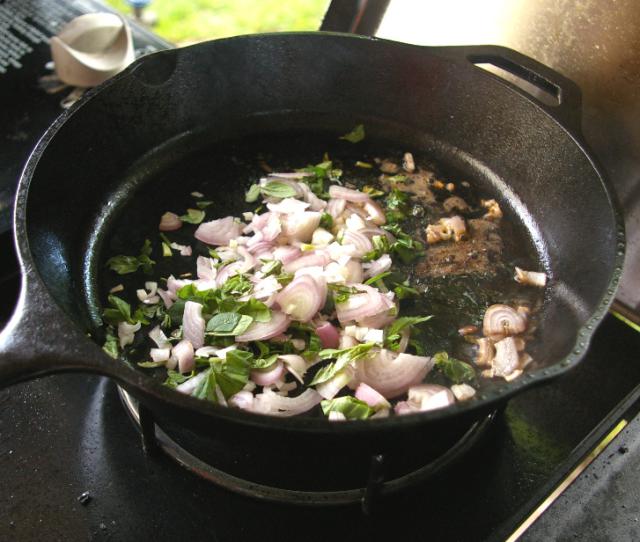
There is another option at this point. Throw some chopped shallots, a cup of red wine, a tablespoon of Dijon mustard in that cast iron skillet to make a sauce to pour over the steak.
This is an incredible sauce that really should not be over looked.
10. Optional: Steak Sauce