
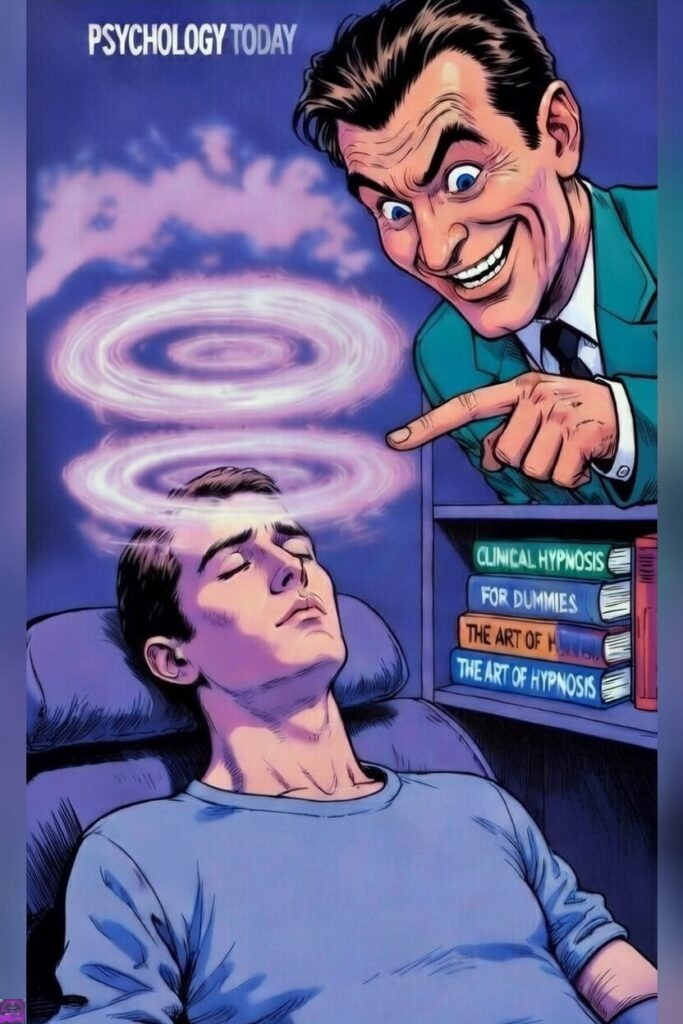
Tired of people ignoring your brilliant ideas? Want to make your stressed-out bestie actually chill for once? Or just curious if you can talk someone into napping on command? Spoiler: You can—sort of. But hypnosis isn’t the Svengali bullshit from old movies. It’s a consensual, evidence-based state of focused attention + heightened suggestibility + deep relaxation where positive suggestions land like well-timed dad jokes. Backed by clinical psych handbooks, expert hypnotherapists, and sources that don’t involve crystal balls.
This isn’t stage hypnosis (where volunteers secretly love acting like idiots). This is real-deal stuff from Gibbons & Lynn (2010), Psychology Today (2001 timeless classic), certified hypnotherapist Julia Lyubchenko’s interviews, Don Gibbons’ hyperempiria/Best Me Technique (2001), and self-hypnosis guides that prove it works when done right. Let’s get trancey, you magnificent chaos agents.
Step 1: Consent & Rapport – Skip This and You’re Just a Weirdo Talking to Themselves
Hypnosis 101: No consent = no hypnosis. Full stop. Find a willing participant (curious friend, partner, that coworker who complains about stress 24/7). Explain like an adult: “This is guided deep relaxation with positive suggestions for [their goal—stress relief, confidence, quitting bad habits]. You stay in control, can stop anytime, and it’s basically meditation with better narration.”
Build rapport: Sit at a 90-degree angle (no creepy staring). Mirror body language subtly. Dim lights, comfy chair, zero distractions. Julia Lyubchenko hammers this: Safety first—people won’t trance if they feel unsafe. Ask: “What do you want from this? Less anxiety? More swagger? World domination vibes?” Tailor suggestions later.
Normalize the weird: “We all trance daily—daydreaming, getting lost in a show, ‘highway hypnosis.’ This is just deeper and intentional.”
Step 2: Suggestibility Test – See If Their Brain Plays Nice
Quick checks (fun, not invasive):
- Hand clasp: Interlock fingers, suggest “Your hands are glued together. The more you try to separate them, the tighter they stick.” Struggle = good sign.
- Eye roll: Look up as far as possible without moving head, then close eyes slowly. More white showing under lids? High hypnotizability jackpot.
Imaginative, focused, smart folks trance easiest. Skeptics? More rapport needed.
Step 3: The Induction – Where You Make Them Melt (Politely)
Use progressive relaxation (Gibbons & Lynn primer gold standard) or eye fixation. Speak slow, low, soothing—like ASMR for people who hate ASMR.
Sample script (adapt, don’t sound like a robot):
“Get comfy… feet flat, hands relaxed. Deep breath in through nose… hold… exhale slow through mouth. Again—inhale calm, exhale nonsense.
Fix eyes on a spot (ceiling crack, wall mark). Stare gently. Notice eyelids growing heavy… heavier… like they’re begging to close.
Relax top to bottom: Forehead smooth… eyes tired… cheeks loose… jaw slack… neck dropping… shoulders melting… arms heavy… chest easy… stomach soft… legs sinking… feet limp.
Each breath sinks you deeper… calmer… peaceful. Warm wave from head to toes, washing tension away. Wave after wave…”
Trance signs: Slow breathing, limp muscles, eyelid flutter, less swallowing. Arm catalepsy test (lift gently, it stays) = deep enough.
Alternative: Eye fixation countdown (self-hypnosis style): Stare up, mentally repeat “Eyes heavy, tired… relax now” until closed. Then 5 to 0: “5—deeper… 4—twice as deep…”
For non-sleepy types: Hyperempiria (Gibbons 2001). Suggest alertness: “Mind expanding… senses sharpening… alert, super-focused, energy alive.” Perfect for confidence or creativity.
Step 4: Deepen It – Because “Kinda Chill” Isn’t the Goal
Eyes closed? Level up:
“Picture a staircase—10 steps to total relaxation. Each step doubles the depth. 10… stepping down… deeper… 9… calm flooding in… to 1… fully open, receptive.”
Or straight countdown: “10 to 1… deeper with every number.”
Test: Arm levitation (“Right arm floats like helium”) or rigidity (“Arm rigid as steel”).
Step 5: Suggestions – The Magic Sauce (Positive Vibes Only)
Here’s where change happens. Rules from Lyubchenko & Psychology Today: Positive, present tense, specific, repeated. No negatives—subconscious hears “don’t think of pink elephants” and thinks pink elephants.
- Positive: “You feel calm and centered” > “You won’t feel anxious.”
- Present: “You are confident” > “You will be confident.”
- Repeat 3x for stickiness.
- Multisensory visualization: Engage sight, sound, feeling.
Examples:
- Stress/Anxiety: “Every breath fills you with calm. Challenges slide off like water. You handle everything with ease and power.”
- Habit Change (e.g., smoking): “Cigarettes taste bitter and gross now. Your lungs crave fresh, clean air. Energy surges. You are free.”
- Confidence: “You stand tall, voice strong, mind sharp. Success builds effortlessly. You are magnetic and unstoppable.”
Best Me Technique (Gibbons): Multimodal punch:
- Beliefs: “You believe deeply in your strength.”
- Emotions: “Joy and confidence flood through you.”
- Sensations: “Energy surges, body alive.”
- Thoughts: “Mind clear and focused.”
- Motivation: “Eager to take action.”
- Self-image: “You see yourself as powerful and capable.”
Visualize goal vividly: “See it, hear it, feel the pride—lock it in.”
Step 6: Post-Hypnotic Triggers & Wake-Up Call
Plant: “Whenever stress creeps in, three deep breaths trigger instant calm.”
Wake: “Counting 1 to 5… 1—energy flowing back… 2—body light… 3—mind clear… 4—eyes ready to open… 5—wide awake, refreshed, feeling epic!”
Debrief: “How was it? Remember everything?” Reinforce wins.
Safety, Ethics & Pro Tips (Don’t Be Dumb)
Safe for most (decades of research, no drug-like risks). But skip if trauma history, psychosis, severe mental health—refer to licensed pros (ASCH/SCEH certified). Not a therapy replacement. Always positive suggestions. Practice ethically: Explicit consent, record with permission, tailor to goals.
From experts: Powerful for relaxation, habits, pain, confidence—but consensual AF.
Click to view Hypnosis References
https://www.psychologytoday.com/intl/articles/200101/the-power-hypnosis
Julia Lyubchenko, MS, MA. Adult Counselor & Certified Hypnotherapist. Expert Interview
https://www.psychologytoday.com/intl/articles/200101/the-power-hypnosis
Julia Lyubchenko, MS, MA. Adult Counselor & Certified Hypnotherapist. Expert Interview
Julia Lyubchenko, MS, MA. Adult Counselor & Certified Hypnotherapist. Expert Interview
Julia Lyubchenko, MS, MA. Adult Counselor & Certified Hypnotherapist. Expert Interview
https://www.psychologytoday.com/intl/articles/200101/the-power-hypnosis
http://www.hypnosisandhealing.co.uk/self-help-centre/how-to-use-self-hypnosis-to-achieve-your-goals/
http://www.hypnosisandhealing.co.uk/self-help-centre/how-to-use-self-hypnosis-to-achieve-your-goals/
Gibbons, D. E. (2001). Experience as an art form: Hypnosis, hyperempiria, and the Best Me Technique. New York, NY: Authors Choice Press.
