

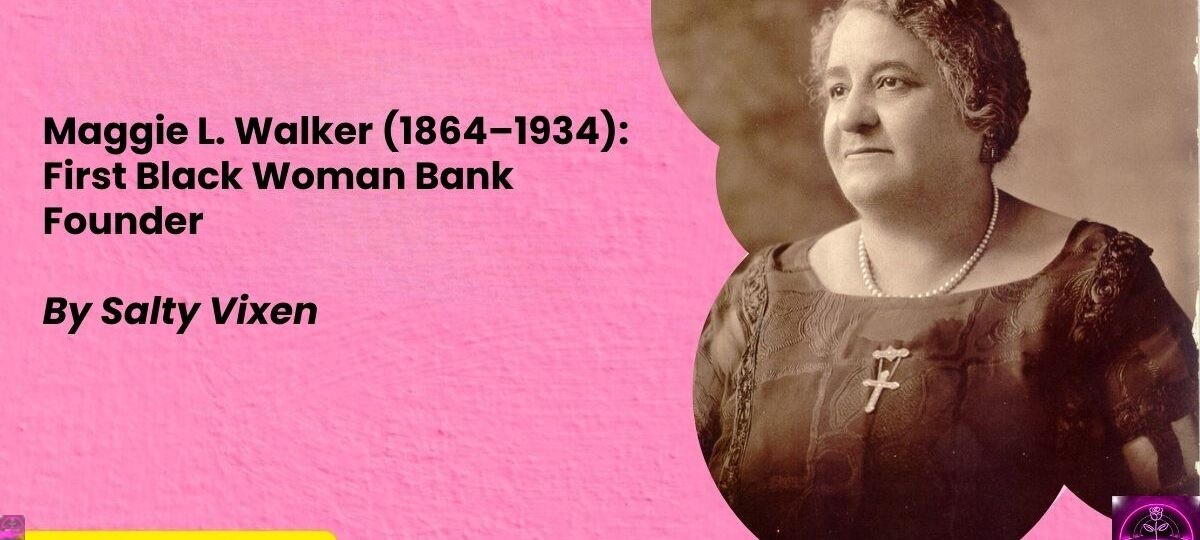
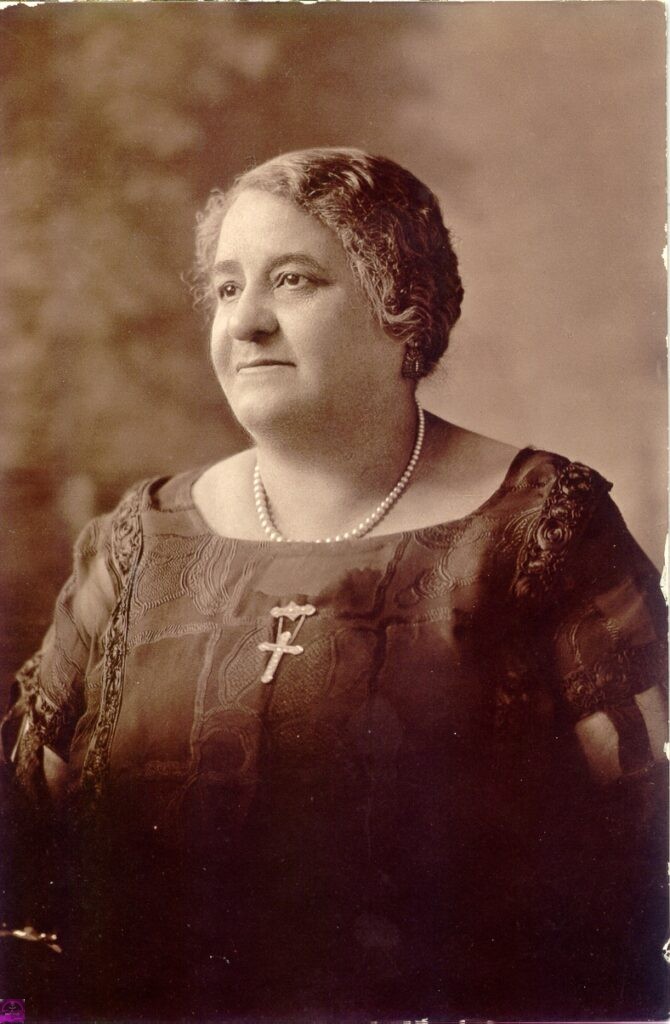
Maggie Lena Walker (1864–1934) stands as one of the most remarkable figures in American history—a trailblazing African American woman who shattered barriers in business, finance, and civil rights during the harsh era of Jim Crow segregation. Born in Richmond, Virginia, just months before the end of the Civil War, she rose from humble beginnings to become the first African American woman to charter a bank in the United States and serve as its president. Her life story is one of resilience, vision, and unwavering commitment to uplifting her community through economic independence.
Early Life and Education
Maggie Lena Draper (later Mitchell after her stepfather) was born on July 15, 1864, in Richmond to Elizabeth Draper, a former enslaved woman who worked as a laundress and cook, and Eccles Cuthbert, an Irish American journalist. After her stepfather William Mitchell’s death, the family faced hardship, but Maggie contributed by helping deliver laundry while attending segregated Richmond public schools.
She graduated from the Richmond Colored Normal School in 1883, training as a teacher. Even as a student, she showed leadership by participating in a protest against segregated graduation ceremonies. At age 14, she joined the Independent Order of St. Luke, a fraternal organization that provided burial insurance, education, and support for African Americans in a time of limited opportunities.
Building a Legacy Through the Independent Order of St. Luke
Walker’s true impact began when she rose to leadership in the Independent Order of St. Luke. In 1899, she became Right Worthy Grand Secretary and revitalized the struggling group, doubling its membership in her first year and expanding its reach. Under her guidance, the organization grew into a powerful force offering insurance, education, healthcare, and community services.
She launched The St. Luke Herald newspaper in 1902 to connect members and promote her vision. Walker emphasized economic self-reliance, famously urging, “Let us put our money together; let us use our money; let us put our money out at usury among ourselves, and reap the benefit ourselves.”
Founding the St. Luke Penny Savings Bank
In 1903, Walker achieved her most historic milestone: chartering the St. Luke Penny Savings Bank in Richmond’s Jackson Ward neighborhood. As its first president, she became the first African American woman (and one of the first women overall) to found and lead a chartered bank in the U.S.
The bank focused on encouraging thrift—especially among children, who saved pennies in special boxes—and financing Black homeownership. By 1920, it had helped hundreds of families buy and pay off homes when white institutions often denied loans to African Americans. Walker led the bank through challenges, including mergers during the Great Depression, and retired as chairman in 1932. It evolved into the Consolidated Bank and Trust Company, remaining a key Black-owned institution for generations.
Community Leadership and Advocacy
Beyond banking, Walker was deeply involved in civil rights and women’s organizations. She co-founded the Richmond branch of the NAACP, served in the National Association of Colored Women, National Urban League, and National Negro Business League, and advocated for suffrage, education, and interracial cooperation. She also ran a department store and supported tuberculosis care for Black patients.
Despite personal tragedies—including the accidental death of her husband Armstead in 1915 (shot by their son in a misunderstanding) and ongoing health struggles after a 1907 fall that left her paralyzed and wheelchair-bound from 1928 onward—Walker continued leading with determination. She adapted her home with an elevator and modified car, proving that disability need not limit impact.
Family and Personal Life
Walker married Armstead Walker Jr. in 1886, viewing marriage as an equal partnership. They had sons (one died in infancy) and adopted a daughter, building a large extended family in their expanded Richmond home on East Leigh Street.
Enduring Legacy
Maggie L. Walker passed away on December 15, 1934, from complications of diabetes, but her influence endures. Her Richmond home is preserved as the Maggie L. Walker National Historic Site by the National Park Service, offering tours of the restored 28-room residence. A high school bears her name (Maggie L. Walker Governor’s School for Government and International Studies), and she has been honored with inductions into halls of fame, a statue in Richmond, and features in Smithsonian exhibits.
In an era when opportunities for Black women were severely restricted, Walker built institutions that empowered generations. Her message of economic empowerment, community solidarity, and perseverance remains powerfully relevant today.
If you’d like to adjust the tone, add more personal anecdotes, shorten sections, or include specific calls-to-action for your site (like visiting the historic site), just let me know—I can refine it further!
