
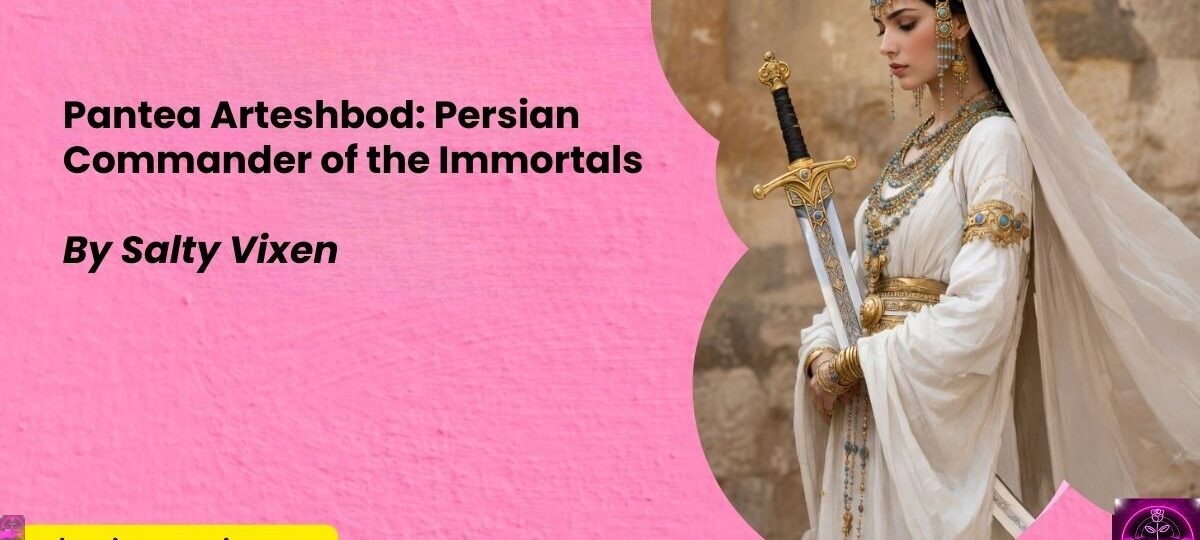
In the 6th century BCE, as Cyrus the Great forged one of history’s greatest empires, a remarkable woman rose to command elite forces on the battlefield. Pantea Arteshbod—her very name echoing “commander” in Old Persian—stands as a symbol of strength, strategy, and the remarkable freedoms Persian women enjoyed. While ancient records are sparse and her story blends documented history with enduring legend, Pantea’s tale captivates: a female general who helped conquer Babylon, governed its chaos, and co-led the legendary Immortals.
Early Life and Rise in a Time of Conquest (c. 559–547 BCE)
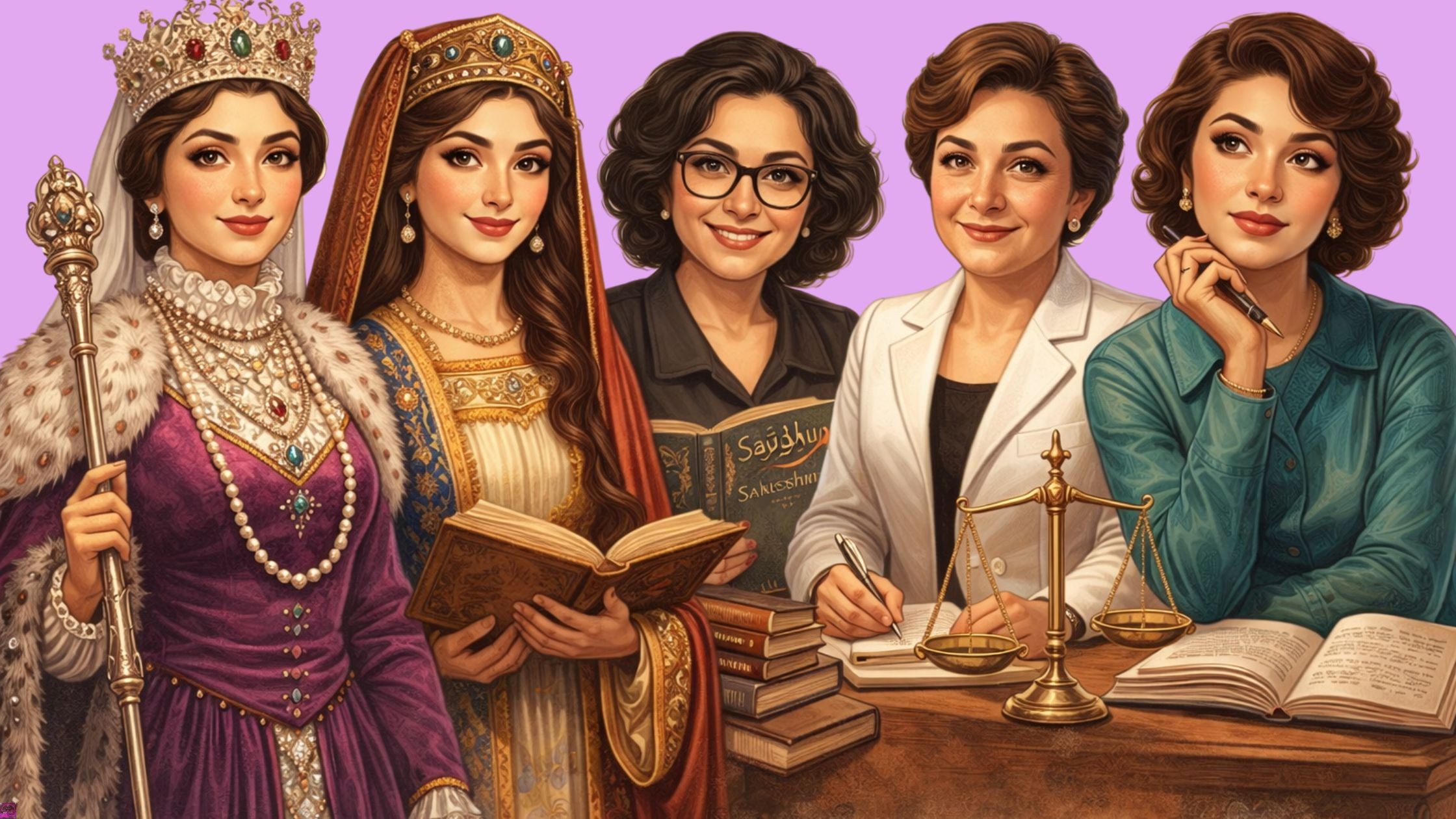
Born around 559 BCE amid Cyrus’s ascent from king of Anshan to empire-builder, Pantea grew up in a society where women held unprecedented rights. Unlike in Greece, where women were largely confined, Achaemenid Persia allowed them to own property, manage estates, travel freely, and even serve in high roles—evidenced by Persepolis tablets naming women supervisors and workers with equal pay in many cases.
She married General Aryasb, a trusted Arteshbod (commander) in Cyrus’s army. Together, they became a formidable duo. Pantea’s tactical brilliance and leadership shone during Cyrus’s early campaigns against the Medes and Lydians. By the mid-540s BCE, she earned her own command, rising through merit in an empire that prized loyalty and competence over gender.
Her name, interpreted as “strong” or linked to divine/all-encompassing themes in some traditions, suited her perfectly. Persian oral histories describe her as one of the most beautiful and toughest women in all of Asia—a detail that adds romantic color while emphasizing her intimidating presence and discipline on the field.
Pantea Arteshbod: Persian Commander of the Immortals – Frequently Asked Questions
▼ Click to Expand
- Who was Pantea Arteshbod?
Pantea Arteshbod was a legendary female military commander (Arteshbod) in the Achaemenid Empire under Cyrus the Great around 559–529 BCE. She is credited in Persian traditions with co-leading the elite Persian Immortals, administering Babylon after its conquest, and playing a decisive role in the Battle of Opis in 539 BCE. - What was Pantea Arteshbod’s role in the Persian Immortals?
According to historical traditions, Pantea Arteshbod, together with her husband General Aryasb, helped form and command the 10,000-strong elite unit known as the Persian Immortals—the imperial guard and standing army of Cyrus the Great. She reportedly trained them and led detachments in key battles. - Did Pantea Arteshbod really wear a battle mask?
In Persian oral traditions and modern retellings, Pantea is said to have worn a battle mask to conceal her renowned beauty and prevent distractions among the troops. This detail is likely legendary or symbolic, as no primary Achaemenid sources confirm it, but it emphasizes her discipline and commanding presence. - Was Pantea Arteshbod a real historical figure?
Pantea Arteshbod appears in later Persian historical traditions and modern compilations, but she is not explicitly named in primary Achaemenid inscriptions, Babylonian chronicles, or Greek sources like Herodotus or Xenophon. Scholars consider her story semi-legendary, though it aligns with documented female autonomy and high roles in the Achaemenid Empire. - How did Pantea Arteshbod contribute to Cyrus the Great’s empire?
Tradition credits Pantea with helping conquer Babylonian territories, governing Babylon post-conquest to maintain order, co-leading the Immortals, and delivering a tide-turning maneuver at the Battle of Opis in 539 BCE, which paved the way for Cyrus’s peaceful entry into Babylon and the fall of the Neo-Babylonian Empire.
Administrator of Babylon: From Conquest to Stability (547–539 BCE)
In 547 BCE, Cyrus turned his attention to the wealthy but declining Neo-Babylonian Empire. Pantea is credited in Persian traditions with commanding forces during the initial conquests of Babylonian territories. Her role extended far beyond combat: after victories, Cyrus appointed her to administer Babylon and its surrounding regions.
This was no ceremonial position. Cyrus pursued a revolutionary policy of tolerance—sparing lives, respecting local gods and customs, and integrating conquered peoples. Implementing this required capable, fair administrators. Pantea excelled, maintaining law and order, preventing unrest in a diverse, ancient metropolis, and ensuring a smooth transition to Persian rule.
Her success in governance reflects the broader Achaemenid practice of empowering talented women. Records from Persepolis show women managing vast estates, paying taxes, and overseeing labor forces—Pantea simply applied similar competence to one of the empire’s most strategic cities.
Leader of the Persian Immortals: Forging an Elite Force
Pantea’s most enduring legacy is her role in establishing and commanding the Immortals—the legendary 10,000-strong elite unit that served as both the imperial guard and a standing professional army. Together with her husband Aryasb, she is credited in tradition with recruiting, training, and leading this force from the empire’s finest warriors, often drawn from Persian nobility and trained from youth.
The Immortals earned their name because any fallen warrior was immediately replaced, keeping the number constant at 10,000. Equipped with long spears, composite bows, short swords (akin), scale armor, and distinctive wicker shields, they were a terrifying and disciplined sight on the battlefield. Their mobility, archery skill, and unbreakable formation made them the backbone of Cyrus’s conquests.
Legends add a striking detail: Pantea reportedly wore a battle mask in combat—not merely for protection, but to conceal her renowned beauty and prevent any distraction among the troops. Whether historical or embellished, this image captures her commitment to duty and her commanding aura.
Decisive Role in the Battle of Opis (539 BCE)
The high point of Pantea’s military career arrived in September 539 BCE at the Battle of Opis, fought near the Tigris River. This was the final major engagement against Nabonidus, the last king of Babylon, whose forces were already demoralized by internal dissent and Cyrus’s tolerant reputation.
Pantea commanded elite reserve units—likely detachments of the Immortals. When Babylonian lines began to falter under Persian pressure, her timely intervention—leading a decisive charge or flanking maneuver—broke the enemy formation. This “tide-turning” action cleared the path for Cyrus to enter Babylon almost peacefully just days later, marking the end of the Neo-Babylonian Empire and one of the largest peaceful transfers of power in ancient history.
Her leadership at Opis exemplified core Persian military innovations: combined arms, rapid mobility, disciplined reserves, and the ability to exploit psychological advantages.
Women Warriors and Leaders in the Achaemenid Empire: A Broader Tradition
Pantea Arteshbod was exceptional, but not solitary. The Achaemenid Empire featured several women in positions of military and political power, reflecting a society far more egalitarian in gender roles than many contemporaries:
- Artemisia I of Caria (c. 480 BCE): A naval commander under Xerxes I, renowned for her strategic brilliance at the Battle of Salamis, where she outmaneuvered larger Greek fleets.
- Artunis (c. 540–500 BCE): Served as a lieutenant commander during the reigns of Cyrus or early Darius.
- Scythian and Saka warrior women: Archaeological evidence from Iranian-speaking steppe graves shows armed females buried with weapons, bows, and horses—likely inspiring Greek myths of the Amazons.
Greek historians like Herodotus and Xenophon, while often biased, acknowledged that Persian women enjoyed greater agency than Athenian women. Xenophon’s idealized portrait of “Panthea” in the Cyropaedia—a devoted, courageous wife—may draw from or conflate traditions about Pantea Arteshbod.
Legacy and Historical Debate
Pantea Arteshbod is believed to have died around 529 BCE, shortly after Cyrus the Great. Her story survives primarily through Persian oral traditions, later compiled in Sassanian-era texts, and modern Iranian historiography. Works such as Zhinia Noorian and Brian Griffith’s *Mother Persia: Women in Iran’s History*, Mary Ellen Snodgrass’s *Women Warriors in History*, and articles from World History Encyclopedia have helped revive her name in global awareness.
Primary Achaemenid sources—cuneiform inscriptions, Persepolis tablets, or Babylonian chronicles—do not explicitly name her in a military capacity. Greek accounts mention no direct equivalent, leading some historians to classify parts of her biography as semi-legendary or folkloric. Yet the core elements align closely with well-documented aspects of Achaemenid society: female property owners, administrators, and the empire’s merit-based military structure.
Today, Pantea inspires as a powerful symbol of women’s capability in leadership and warfare. In Iran and the broader Persian diaspora, she represents national pride and forgotten heroines. Globally, she stands as proof that ancient empires could thrive when talent—regardless of gender—was recognized and utilized.
Her life reminds us that behind every great conqueror stood capable minds and brave hearts, some of them belonging to women whose stories deserve to be told.
Pantea Arteshbod: Persian Commander of the Immortals : References
▼ Click to Expand
- Noorian, Zhinia; Griffith, Brian (2024-08-13). Mother Persia: Women in Iran’s History. Springer Nature. ISBN 978-3-031-64583-9.
- Mark, J. J. (31 January 2020). “Twelve Great Women of Ancient Persia”. World History Encyclopedia. Retrieved April 23, 2021.
- “Las legendarias guerreras de la antigüedad que inspiraron el personaje de la Mujer Maravilla”. BBC News Mundo.
- (3 May 2024). “Historical Persian Queens, Empresses, Warriors, Generals of Persia (persepolis.nu)”. Persepolis.nu (Persian Encyclopedia)
- Snodgrass, Mary Ellen (2023-12-20). Women Warriors in History: 1,622 Biographies Worldwide from the Bronze Age to the Present. McFarland. ISBN 978-1-4766-5032-6.
