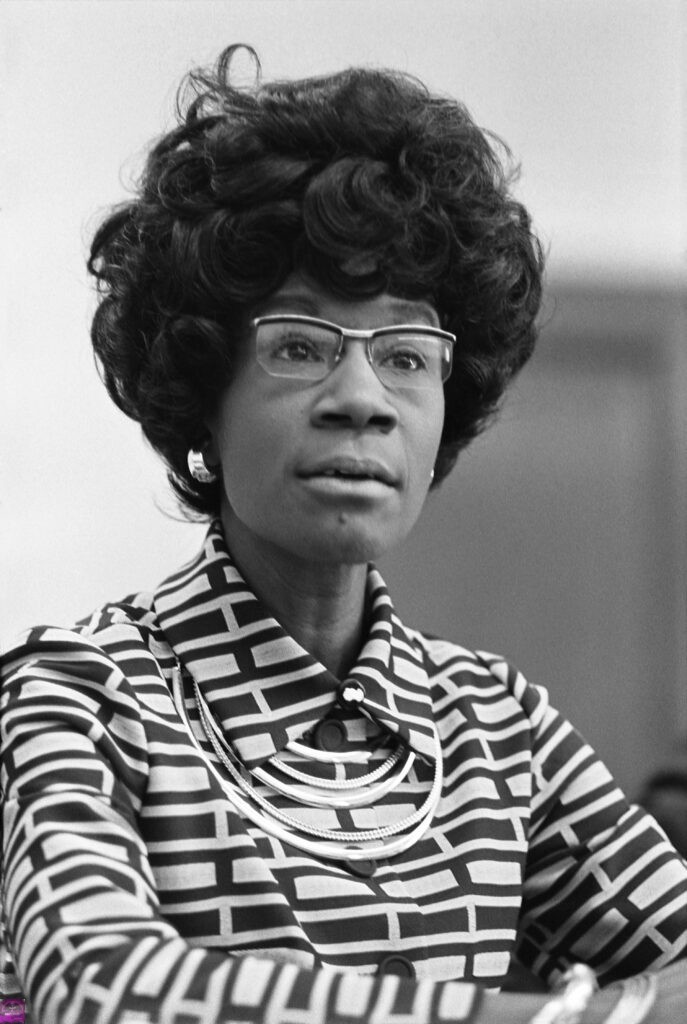
Let’s get one thing straight right from the jump: Shirley Chisholm (November 30, 1924 – January 1, 2005)) wasn’t some quiet footnote in history books—she was the thunderclap that shook the foundations of American politics. She’s an inspiration to every woman who’s ever been told she’s “too much,” myself included. Writing about her isn’t just work; it’s an honor.
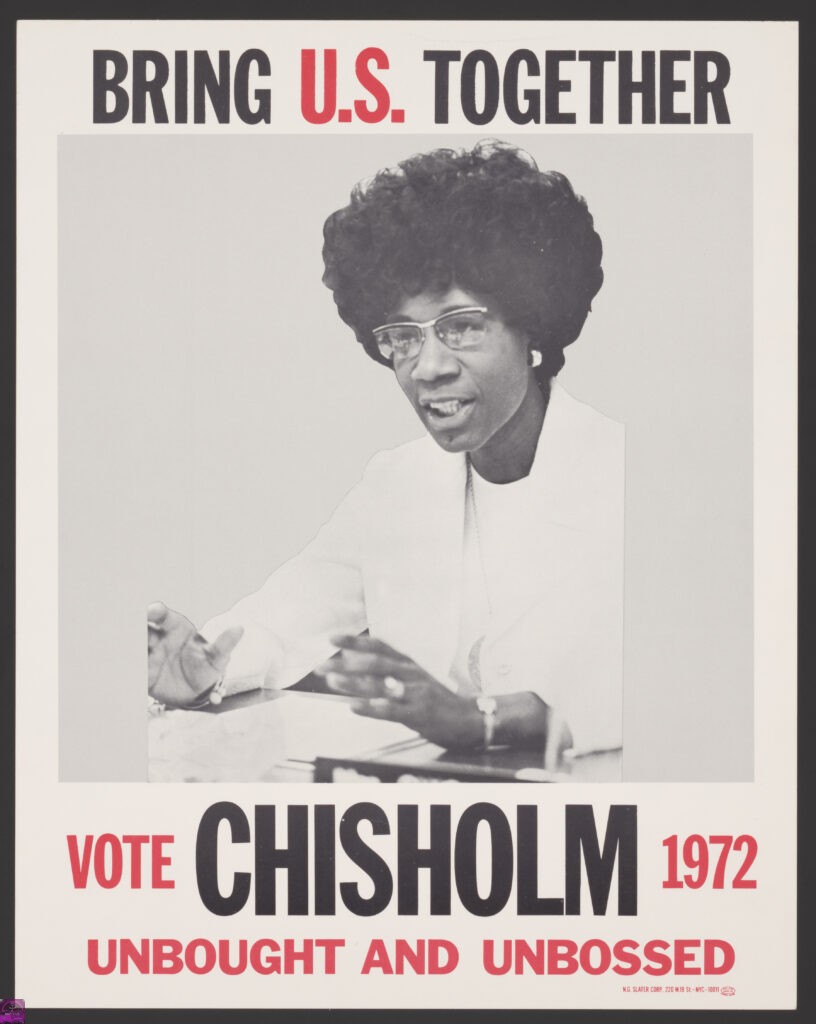
In 1972, she became the first Black woman to run for president from a major political party, seeking the Democratic nomination at a time when the very idea seemed like a pipe dream to most. But for Chisholm, dreams weren’t enough; action was. She didn’t wait for permission or endorsements; she charged forward with her iconic slogan, Unbought and Unbossed, proving that a Black woman from Brooklyn could challenge the white, male-dominated establishment and force the nation to reckon with its biases. And get this—most people still don’t know this pivotal fact about her. In the midst of Black History Month 2026, marking the 100th anniversary of Carter G. Woodson’s N**ro History Week (now celebrated under the ASALH theme “A Century of Black History Commemorations” ** Note: We recognize the sensitivity of the term “N**ro” in a contemporary context. However, to maintain the integrity of Shirley Chisholm’s era and the primary sources cited, this article utilizes historically accurate terminology. Our goal is to preserve the authenticity of the record as it existed during her groundbreaking career. ), Chisholm’s story isn’t just relevant—it’s a blueprint for every underdog fighting for their seat at the table.
Shirley Anita St. Hill Chisholm lived a life that read like a manifesto against the status quo. Born on November 30, 1924, in Brooklyn, New York, she was the daughter of Caribbean immigrants who instilled in her a fierce sense of self-worth and resilience. She rose from humble beginnings to become an educator, activist, state legislator, congresswoman, and presidential candidate—all while battling the intersecting forces of racism and sexism that tried to keep her down. Her 1972 presidential run wasn’t a symbolic gesture; it was a declaration of war on exclusion, inspiring generations of women of color in politics, from Kamala Harris to Barbara Lee. Chisholm once said, “I am not the candidate of Black America, although I am Black and proud. I am not the candidate of the women’s movement of this country, although I am a woman and I am equally proud of that. I am the candidate of the people, and my presence before you now symbolizes a new era in American political history.” Those words still land like a mic drop.
This article dives deep into her life—the triumphs, the setbacks, the unyielding spirit that made her a legend. From her Barbadian roots to her groundbreaking campaign and enduring legacy, Shirley Chisholm’s story is one of unbreakable determination. And in 2026, as we reflect on a century of commemorating Black history, her message rings clearer than ever: if they won’t give you a seat, bring your own damn chair—and make sure it’s the sturdiest one in the room.
Roots in Resilience: Early Life and Caribbean Influences
Shirley Chisholm’s story begins in the bustling, immigrant-filled neighborhoods of Brooklyn, but its true foundations lie across the Atlantic in the Caribbean. Born Shirley Anita St. Hill on November 30, 1924, she was the eldest of four daughters in a family that embodied the immigrant hustle. Her father, Charles Christopher St. Hill, hailed from British Guiana (now Guyana) by way of Barbados, arriving in New York City in 1923 aboard the S.S. Vestris from Antilla, Cuba. He toiled as a laborer in a burlap bag factory and later as a baker’s helper, scraping by to provide for his family. Her mother, Ruby Seale, was born in Christ Church, Barbados, and immigrated to New York in 1921. Ruby worked as a seamstress and domestic worker, taking in sewing jobs and cleaning homes to make ends meet. The St. Hills were working-class to their core, living in a cramped apartment in Bedford-Stuyvesant, where money was tight but principles were ironclad.
The family faced the harsh realities of the Great Depression, and in November 1929, when Shirley was just five years old, her parents made the tough decision to send her and her two younger sisters to live with their maternal grandmother, Emaline Seale, on a farm in Vauxhall village, Christ Church, Barbados. This move was common among West Indian immigrants seeking better opportunities for their children while they established themselves in America. For nearly five years, Shirley lived in a rural setting that contrasted sharply with Brooklyn’s urban grit. She attended a one-room schoolhouse, where the British-style education was rigorous and disciplined. Classes emphasized reading, writing, arithmetic, and proper behavior, with corporal punishment for missteps. Shirley later credited this experience with giving her an edge: “Years later I would know what an important gift my parents had given me by seeing to it that I had my early education in the strict, traditional, British-style schools of Barbados.” The curriculum, heavy on English literature and history, honed her speaking and writing skills, which would become weapons in her political arsenal.
Life on her grandmother’s farm was no easy ride. Shirley helped with chores—tending crops, fetching water, and caring for animals—in a environment that taught self-reliance and community. Her grandmother, a strong, no-nonsense woman, instilled values of dignity and love that Shirley carried forever. “Granny gave me strength, dignity, and love. I learned from an early age that I was somebody. I didn’t need the black revolution to teach me that,” she reflected in her autobiography. This period also exposed her to the anti-colonial sentiments brewing in Barbados, where discussions of independence from Britain were commonplace. Her father’s admiration for Marcus Garvey, the Jamaican-born Black nationalist who advocated for Pan-Africanism and economic independence, filtered through family conversations, planting seeds of activism.
In 1934, at age nine, Shirley and her sisters returned to Brooklyn aboard the SS Nerissa, reuniting with their parents and newborn sister. The family had stabilized somewhat, but the Depression’s shadow lingered. They lived in a modest home, and Shirley spoke with a West Indian accent for the rest of her life—a proud marker of her heritage that set her apart in American society. Religion played a role too; the family belonged to the Quaker Brethren sect in the West Indies, but in New York, they attended Methodist services. This blend of spiritual influences emphasized equality and social justice, aligning with her later Quaker-inspired principles.
Growing up in Bedford-Stuyvesant, a diverse but segregated neighborhood, Shirley witnessed firsthand the inequalities faced by Black and immigrant communities. Her parents’ stories of colonial oppression in the Caribbean mirrored the Jim Crow realities in America. These early exposures fueled her fire. She attended public schools, excelling academically despite the challenges. By high school, at the integrated Girls’ High School in Bedford-Stuyvesant from 1939 to 1942, she served as vice president of the Junior Arista honor society, showcasing her leadership potential. The school was a rare integrated space, but Shirley still navigated racial tensions, which sharpened her awareness of systemic injustice.
Her family’s political discussions—her father supported trade unions and Garvey’s ideas—introduced her to activism early. Shirley later recalled how these conversations around the dinner table shaped her worldview: the importance of self-determination, community uplift, and challenging authority. This foundation of resilience wasn’t just personal; it was cultural. As a Barbadian American, she often identified strongly with her Caribbean roots, once stating in interviews that her dual heritage gave her a unique perspective on American racism. “I am Barbadian by birthright, but American by choice,” she said, blending her identities seamlessly.
Education: Building the Tools for Change
Shirley Chisholm’s education was her launchpad—a rigorous journey that equipped her with the knowledge and confidence to challenge the world. After graduating from Girls’ High School in 1942 amid World War II, she was accepted to prestigious colleges like Vassar and Oberlin but couldn’t afford the room and board. Instead, she chose Brooklyn College, a tuition-free public institution, allowing her to live at home and commute. There, she majored in sociology with a minor in Spanish, graduating cum laude in 1946.
At Brooklyn College, Shirley wasn’t just a student; she was an agitator. She joined the debate team, honing the oratory skills that would later command congressional floors and campaign stages. As a member of Delta Sigma Theta sorority, she engaged in service projects focused on Black communities. But it was her involvement in the Harriet Tubman Society that truly ignited her activism. The group advocated for the inclusion of African American history in the curriculum, more Black students and faculty, and greater involvement of women in student government. Shirley pushed hard for these changes, organizing meetings and petitions. Her efforts reflected her belief that education should empower the marginalized: “The emotional, sexual, and psychological stereotyping of females begins when the doctor says, ‘It’s a girl,'” she once quipped, highlighting early gender biases.
Brooklyn College was a hotbed of progressive ideas during the 1940s, with influences from the civil rights movement and anti-war sentiments. Shirley absorbed it all, minoring in Spanish to connect with New York’s growing Latino communities—a strategic move that later helped her build coalitions in politics. Her sociology studies exposed her to theories of inequality, race, and class, which she applied to real-world issues. She won prizes for her debating prowess, often arguing for social justice topics.
After graduation, Shirley worked various jobs while pursuing further education. In 1949, she married Conrad Chisholm, a Jamaican immigrant and private investigator who supported her ambitions. They had no children, possibly due to miscarriages and her focus on career, but the marriage provided stability. In 1951, she earned her Master of Arts in elementary education from Teachers College at Columbia University. Her thesis explored educational opportunities for African American children, critiquing systemic barriers in urban schools. Teachers College, part of Columbia, was a prestigious program that trained educators for leadership roles, and Shirley excelled, graduating with honors.
Her education wasn’t just academic—it was practical activism. During college, she volunteered with organizations like the League of Women Voters and the National Association of College Women, recruiting people of color into local politics. These experiences taught her the power of grassroots organizing. “Education is not just about books; it’s about empowering people to change their circumstances,” she often said. This philosophy drove her teaching career, where she saw education as a tool to combat poverty and discrimination.
Chisholm’s educational path was marked by determination. As a Black woman in mid-20th-century America, she faced barriers at every turn—limited scholarships, segregated facilities, and skepticism from peers. Yet she persisted, using her degrees to advocate for better child welfare and early education programs. Her time at Columbia introduced her to progressive educators who emphasized child-centered learning, influencing her later congressional work on day care and WIC. By the 1950s, she was already a recognized expert in early childhood education, consulting for New York City’s Bureau of Child Welfare and directing nurseries in underserved neighborhoods.
From Classrooms to Community Power: Early Career and Activism
Shirley Chisholm’s early career was a blend of passion and purpose, rooted in her belief that change starts with the youngest and most vulnerable. From 1946 to 1953, she worked as a teacher’s aide at Mt. Calvary Child Care Center in Harlem, a neighborhood pulsing with the energy of the Harlem Renaissance’s aftermath but plagued by poverty and discrimination. Here, she cared for children from low-income families, teaching basic skills and providing emotional support. It was hands-on work that exposed her to the harsh realities of urban life for Black families: overcrowded homes, inadequate nutrition, and limited access to quality education.
In 1953, she became director of the Friend in Need Nursery in Brownsville, Brooklyn—a role that expanded her influence. She oversaw operations for dozens of children, ensuring they received not just care but educational enrichment. From 1954 to 1959, she directed the Hamilton-Madison Child Care Center in Lower Manhattan, managing a staff of 24 and 130 children. These positions made her an authority on child development, and by 1959, she was an educational consultant for New York City’s Bureau of Child Welfare, supervising ten day-care centers and advocating for expansions. She pushed for higher standards, better funding, and inclusive programs, arguing that early education was key to breaking cycles of poverty.
But Chisholm wasn’t content with just teaching; she saw education as part of a larger fight for justice. In the 1950s, she dove into community activism. She joined the Bedford-Stuyvesant Political League in 1953, helping elect Lewis Flagg Jr. as Brooklyn’s first Black judge. However, she left around 1958 due to disputes over women’s input—foreshadowing her lifelong battle against sexism. She volunteered for white liberal Democratic clubs in Brooklyn, the League of Women Voters, and the National Association of College Women, recruiting people of color into politics. In 1960, she helped form the Unity Democratic Club (UDC), challenging the white-controlled Madison Club in Bedford-Stuyvesant. The UDC successfully backed Thomas R. Jones for state assembly in 1962 and judge in 1964, setting the stage for Chisholm’s own run.
Her activism extended to broader causes. She campaigned for civil rights, women’s rights, and better housing. As a member of the National Association for the Advancement of Colored People (NAACP) and the Urban League, she organized voter registration drives and protested discriminatory practices. Chisholm’s early career showed her knack for building coalitions: she worked with Latino communities (thanks to her Spanish minor) and white liberals, all while centering Black women’s voices. “I have always met more discrimination being a woman than being Black,” she later noted, highlighting the intersectional challenges she faced.
These years were also personal. Her marriage to Conrad Chisholm provided support; he handled security during her campaigns. They faced miscarriages, which may have influenced their childless marriage, but Shirley channeled her energy into her work. By the early 1960s, she was a known figure in Brooklyn politics—known as “Fighting Shirley” for her tenacious advocacy.
Storming the Assembly: State Legislature Breakthrough (1964–1968)
In 1964, Chisholm made her first big political leap, running for the New York State Assembly in Brooklyn’s newly redistricted 17th District (later 45th and 55th). The district was majority Black, and Chisholm saw an opportunity to represent her community. She won the Democratic primary against male opponents who underestimated her, appealing to women voters through the Key Women of America. In the general election, she defeated minor candidates with over 18,000 votes, becoming the first Black woman in the New York State Legislature.
Serving from 1965 to 1968, Chisholm wasted no time. She sponsored 50 bills, focusing on education, labor, and civil rights. Key achievements included extending unemployment benefits to domestic workers (mostly women of color), creating the SEEK program for remedial college education for disadvantaged students, and fighting literacy tests that disenfranchised Black voters. “Just because a person functions better in his native language is no sign a person is illiterate,” she argued, dismantling arguments for voter suppression.
Chisholm also pushed for day-care funding, child welfare reforms, and anti-poverty measures. She opposed capital punishment and supported abortion rights—positions ahead of their time. Her work earned her re-election in 1966 and 1968, and in 1968, she became New York’s Democratic National Committeewoman. In Albany, she navigated a male-dominated environment, often the only woman in the room. “The emotional, sexual, and psychological stereotyping of females begins when the doctor says, ‘It’s a girl,'” she quipped, calling out gender biases.
Her Assembly tenure built her reputation as a fighter. She challenged party bosses and advocated for underrepresented groups, setting the stage for her congressional run. Chisholm’s success showed that Black women could win elections by building grassroots coalitions and speaking truth to power.
Congress: The First Black Woman on Capitol Hill (1969–1983)
In 1968, redistricting created New York’s 12th Congressional District in Bedford-Stuyvesant—a majority-Black area. Chisholm ran, defeating Democratic primary opponents and then James Farmer in the general election. On January 3, 1969, she was sworn in as the first Black woman in U.S. Congress—the only woman in her freshman class.
Initially assigned to the Agriculture Committee (a slap in the face for her urban district), Chisholm protested and was reassigned to Veterans’ Affairs, then Education and Labor (where she rose to third-ranking by retirement). She expanded food stamps with Bob Dole and helped create WIC, crediting influences like Rebbe Menachem M. Schneerson for her focus on aiding the poor: “Poor babies [now] have milk and poor children have food.”
Chisholm co-founded the Congressional Black Caucus (1971) to advocate for Black interests and the National Women’s Political Caucus to advance women’s political participation. She served as Secretary of the House Democratic Caucus from 1977 to 1981 under Tip O’Neill. Her legislative priorities: anti-poverty programs, women’s rights, child care, and opposition to the Vietnam War. She co-sponsored the Health Security Act (1971) for universal health care and introduced a $10 billion child-care bill with Bella Abzug (vetoed by Nixon).
She opposed the draft, the Internal Security Act, and apartheid, supported Native American land rights and Haitian refugees. Chisholm visited George Wallace after his 1972 shooting, a controversial move that helped pass minimum-wage laws for domestic workers. “I met more discrimination as a woman than for being Black,” she said, highlighting intersectionality.
Her congressional career spanned seven terms, marked by independence. She sided with party bosses at times but always prioritized her constituents. By retirement in 1983, she had left an indelible mark on policy and representation.
The 1972 Presidential Run: Shattering Ceilings and Expectations
Shirley Chisholm’s 1972 presidential campaign was a seismic event—the first time a Black woman sought a major party’s nomination for the highest office. Announced on January 25, 1972, in a Brooklyn Baptist church, she declared, “I am not the candidate of Black America, although I am Black and proud. I am not the candidate of the women’s movement of this country, although I am a woman and I am equally proud of that. I am the candidate of the people of America.”
Her platform was progressive: end Vietnam, universal health care, child care, anti-poverty programs, women’s rights, and environmental protection. With a budget under $300,000, she campaigned in 14 states, focusing on primaries like Florida (where she got 3.5% of the vote) and North Carolina (7.5%). She won symbolic victories in New Jersey, Louisiana, and Mississippi through non-binding votes or caucuses.
Challenges were relentless: racism from white voters, sexism from male politicians, and skepticism from some Black leaders who backed more “viable” candidates like Hubert Humphrey. Feminists like Gloria Steinem supported her, but Betty Friedan and others saw her as divisive. Death threats came, requiring Secret Service protection from May. Her husband Conrad served as bodyguard initially.
Chisholm entered the Democratic National Convention in Miami with 152 delegates (fourth place), including support from Ohio (23 delegates, half white). She debated rivals and inspired delegates, but released them to George McGovern, who won the nomination.
The campaign was documented in the 1972 film Shirley Chisholm for President. “I ran for the presidency despite hopeless odds to demonstrate the sheer will and refusal to accept the status quo,” she reflected. It paved the way for future candidates, proving Black women belonged in the race.
Later Years: Teaching, Advocacy, and Honors (1983–2005)
After retiring from Congress in 1983—citing her husband’s health, Reagan’s policies, and internal party challenges—Chisholm didn’t slow down. She taught politics and women’s studies at Mount Holyoke College (1983–1987) and Spelman College (1985), mentoring young women. She lectured nationwide, sharing her experiences and pushing for change.
In 1984, she co-founded the National Congress of Black Women (now National Congress of Black Women Inc.), advocating for Black women’s issues. She was nominated as U.S. Ambassador to Jamaica in 1993 but withdrew due to health issues. Chisholm remarried Arthur Hardwick Jr. in 1977 (he died 1986), and remained active in Democratic politics, supporting Jesse Jackson’s 1984 and 1988 runs.
Her health declined in the 1990s with strokes, but she continued speaking. She died on January 1, 2005, at age 80 in Ormond Beach, Florida, from a series of strokes. Buried in Forest Lawn Cemetery, Buffalo, New York, her headstone reads “Unbought and Unbossed.”
Honors and Recognition
Chisholm’s contributions earned her numerous honors. Posthumously, President Barack Obama awarded her the Presidential Medal of Freedom in 2015, recognizing her as a “catalyst for change.” She received the Congressional Gold Medal in 2024, posthumously. She was inducted into the National Women’s Hall of Fame in 1993 and named one of the 100 Greatest African Americans in 2002.
Educational institutions honored her with honorary Doctor of Laws degrees from Aquinas College (1974), Smith College (1975), Mount Holyoke (1981), Stetson University (1996), and East Stroudsburg University (1991). The Shirley Chisholm Station at Brooklyn College was dedicated in 2005, and a U.S. Postal Service forever stamp was issued in 2014.
Landmarks include Shirley Chisholm State Park in Brooklyn (dedicated 2018, opened 2019—the city’s largest state park), the Congresswoman Shirley A. Chisholm Post Office Building (2006), and a planned monument in Prospect Park (design approved 2023). In Barbados, Vauxhall Primary School was renamed Shirley Chisholm Primary School in 2023.
The Phoenix Award from the Congressional Black Caucus Foundation (1982) and the William L. Dawson Award (1982) celebrated her leadership. These honors reflect her lasting impact on civil rights, women’s rights, and education.
Cultural References and Enduring Influence
Shirley Chisholm’s life has inspired countless cultural works, cementing her as an icon. The 2004 documentary Shirley Chisholm ’72: Unbought and Unbossed (directed by Shola Lynch) won a Peabody Award in 2006, chronicling her presidential campaign. Her 2014 biography Shirley Chisholm: Catalyst for Change by Barbara Winslow explores her activism.
In television, Uzo Aduba portrayed Chisholm in the FX miniseries Mrs. America (2020), earning an Emmy for Outstanding Supporting Actress in a Limited Series. Aduba thanked Chisholm in her acceptance speech, highlighting her trailblazing role. Wanda Sykes played her in the satirical History of the World, Part II (2023), with segments like “Shirley Chisholm Meets the Teenager.”
Films include The Fighting Shirley Chisholm (in development, starring Danai Gurira, directed by Cherien Dabis) and Shirley (2024, Netflix, directed by John Ridley, starring Regina King as Chisholm). The film explores her 1972 campaign and personal life.
Music references abound: Biz Markie’s 1988 song “Nobody Beats the Biz” includes the line “Reagan is the Pres, but I voted for Shirley Chisholm.” Samples appear in Redman and Method Man’s “A-Yo” (1999) and LL Cool J’s “Mama Said Knock You Out” (2006). Composer Ted Hearne’s 2012 overture “But I Voted for Shirley Chisholm” pays homage.
Podcasts like the University of Kentucky’s “Long Story Short” feature her, and her influence shows in branding—Kamala Harris’s 2020 campaign logo paid tribute to Chisholm’s 1972 design. Politicians like Nina Turner and Barbara Lee cite her as inspiration, with Lee saying Chisholm “taught me to stand up and fight.” Her oral history at the National Visionary Leadership Project (2002) provides firsthand insights.
Chisholm’s cultural footprint extends to books, art, and activism. She influenced Black feminist politics, with her papers archived at Brooklyn College’s Shirley Chisholm Project. In 2019, TIME magazine declared “2019 Belongs to Shirley Chisholm,” reflecting renewed interest amid diverse political candidacies.
Salty Vixen Wiki: Political Career of Shirley Chisholm
| New York State Assembly | ||
|---|---|---|
| Preceded by: Thomas Jones | Member of the NY Assembly from Kings’s 17th district 1965 | Constituency abolished |
| New constituency | Member of the NY Assembly from the 45th district 1966 | Succeeded by: Max Turshen |
| Preceded by: Herbert Marker | Member of the NY Assembly from the 55th district 1967–1968 | Succeeded by: Thomas Fortune |
| U.S. House of Representatives | ||
| Preceded by: Edna Kelly | Member of the U.S. House from NY’s 12th district 1969–1983 | Succeeded by: Major Owens |
| Party Political Offices | ||
| Preceded by: Patsy Mink | Secretary of the House Democratic Caucus 1977–1981 | Succeeded by: Geraldine Ferraro |
Why Shirley Chisholm Still Matters in 2026
In 2026, as we mark a century of Black history commemorations, Shirley Chisholm’s life isn’t just a history lesson—it’s a call to action. She showed us that one person, armed with conviction and courage, can rewrite the rules. “I want to be remembered as a woman who lived in the twentieth century and who dared to be a catalyst for change,” she wrote. And she was.
Her intersectional fight—tackling racism, sexism, poverty, and war—laid the groundwork for today’s leaders. Kamala Harris, the first Black and South Asian woman vice president, has often nodded to Chisholm’s influence. Barack Obama awarded her the Presidential Medal of Freedom in 2015, recognizing her as a pioneer. Figures like Jacqui Patterson (climate justice) and Linda Sarsour (women’s rights) draw from her playbook.
Chisholm’s message resonates amid ongoing struggles for equality. Her advocacy for universal health care, child care, and anti-poverty programs feels eerily prescient in a nation still grappling with these issues. She challenged the Democratic Party to be more inclusive, a fight that continues today. “The next time an opportunity to speak comes, I shall seize it and say I am Black and proud,” she declared in a 1970 speech on the Equal Rights Amendment.
For Black women, Chisholm is a beacon. She faced “double discrimination” but never let it define her. Her legacy lives in organizations like the National Congress of Black Women, which she co-founded in 1984 to advance Black women’s political power. In education, her work on SEEK and child welfare programs helped countless disadvantaged students.
As we reflect on 100 years of Black history commemorations in 2026, Chisholm reminds us that history isn’t passive—it’s shaped by those who dare to disrupt. She said, “Service is the rent we pay for living on this earth.” In a world that still needs fighters, Shirley Chisholm’s rent is paid in full—and her lease is eternal.
▼ Click to view: Shirley Chisholm & Cited References
General and Cited References
- Brooks-Bertram, Peggy; Nevergold, Barbara A. Seals (2009). Uncrowned Queens, Volume 3: African American Women Community Builders of Western New York. Buffalo, New York: Uncrowned Queens Institute-SUNY Press.
- Curwood, Anastasia C. (2023). Shirley Chisholm: Champion of Black Feminist Power Politics. The University of North Carolina Press.
- Winslow, Barbara (2014). Shirley Chisholm: Catalyst for Change, 1926–2005. Lives of American Women. Boulder, CO: Westview Press.
Further Reading
- Fitzpatrick, Ellen (2016). The Highest Glass Ceiling: Women’s Quest for the American Presidency. Cambridge, Massachusetts: Harvard University Press.
- Howell, Ron (2018). Boss of Black Brooklyn: The Life and Times of Bertram L. Baker. Bronx, New York: Fordham University Press.
External Links
- Appearances on C-SPAN
- Video: Shirley Chisholm Presidential Bid, January 25, 1972
- Biographical Directory of the United States Congress: Shirley Chisholm
- Chisholm ’72 – Unbought & Unbossed (PBS POV)
- Shirley Chisholm at the National Women’s History Museum
Attribution: This article incorporates material from the Citizendium article “Shirley Chisholm,” licensed under CC BY-SA 3.0.
