

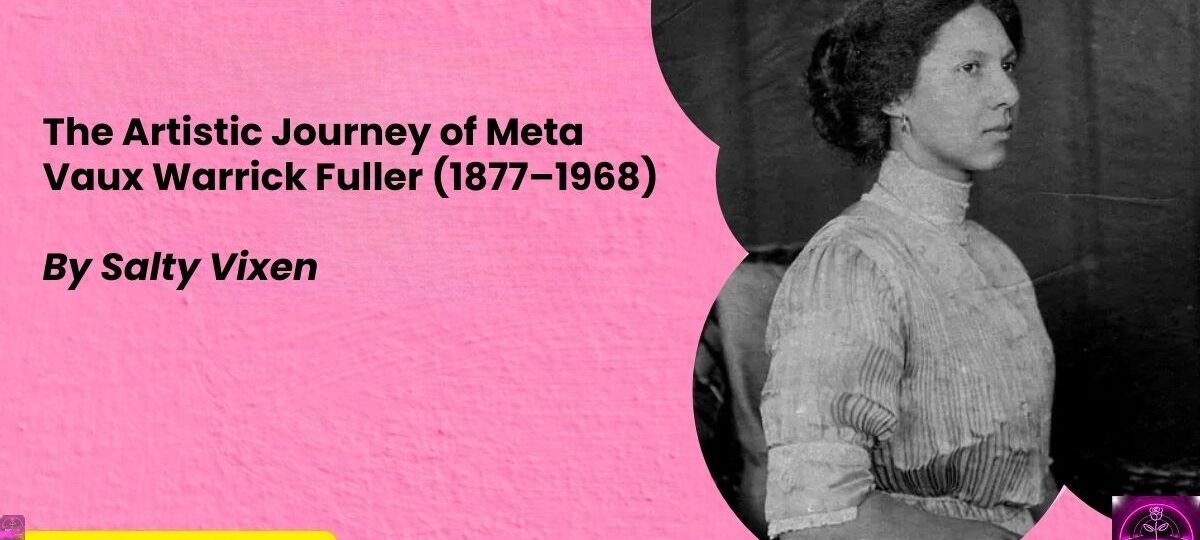
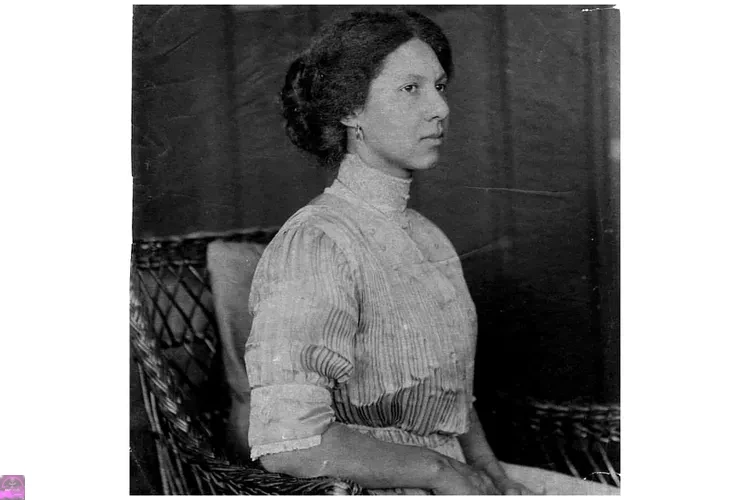
Meta Vaux Warrick Fuller was a groundbreaking sculptor whose work bridged the gap between classical European technique and the soul of the Harlem Renaissance. Despite facing the dual hurdles of racial and gender discrimination, she became one of the most influential Black artists in American history.
Early Life and Education in Philadelphia
Born on June 9, 1877, in Philadelphia, Meta was the daughter of Emma and William Warrick, successful entrepreneurs who ran a hair salon and barbershop. Her creative spark was ignited early by her father, who had a deep passion for sculpture and painting.
Her formal training began at J. Liberty Tadd’s art school. Her talent was undeniable; by 1893, her work was selected for the World’s Columbian Exposition. This achievement earned her a scholarship to the Pennsylvania Museum & School of Industrial Art, where she spent years honing her craft before graduating in 1898 with both a diploma and a teacher’s certificate.
The Paris Years: Finding a Mentor in Rodin
In 1899, Meta sought the artistic freedom of Paris. She studied under Raphaël Collin and received mentorship from the legendary painter Henry Ossawa Tanner. While balancing sketches at the École des Beaux-Arts and sculpture at the Académie Colarossi, she caught the attention of Auguste Rodin. Upon seeing her work, the master sculptor famously remarked, “My child, you are a sculptor; you have the sense of form in your fingers.”
During this time, she also met W.E.B. Du Bois, who challenged her to move beyond European classical subjects and begin incorporating Black themes and African identity into her art. By the time she left Paris in 1903, she was a celebrated figure in the city’s galleries, with powerful works like The Wretched and The Impenitent Thief earning acclaim at the Paris Salon.
Resilience in the Face of Adversity
Returning to the U.S. in 1903 proved challenging. The Philadelphia art community was far less welcoming than Paris, with critics dismissing her work as “domestic” or dismissing her entirely based on her race. Undeterred, Meta broke barriers by becoming the first Black woman artist to receive a U.S. government commission.
She channeled her energy into monumental projects:
1906: Created a series of dioramas for the Jamestown Tercentennial Exposition, depicting pivotal moments in Black history, from the 1619 arrival of enslaved Africans to the speeches of Frederick Douglass.
1910: Faced a devastating blow when a fire destroyed the majority of her previous paintings and sculptures.
The Awakening and Later Career
Following the fire, Meta spent a decade working from her home studio in Massachusetts while raising her family. While much of this period was dedicated to religious themes, she made a historic pivot in 1914 with “Ethiopia Awakening.“ This sculpture is now hailed as a foundational symbol of the Harlem Renaissance, capturing a sense of rising African consciousness.
Her career continued to flourish with exhibitions at the Pennsylvania Academy of Fine Arts (1920) and the Boston Public Library (1922), solidifying her status as a master of her craft.
Personal Life and Legacy
Meta married Dr. Solomon Carter Fuller in 1907. The couple settled in Framingham, Massachusetts, where they raised three sons. Meta continued to create until her passing on March 3, 1968, at Cardinal Cushing Hospital. Today, she is remembered not just as a sculptor, but as a visionary who carved a space for Black identity in the world of fine art.
