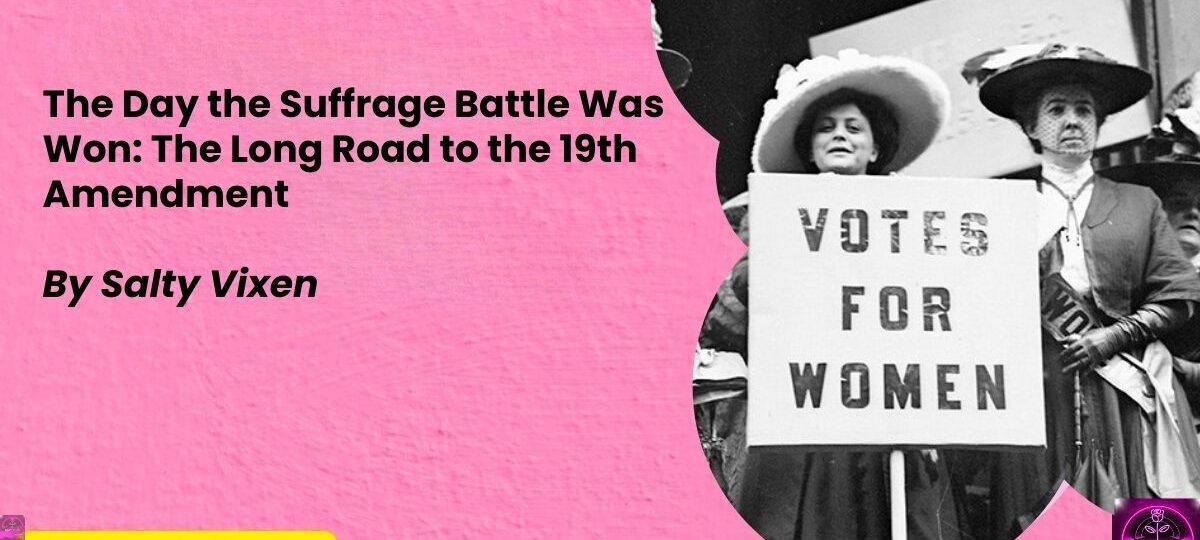
The Day the Suffrage Battle Was Won: The Long Road to the 19th Amendment
📖21 mins read
The struggle for women’s right to vote in the United States spanned more than seven decades, marked by tireless organizing, strategic debates, personal sacrifices, and moments of profound courage. It began in the mid-19th century amid broader reform movements and culminated in 1920 with the ratification of the 19th Amendment to the Constitution. The final, decisive act came not in a grand national hall but in the Tennessee state legislature, where a single young representative—swayed by his mother’s quiet urging—cast the vote that made history. This is the story of that day, August 18, 1920, and the long battle that led to it.
The Seeds of the Movement: Seneca Falls and the Early Years (1848–1890)
The organized push for women’s suffrage in America is traditionally dated to July 19–20, 1848, when the Seneca Falls Woman’s Rights Convention convened in upstate New York. Organized by Elizabeth Cady Stanton and Lucretia Mott, the gathering drew about 300 attendees, including 68 women and 32 men. The convention produced the Declaration of Sentiments, a document modeled on the Declaration of Independence, asserting that “all men and women are created equal” and listing grievances against “man” as a form of tyranny over women. Among the resolutions was a bold call for women’s suffrage—the right to vote—which proved the most controversial, even among attendees.
One young woman present was Charlotte Woodward, just nineteen years old at the time. A seamstress from Waterloo, New York, she signed the Declaration alongside Stanton, Mott, and others. Woodward’s presence at Seneca Falls would prove symbolic: she lived long enough to see the cause triumph. In November 1920, at age eighty-one (though some accounts say ninety), she became the only surviving signer to cast her ballot in a national election. Tragically, illness prevented her from voting in person on Election Day, but her story endures as a bridge between the movement’s hopeful beginning and its hard-won victory.
In the decades following Seneca Falls, suffrage advocates faced immense resistance. Women’s rights were intertwined with abolitionism, temperance, and labor reform, but progress was slow. The Civil War (1861–1865) diverted national attention, and the postwar Reconstruction Amendments—the 14th (1868, citizenship and equal protection) and 15th (1870, voting rights regardless of race)—granted Black men the franchise but explicitly excluded women. This omission caused deep divisions among reformers. Stanton and Susan B. Anthony, leaders of the National Woman Suffrage Association (NWSA, founded 1869), opposed the 15th Amendment for ignoring women and advocated a federal suffrage amendment. Lucy Stone and Henry Blackwell’s American Woman Suffrage Association (AWSA) pursued state-by-state campaigns, believing incremental wins would build momentum.
When and where did the women’s suffrage movement begin in the United States? ▼
The organized push for women’s suffrage in the United States is traditionally dated to July 19–20, 1848, when the Seneca Falls Woman’s Rights Convention convened in upstate New York. Organized by Elizabeth Cady Stanton and Lucretia Mott, it drew about 300 attendees and produced the Declaration of Sentiments — a document modeled on the Declaration of Independence asserting that “all men and women are created equal.” Among its resolutions was a bold call for women’s right to vote, which proved the most controversial demand of the convention.
What role did Alice Paul play in the suffrage movement? ▼
Alice Paul was a Quaker from New Jersey who brought militant tactics to the American suffrage movement after witnessing them in Britain. In 1913 she broke from NAWSA to form the Congressional Union for Woman Suffrage, later the National Woman’s Party. She led a massive suffrage parade of 8,000 women down Pennsylvania Avenue the day before Woodrow Wilson’s inauguration, organized the “Silent Sentinels” who picketed the White House daily beginning January 10, 1917, and endured arrest, imprisonment, and brutal force-feedings during a hunger strike — all to force direct pressure on the president and Congress.
How did the 19th Amendment get ratified? ▼
The U.S. House passed the amendment on May 21, 1919 (304–89) and the Senate followed on June 4, 1919 (56–25), sending it to the states for ratification. 36 of 48 states were required to ratify. Illinois, Wisconsin, and Michigan were first in June 1919. By summer 1920, 35 states had ratified and Tennessee was the decisive battleground. On August 18, 1920, 24-year-old Tennessee state representative Harry T. Burn changed his vote from “no” to “Aye” — swayed by a letter from his mother urging him to support suffrage — breaking a deadlock and giving the amendment its 36th and final ratification. Secretary of State Colby proclaimed it law on August 26, 1920.
Who was Harry T. Burn and why is he significant? ▼
Harry T. Burn was a 24-year-old Tennessee state representative from Niota — the youngest legislator in the chamber — who cast the deciding vote to ratify the 19th Amendment on August 18, 1920. He had previously voted against suffrage and wore a red rose, the anti-suffrage symbol. On that historic day, however, he carried a letter from his mother, Febb Ensminger Burn, who urged him: “Hurrah and vote for suffrage and don’t keep them in doubt… Don’t forget to be a good boy and help Mrs. Catt put the ‘rat’ in ratification.” When the roll call reached a deadlock, Burn changed his vote to “Aye,” breaking the tie 49–47 and making Tennessee the 36th state to ratify.
Did the 19th Amendment guarantee voting rights for all women? ▼
No. While the 19th Amendment was a landmark achievement, its victory was incomplete for many women. Black women across the South continued to face Jim Crow barriers — poll taxes, literacy tests, intimidation, and outright exclusion — that prevented them from exercising the vote the amendment promised. Native American and Asian American women faced additional layers of disenfranchisement and were excluded longer. The broader fight for full and equal voting rights for all women continued well beyond 1920, demonstrating that the ratification of the amendment was a crucial milestone but not the end of the struggle.
The split lasted two decades, diluting efforts until the groups merged in 1890 into the National American Woman Suffrage Association (NAWSA), with Anthony as its first president. By then, some Western territories and states had granted women limited or full voting rights. Wyoming Territory enfranchised women in 1869 (retaining it upon statehood in 1890), partly to attract female settlers. Utah followed in 1870 (revoked by Congress in 1887 amid anti-polygamy laws, restored 1896). Colorado (1893), Idaho (1896), and others built a Western stronghold, demonstrating that women’s votes improved education, labor laws, and public health without societal collapse.
These state victories were hard-fought, often requiring referendums where suffragists canvassed farms, factories, and mining towns. Yet the South and Northeast remained resistant, citing tradition, states’ rights, and fears that Black women voters would challenge white supremacy.
The Radical Turn: Alice Paul, the National Woman’s Party, and Confrontation (1910s)
By the 1910s, younger activists grew impatient with NAWSA’s moderate approach. Alice Paul, a Quaker from New Jersey who had experienced militant tactics in Britain’s suffrage movement, returned to the U.S. in 1910 and joined NAWSA’s Congressional Committee. Frustrated by slow progress, she broke away in 1913 to form the Congressional Union for Woman Suffrage (later the National Woman’s Party, NWP).
Paul’s strategy was bold and visual: direct pressure on President Woodrow Wilson and Congress. On March 3, 1913—the day before Wilson’s inauguration—she led a massive suffrage parade of 8,000 women down Pennsylvania Avenue. Half a million spectators watched, but violence erupted: crowds harassed marchers, police stood by, and over 200 were injured. The incident drew national sympathy and media coverage, highlighting women’s determination.
Paul escalated further. Beginning January 10, 1917, the NWP’s “Silent Sentinels” picketed the White House daily—rain, snow, or shine—holding banners quoting Wilson’s pro-democracy speeches abroad (“We fight for democracy”) while accusing him of hypocrisy at home. Banners read: “Mr. President, How Long Must Women Wait for Liberty?” and “Kaiser Wilson.”
Wilson initially ignored them. After U.S. entry into World War I in April 1917, authorities deemed the pickets disloyal. Arrests began June 1917 for “obstructing traffic.” Sentences escalated from fines to months in Occoquan Workhouse (Virginia) or D.C. Jail. In October 1917, Paul was arrested, sentenced to seven months, and began a hunger strike demanding political prisoner status. Authorities responded with brutal force-feedings—tubes shoved down throats—causing lasting harm to many, including Paul.
Thousands participated: ordinary housewives, teachers, students, even grandmothers. Family legends abound; one recounts women chaining themselves to courthouse doors in Minneapolis. The “Night of Terror” on November 15, 1917, saw guards beat and abuse prisoners. Public outrage grew, pressuring Wilson.
Meanwhile, NAWSA under Carrie Chapman Catt pursued a “Winning Plan”: state campaigns to build pressure for a federal amendment, combined with wartime loyalty. Women filled factories, sold bonds, conserved food, and nursed soldiers—proving their citizenship. Catt reminded Wilson and Congress that women’s sacrifices deserved political equality.
Wilson, initially opposed (citing states’ rights), shifted. In a September 30, 1918, address to the Senate, he declared: “We have made partners of the women in this war. Shall we admit them only to a partnership of suffering and sacrifice and toil and not to a partnership of right?” The House passed the amendment May 21, 1919 (304–89); the Senate followed June 4 (56–25), sending it to the states.
Ratification: The Battle for the 36th State (1919–1920)
Ratification required 36 of 48 states. Illinois, Wisconsin, and Michigan ratified first (June 1919). Southern states like Georgia and Alabama rejected quickly. By summer 1920, 35 states had ratified; Tennessee remained.
Anti-suffrage forces—well-funded, organized, including men and women—mobilized. They argued women didn’t want the vote, were unfit, or it would disrupt homes and invite “socialism.” Pro-suffrage advocates flooded Nashville. Hotels overflowed; lobbyists worked corridors.
On August 18, 1920, the Tennessee House voted. The Senate had already approved. A tie seemed likely. Harry T. Burn, 24, youngest legislator from Niota, had voted anti-suffrage earlier, wearing a red rose (anti symbol). Pro-suffragists wore yellow roses.
Burn carried a seven-page letter from his mother, Febb Ensminger Burn, a widow who read newspapers avidly and supported suffrage. Amid family gossip, the last page urged: “Hurrah and vote for suffrage and don’t keep them in doubt… Don’t forget to be a good boy and help Mrs. Catt put the ‘rat’ in ratification. Ha! With lots of love, Mama.”
As the roll call reached him, the vote was deadlocked. Burn changed his vote to “Aye,” breaking the tie (49–47). Tennessee ratified. Antis tried parliamentary delays and vote-switching, but failed. Governor Roberts certified it; Secretary of State Colby proclaimed the 19th Amendment law on August 26, 1920.
Women voted that November, including in the presidential election.
The Legacy: A Victory Built on Generations
The 19th Amendment—”The right of citizens… to vote shall not be denied… on account of sex”—was a triumph of persistence. From Seneca Falls to Nashville, from Charlotte Woodward’s hope to Harry Burn’s mother’s letter, it showed women’s strength: enduring, strategic, intergenerational.
Yet ratification was incomplete. Black women faced Jim Crow barriers; Native American and Asian American women were disenfranchised longer. The fight continued.
Still, on that August day in 1920, the suffrage battle was won—not by force, but by one young man’s decision to heed his mother’s voice. In that act, the long arc bent toward justice.
Citations ▼
“19th Amendment”. LII / Legal Information Institute. Retrieved May 24, 2019.
“1st Amendment”. Legal Information Institute, Cornell University School of Law. Retrieved May 31, 2019.
Nenadic, Susan L. (May 2019). “Votes for Women: Suffrage in Michigan”. Michigan History. 103 (3). Lansing, Michigan: Historical Society of Michigan: 18.
Keyssar, Alexander (2000). The Right to Vote: The Contested History of Democracy in the United States. New York: Basic Books. p. 173.
United States Senate (1865). Petition for Universal Suffrage which Asks for an Amendment to the Constitution that Shall Prohibit the Several States from Disenfranchising Any of Their Citizens on the Ground of Sex. National Archives and Records Administration. Retrieved July 29, 2016.
“Universal Suffrage”. National Archives. August 15, 2016. Retrieved May 21, 2019.
Banaszak 1996, pp. 5–6.
Banaszak 1996, pp. 6–7.
Mintz, Steven (July 2007). “The Passage of the Nineteenth Amendment”. OAH Magazine of History. 21 (3). Organization of American Historians: 47.
“14th Amendment”. Legal Information Institute, Cornell University School of Law. Retrieved May 31, 2019.
Banaszak 1996, p. 8.
Mead 2004, pp. 35–38.
83 U.S. 130 (1873)
Baker 2009, p. 3.
88 U.S. 162 (1874)
Woloch 1984, p. 333.
Myres, Sandra L. (1982). Westering Women and the Frontier Experience. Albuquerque: University of New Mexico Press. pp. 227–30. ISBN 9780826306258.
Mead 2004, p. 38.
Amar 2005, pp. 421.
Kobach, Kris (May 1994). “Woman suffrage and the Nineteenth Amendment”. University of Missouri–Kansas City School of Law.
United States House of Representatives (April 30, 1888). House Joint Resolution 159, Proposing an Amendment to the Constitution to Extend the Right to Vote to Widows and Spinsters who are Property Holders. National Archives and Records Administration. Retrieved July 25, 2016.
“The Black Church”. The Black Suffragist. Archived from the original on June 6, 2019. Retrieved June 6, 2019.
Terborg-Penn, Rosalyn (1998). African American Women in the Struggle for the Vote, 1850–1920. Indiana University Press. ISBN 9780253211767.
Goodier, S.; Pastorello, K. (2017). “A Fundamental Component: Suffrage for African American Women”. Women Will Vote: Winning Suffrage in New York State. Cornell University Press. pp. 71–91.
Lichtman, Allan J. (2018). The Embattled Vote in America: From the Founding to the Present. Cambridge, MA: Harvard University Press. p. 120. ISBN 9780674972360.
Weiss, Elaine (2018). The Woman’s Hour: The Great Fight to Win the Vote. Penguin Books. ISBN 9780143128991.
Cooney, Robert P. J. Jr. (2005). Winning the Vote: the Triumph of the American Woman Suffrage Movement. Santa Cruz, CA: American Graphic Press. pp. 408–427. ISBN 978-0977009503.
Jones, Robert B.; Byrnes, Mark E. (Fall 2009). “The ‘Bitterest Fight’: The Tennessee General Assembly and the Nineteenth Amendment”. Tennessee Historical Quarterly. 68 (3): 270–295.
Goodstein, A. (1998). “A Rare Alliance: African American and White Women in the Tennessee Elections of 1919 and 1920”. The Journal of Southern History. 64 (2): 219–46.
Van West 1998.
Hakim 1995, pp. 29–33.
Monroe, Judy (1998). The Nineteenth Amendment: Women’s Right to Vote. Berkeley Heights, NJ: Ensloe Publishers, Inc. pp. 77. ISBN 978-0-89490-922-1.
Morris, Mildred (August 19, 1920). “Tennessee Fails to Reconsider Suffrage Vote — Fight for All Rights Still Facing Women”. The Washington Times. p. 1.
Mount, Steve (January 2007). “Ratification of Constitutional Amendments”. Retrieved February 24, 2007.
“Claim Wisconsin First to O.K. Suffrage”. Milwaukee Journal. November 2, 1919. Retrieved November 16, 2010.
“Two States Ratify Votes for Women”. The Ottawa Herald. Ottawa, Kansas. June 10, 1919. p. 1.
“Wisconsin O.K.’s Suffrage; Illinois First”. The Capital Times. Madison, Wisconsin. June 10, 1919. p. 1.
Harper, Ida Husted, ed. (1922). History of Woman Suffrage. Vol. 6: 1900–1920. Rochester, New York: J. J. Little & Ives Company. p. 164.
“Michigan Third to Put O.K. on Suffrage Act”. The Detroit Free Press. June 10, 1919. p. 1.
“State Ratifies Equal Suffrage; Few Women Present as Measure Passes”. Lansing State Journal. June 11, 1919. p. 1.
“Suffrage is Ratified”. The Independence Daily Reporter. Independence, Kansas. June 16, 1919. p. 1.
“Assembly to O. K. Suffrage with Dispatch”. The Dayton Daily News. June 16, 1919. p. 9.
“Ohio Legislature Favors Suffrage”. The Fremont Daily Messenger. June 17, 1919. p. 1.
Weatherford 1998, p. 231.
“Women Suffrage Amendment Wins in Legislature”. The New York Times. June 17, 1919. p. 1.
Weatherford 1998, p. 232.
“Utah Ratifies the Suffrage Amendment”. The Ogden Standard. September 30, 1919. p. 6.
Weatherford 1998, pp. 231–233.
“House Resolution 5, Enacted 01/07/2020: Joyously Celebrating the 100th Anniversary of Rhode Island’s Ratification of the 19th Amendment”. House of Representatives of the State of Rhode Island. Retrieved September 14, 2020.
Conkright, Bessie Taul (January 7, 1920). “Women Hold Jubilee Meet”. Lexington Leader. Retrieved September 14, 2020.
Morgan, Anita (2019). “‘An Act of Tardy Justice’: The Story of Women’s Suffrage in Indiana”. Indiana Women’s Suffrage Centennial. Retrieved May 14, 2019.
Weatherford 1998, pp. 232–233.
Weatherford 1998, p. 233.
Weatherford 1998, p. 237.
Weatherford 1998, pp. 237–238.
Weatherford 1998, p. 238.
Weatherford 1998, pp. 242–243.
Monroe, Judy. The Nineteenth Amendment: Women’s Right to Vote. Berkeley Heights, NJ: Ensloe Publishers, Inc. p. 75.
Hine, Darlene Clark; Farnham, Christie Anne (1997). “Black Women’s Culture of Resistance and the Right to Vote”. In Farnham, Christie Anne (ed.). Women of the American South: A Multicultural Reader. New York: NYU Press. pp. 204–219. ISBN 9780814726549.
“House Beats Suffrage by 62 to 22 Vote”. The Portsmouth Star. February 12, 1920. p. 1.
“The Suffrage Amendment”. Lenoir News-Topic. February 12, 1920. p. 2.
“Ratification of the Nineteenth Amendment by the Florida Legislature, 1969”. Institute of Museum and Library Services.
258 U.S. 130 (1922)
Anzalone 2002, p. 17.
Bronson, Minnie (November 6, 1920). “Maryland League for State Defense Starts Great Suit”. The Woman Patriot. Vol. 4, no. 45. p. 2.
“Leser v. Garnett page 217” (PDF). Independence Institute. October 1921.
“258 U.S. 130—Leser v. Garnett”. OpenJurist. Retrieved February 7, 2011.
Lemons, J. Stanley (1969). “The Sheppard-Towner Act: Progressivism in the 1920s”. The Journal of American History. 55 (4): 776–786.
Baker 2009, p. 43.
Harvey, Anna L. (July 13, 1998). Votes Without Leverage: Women in American Electoral Politics, 1920–1970. Cambridge University Press. p. 157. ISBN 9780521597432.
Moses & Hartmann 1995, pp. xx–xxi.
Harvey, Anna L. (July 13, 1998). Votes Without Leverage: Women in American Electoral Politics, 1920–1970. Cambridge University Press. pp. 10, 210. ISBN 9780521597432.
“THE GENDER GAP, Voting Choices In Presidential Elections; Fact Sheet” (PDF). Center for American Women and Politics (CAWP), Eagleton Institute of Politics, Rutgers University. 2017.
Contreras, Russell (November 1, 2018). “How the Native American Vote Evolved”. Great Falls Tribune. Retrieved May 24, 2019.
Williams, Sherri. “Women’s Equality Day celebrates the 19th Amendment. For nonwhite women, the fight to vote continued for decades”. The Washington Post. Retrieved May 24, 2019.
Oxford, Andrew (August 2, 2018). “It’s been 70 years since court ruled Native Americans could vote in New Mexico”. Santa Fe New Mexican. Retrieved June 5, 2019.
McCammon, H. et al. (2008). “Becoming Full Citizens: The U.S. Women’s Jury Rights Campaigns, the Pace of Reform, and Strategic Adaptation”. American Journal of Sociology. 113 (4): 1104–1147.
Brown, J. (1993). “The Nineteenth Amendment and Women’s Equality”. The Yale Law Journal. 102 (8): 2175–2204.
Henning, Arthur Sears (September 26, 1921). “WOMAN’S PARTY ALL READY FOR EQUALITY FIGHT”. The Baltimore Sun. p. 1.
“The Proposed Equal Rights Amendment: Contemporary Ratification Issues”. EveryCRSReport.com. July 18, 2018. Retrieved September 22, 2019.
Cott, Nancy (1984). “Feminist Politics in the 1920s: The National Woman’s Party”. Journal of American History. 71 (1): 43–68.
Dollinger, Genora Johnson (1997). “Women and Labor Militancy”. In Ware, Susan (ed.). Modern American Women: A Documentary History. McGraw-Hill. pp. 125–126. ISBN 0-07-071527-0.
“Conversations with Alice Paul: Woman Suffrage and the Equal Rights Amendment”. cdlib.org. Suffragists Oral History Project.
Harrison, Cynthia Ellen (1989). On Account of Sex: The Politics of Women’s Issues, 1945–1968. University of California Press. pp. 31–32. ISBN 9780520909304.
Rick Pearson; Bill Lukitsch (May 31, 2018). “Illinois approves Equal Rights Amendment, 36 years after deadline”. Chicago Tribune.
“Bid to revive Equal Rights Amendment in Virginia fails by 1 vote”. WHSV. February 21, 2019. Retrieved September 22, 2019.
Gross, Samantha J. (August 26, 2019). “99 years ago Florida led in women’s suffrage. Are equal rights still a priority?”. Miami Herald. Retrieved September 22, 2019.
Goolsby, Denise (September 19, 2016). “No room for fourth bust on suffragist statue?”. Desert Sun.
Ellison, Sarah (January 27, 2020). “New media outlet covering the intersection of women and politics launches as 2020 election kicks off”. The Washington Post.
The 19th. “Introducing The 19th: A Nonprofit, Nonpartisan Newsroom To Inform, Engage And Empower America’s Women” (Press release). PR Newswire. Retrieved January 30, 2020.
“Dolly Parton Hopes to ‘Uplift Women’ in New Song That Highlights 19th Amendment”. Nash Country Daily. September 18, 2018. Retrieved November 12, 2018.
“SECONDARY SOURCE—One Woman, One Vote: A PBS Documentary”. Women’s Suffrage and the Media.
Leab, Amber (November 4, 2008). “‘One Woman, One Vote’: A Documentary Review”. Bitch Flicks.
Amar, Akhil Reed (2005). America’s Constitution: A Biography. Random House. ISBN 978-0-8129-7272-6.
Anzalone, Christopher A (2002). Supreme Court Cases on Gender and Sexual Equality, 1787–2001. Sharpe. ISBN 978-0-7656-0683-9.
Baker, Jean H. (2009). Women and the U.S. Constitution, 1776–1920. American Historical Association. ISBN 9780872291638.
Banaszak, Lee A. (1996). Why Movements Succeed or Fail: Opportunity, Culture, and the Struggle for Woman Suffrage. Princeton University Press. ISBN 978-1-4008-2207-2.
DuBois, Ellen Carol, et al. “Interchange: Women’s Suffrage, the Nineteenth Amendment, and the Right to Vote”. Journal of American History 106.3 (2019): 662–694.
Dumenil, Lynn (1995). The Modern Temper: American Culture and Society in the 1920s. Hill and Wang. ISBN 978-0-8090-6978-1.
Gidlow, Liette. “The Sequel: The Fifteenth Amendment, the Nineteenth Amendment, and Southern Black Women’s Struggle to Vote”. Journal of the Gilded Age and Progressive Era 17.3 (2018): 433–449.
Hakim, Joy (1995). A History of US, Book 9: War, Peace, and All That Jazz. Oxford University Press. ISBN 978-0-19-509514-2.
Hasen, Richard L., and Leah Litman. “Thin and Thick Conceptions of the Nineteenth Amendment Right to Vote and Congress’s Power to Enforce It”. Georgetown Law Journal (2020): 2019–63.
McCammon, Holly J., and Lee Ann Banaszak, eds. 100 Years of the Nineteenth Amendment: An Appraisal of Women’s Political Activism. Oxford University Press, 2018.
Mead, Rebecca J. (2004). How the Vote Was Won: Woman Suffrage in the Western United States, 1868–1914. NYU Press. ISBN 978-0-8147-5676-8.
Monopoli, Paula A. (2020). Constitutional Orphan: Gender Equality and the Nineteenth Amendment. Oxford University Press. ISBN 978-0-190-09280-1.
Moses, Claire Goldberg; Hartmann, Heidi I. (1995). U.S. Women in Struggle: A Feminist Studies Anthology. University of Illinois Press. ISBN 978-0-252-02166-4.
Teele, Dawn Langan. Forging the Franchise: The Political Origins of the Women’s Vote (2018).
Van West, Carroll, ed. (1998). “Woman Suffrage Movement”. Tennessee Encyclopedia of History and Culture. Thomas Nelson. ISBN 1558535993.
Weatherford, Doris (1998). A History of the American Suffragist Movement. Santa Barbara, CA: ABC-CLIO. ISBN 9781576070659.
Woloch, Nancy (1984). Women and the American Experience. New York: Knopf. ISBN 9780394535159.
All content on saltyvixenstories.com is fully copyrighted. Do not use, copy, or distribute.
Manage Cookie Consent
To provide the best experiences, we use technologies like cookies to store and/or access device information. Consenting to these technologies will allow us to process data such as browsing behavior or unique IDs on this site. Not consenting or withdrawing consent, may adversely affect certain features and functions.
Functional Always active
The technical storage or access is strictly necessary for the legitimate purpose of enabling the use of a specific service explicitly requested by the subscriber or user, or for the sole purpose of carrying out the transmission of a communication over an electronic communications network.
Preferences
The technical storage or access is necessary for the legitimate purpose of storing preferences that are not requested by the subscriber or user.
Statistics
The technical storage or access that is used exclusively for statistical purposes.The technical storage or access that is used exclusively for anonymous statistical purposes. Without a subpoena, voluntary compliance on the part of your Internet Service Provider, or additional records from a third party, information stored or retrieved for this purpose alone cannot usually be used to identify you.
Marketing
The technical storage or access is required to create user profiles to send advertising, or to track the user on a website or across several websites for similar marketing purposes.