

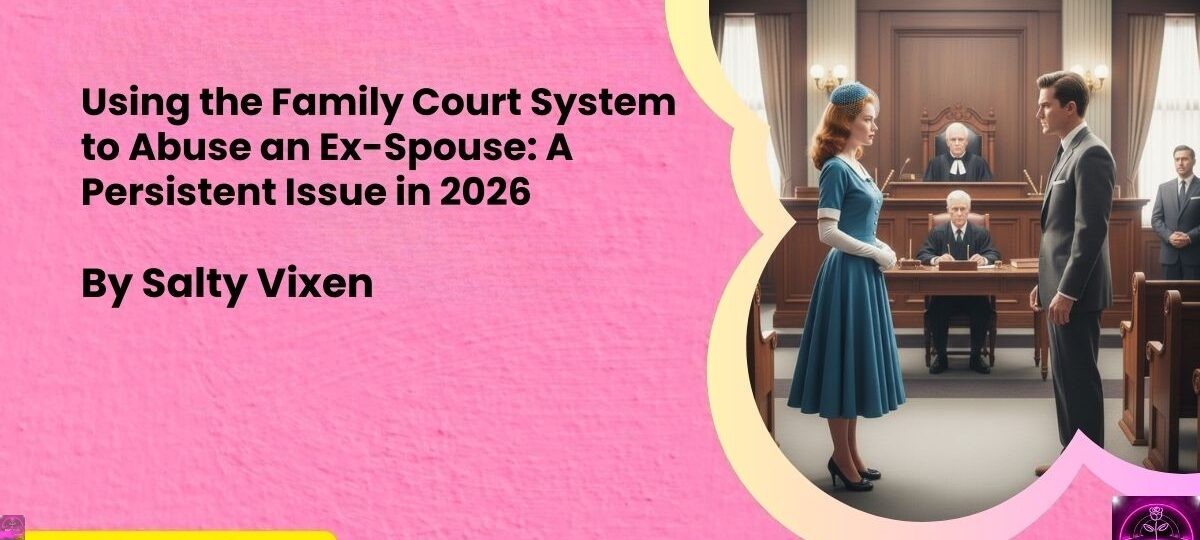
Using the Family Court System to Abuse an Ex-Spouse: A Persistent Issue in 2026
When legal process becomes a weapon — and control doesn’t end with separation.
In 2026, approximately 95% of separations, divorces, and custody matters resolve outside of court through negotiation, mediation, or agreement. The remaining 5% account for a disproportionate amount of court congestion, emotional damage, and financial harm. These cases are rarely about unresolved legal questions — they are about control.
This pattern is increasingly recognized as legal abuse or systems abuse: the use of courts, filings, and procedural threats to continue coercive control after a relationship ends.
What Legal Abuse Looks Like in Practice
Common Tactics Used by Abusive Litigants
- Filing repeated or improper motions that do not legally apply to the situation
- Threatening eviction or removal from property despite shared ownership
- Withholding child support while claiming “financial fairness”
- Using custody filings as retaliation rather than child-centered concern
- Demanding compliance while ignoring existing legal obligations
- Over-documenting, recording, or interrogating children to create leverage
Why Common-Law and Non-Marital Cases Are Especially Vulnerable
Legal abuse is not limited to divorced couples. It is particularly common in non-marital, common-law-adjacent, or long-term co-parenting situations where one party assumes authority they do not legally hold.
In these cases, an abusive party may:
- Assume financial control substitutes for legal authority
- Misrepresent shared property as personal property
- File custody modifications when no custody order exists
- Conflate voluntary payments with court-ordered support
- Use legal threats to intimidate rather than resolve
The Psychological Impact on Survivors and Children
Survivors subjected to ongoing legal abuse often report symptoms consistent with chronic stress and trauma:
- Hypervigilance and anxiety surrounding mail, emails, or filings
- Financial instability caused by withheld support
- Fear of retaliation for asserting legal rights
- Emotional exhaustion from repeated procedural battles
- Children experiencing stress, loyalty conflicts, or fear of punishment
Children, especially adolescents, are not oblivious. Many recognize coercion and manipulation when it occurs, even when it is framed as “legal action.” Courts increasingly acknowledge the weight of a mature child’s voice.
Why Retaliatory Litigation Backfires
While legal abuse may feel powerful in the short term, it often weakens the abuser’s position over time. Courts, mediators, and administrators track patterns — not just filings.
Patterns Courts Notice
- Escalation following loss of financial or emotional control
- Filings inconsistent with actual law
- Disregard for a child’s stability or well-being
- Attempts to punish rather than resolve
- Resistance to administrative solutions
Over time, this behavior undermines credibility and shifts scrutiny toward the party abusing the process — not the one seeking stability.
What Survivors Can Do in 2026
- Document patterns, not just incidents
- Use administrative remedies where available
- Respond factually and minimally to filings
- Seek legal aid experienced in domestic violence dynamics
- Prioritize child-centered language and evidence
- Build emotional and logistical support outside the court system
