Founder & CEO of saltyvixenstories.com
When people find out I run a digital platform dedicated to steamy romance stories, I usually get one of two reactions: a raised eyebrow with a nervous chuckle, or a lean-in curiosity followed by, “Wait… can you actually make money doing that?”
The answer is a resounding yes. But getting here wasn’t a clean, linear journey filled with color-coded spreadsheets and quiet, cozy writing sessions. It was messy, chaotic, hilarious, and at times, deeply personal.
I’ve been publishing in this industry since 1997. I’ve watched the world shift from traditional paperbacks, queries, and mail-in manuscripts to the rise of digital publishing, and now to direct-to-consumer websites. Starting my own platform, stepping into the CEO shoes, and building a brand in the modern romance space taught me more about business, human psychology, and self-worth than any traditional publishing contract ever could.
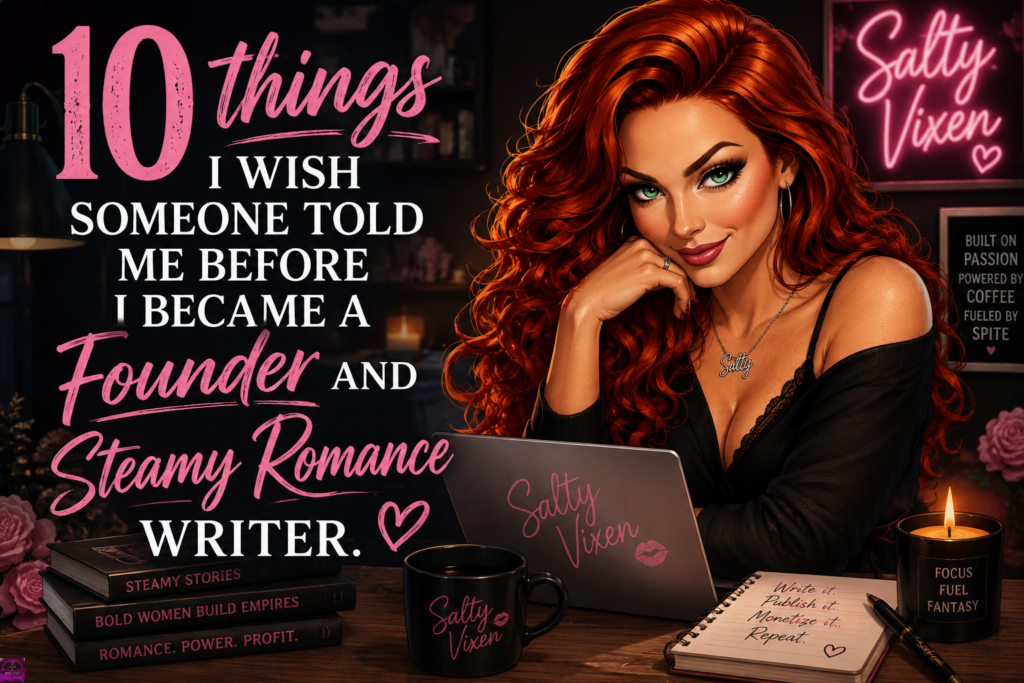
If I could travel back in time to the moment I first decided to take full control of my creative destiny, here are the 10 raw, unfiltered truths I wish someone had handed to me on day one.
1. Do Not Give a Fuck What Other People Think
Let’s start with the big one. If you are going to put your work, your business, or your passions out into the world — especially in a niche like romance — you have to shed the need for external approval.
To be totally honest, my very pen name was born out of spite.
A while back, I was dealing with an absolute asshole who swore up and down he was single. Plot twist: he was very much married. I was furious, embarrassed, and hurt. But instead of letting that lie define me, I took a piece of that experience, turned it into my pen name, and decided to build an entire empire on top of it.
I got over the guy pretty quickly, but the name stuck. And you know what? It became my armor.
When you first launch a venture — especially one revolving around “steamy” or adult content — people in your life will have opinions. Relatives might whisper. Acquaintances might scoff. Keyboard warriors might leave weird comments.
Here is the truth: The people judging you aren’t paying your bills. They aren’t staying up until 2:00 AM tweaking CSS code on a website, and they aren’t building a community of loyal readers. Own your story, own your brand, and turn the noise into fuel.
“The people judging your grind aren’t the ones funding your freedom. Turn the noise into your brand.”
2. “Erotica” Isn’t Dead — It Just Got a Massive Rebrand
Having been in the publishing ecosystem since 1997, I can tell you that the transformation of adult romance is nothing short of extraordinary.
Back in the late ’90s and early 2000s, spicy fiction was heavily compartmentalized. It was either hidden behind dark-colored covers, tucked away in the back corners of old bookstores, or heavily policed by traditional publishing houses that held total power over what was “acceptable.”
Fast forward to today, and the industry has undergone a complete cultural evolution. What used to be lumped together under the dusty blanket term “erotica” has been rebranded, refined, and launched straight into the mainstream pop-culture zeitgeist.
Today, the market speaks a totally different language:
- Steamy Romance: Emotional, character-driven love stories with high heat and zero apologies.
- Dark Romance: Taboo themes, intense angst, and morally gray heroes that dominate bestseller lists worldwide.
- Romantasy: High-stakes fantasy worlds packed with intense romantic tension.
This isn’t an underground secret anymore. It’s a multi-billion-dollar juggernaut driven by millions of readers who proudly share their favorite books on TikTok and Instagram. Understanding this shift in terminology was crucial for my website — it changed how I tagged my content, how I spoke to my audience, and how I positioned my brand in the modern market.
3. Yes, You Can Make Real Money as a Steamy Romance Writer
There is a pervasive myth out there called the “Starving Artist.” People love to assume that if you write fiction — especially romance — it’s just a fun little hobby that pays in pennies.
Let me set the record straight: Steamy romance is one of the most lucrative genres in the entire publishing and digital media world.
Romance readers are unlike any other consumer group on the internet. They are ferocious, loyal, and fast. They don’t read one book a month; they devour three books a week. They crave bingeable content, and when they find an author or a platform they trust, they stay.
Whether through direct site monetization, ad revenue, sponsorships, exclusive memberships, or merchandise, being the CEO of a romance platform can be a full-fledged, highly profitable business. Stop treating your creative work like a side-gig and start treating it like the media company it actually is.
4. Social Media Gives You SEO and Reach — It Does Not Guarantee Sales
When I first started expanding my online footprint, I fell into the same trap every beginner falls into: I thought going viral on social media was the magic key to instant wealth.
I quickly learned the hard truth about social media marketing: Followers do not automatically equal customers.
Social media platforms like TikTok, Instagram, and Pinterest are fantastic for:
- Building brand awareness and social proof.
- Creating a recognizable name across the web.
- Driving search volume and backlink authority (SEO).
- Testing what kind of tropes or teasers grab people’s attention.
However, social media algorithms are rented land. You don’t own your followers. A video can get 100,000 views, but if those viewers don’t take the action to click through to your platform, sign up for your ecosystem, or engage with your core content, those views mean very little.
Social media is the digital billboard on the highway. Your website is the destination. Never confuse traffic with long-term brand conversion.
5. Why Direct Site Publishing Beats Amazon KDP (And Why I Dropped Selling eBooks)
This was easily the scariest business decision I ever made, but it completely transformed my business model: I stopped selling eBooks through third-party retailers like Amazon KDP and kept my stories published directly on my own website.
When digital self-publishing blew up, platforms like Amazon KDP were hailed as the ultimate equalizer. But over the years, the reality of selling on KDP has turned into a nightmare for thousands of authors.
Let’s talk about the elephant in the room: KDP’s automated termination bots.
Every single day, authors wake up to horror stories of their KDP accounts being randomly suspended or terminated with zero warning, zero human explanation, and no realistic appeal process. An automated algorithm flags a keyword, misinterprets a cover, or falsely flags an account — and suddenly your entire catalog, your income, your customer base, and your pending royalties are wiped out overnight.
Building your entire business on Amazon KDP is like building a multi-million dollar house on land you don’t own, owned by a landlord who can kick you out and keep your furniture because an automated bot made a mistake.
By moving my stories directly to my own website and making them free and seamless to read, a few incredible things happened:
- Total Asset Ownership: No algorithm or third-party retailer can ban my website, delete my catalog, or withhold my hard-earned income.
- Zero Reader Friction: Readers don’t have to deal with Kindle formatting issues or credit card forms — they just click, read, and enjoy.
- Massive Web Traffic: Organic search traffic exploded because all that rich, text-heavy story content lives directly on my domain name.
- Flexible Monetization: Instead of relying on a tiny commission per eBook download, my website functions as a media hub monetized via premium ad networks, VIP reader memberships, brand partnerships, and direct reader support.
Own your platform. Never leave your livelihood in the hands of a company that views authors as disposable assets.
6. The Publishing Industry Transformed — And Direct Access Won
Starting out in 1997, I lived through the old era of publishing. Back then, you were completely at the mercy of traditional gatekeepers:
- Literary agents reading slush piles.
- Publishing houses deciding if your story was “marketable.”
- Retail bookstores deciding how many copies to place on shelves.
If a gatekeeper said “no,” your book was dead. End of story.
The rise of the internet dismantled that entire gatekeeper model. Today, the power sits entirely between the creator and the reader. You do not need an agent to approve your hook. You do not need an editor at a legacy publishing house to give you permission to publish.
Publishing directly on your website gives you real-time feedback, instant distribution, and direct access to your audience. The authors who thrive today aren’t the ones waiting to be picked — they are the ones who pick themselves.
7. Being the “Founder” Means Wearing Every Single Hat Until You Can Delegate
When you start a digital publishing site, you quickly realize that writing the content is only about 20% of the job.
To be the Founder and CEO of a platform, you have to temporarily become:
- The CTO: Fixing broken site links, optimizing page load speeds, and organizing site layout.
- The CMO: Writing copy, designing teaser graphics, and planning content calendars.
- The CFO: Tracking site expenses, managing ad revenue payouts, and budgeting for growth.
- The Editor: Proofreading, formatting, and polishing every piece of work before it goes live.
Early on, it’s easy to feel overwhelmed by the sheer weight of all these roles. But going through this fire is what actually makes you a real leader. Once you understand how every cog in your business machine turns, you gain total clarity on how to run it efficiently — and eventually, how to hire the right team to take those tasks off your plate.
8. Tropes Are Your Best Marketing Asset — Learn Them, Love Them, Use Them
In mainstream business, people talk about “unique selling propositions” (USPs). In the steamy romance world, we talk about tropes.
Romance readers don’t browse websites looking for vague literary descriptions. They look for specific emotional experiences and story dynamics. They want to know exactly what kind of ride they are getting onto.
Understanding how to classify and present my stories based on popular tropes was a turning point for site engagement:
- Enemies to Lovers
- Fake Relationship / Forced Proximity
- Billionaire / Boss-Employee
- Grumpy x Sunshine
- Morally Gray Protagonists
When you organize your website and story landing pages around these clear categories, you make it effortlessly easy for readers to find their personal reading addictions. Speak your audience’s language, and they will keep coming back for more.
9. Community Beats Audience Every Single Time
An audience passively consumes your content and forgets about it ten minutes later. A community champions your brand, shares your link with their friends, and checks your website every single morning to see if you’ve posted anything new.
Since launching my site, I’ve focused on making my platform feel like an inclusive, welcoming, and fun space for romance lovers.
I didn’t want my site to feel like a cold corporate directory; I wanted it to feel like the ultimate digital hideaway where readers could escape the stress of daily life and indulge in guilt-free romance.
Engage with your readers in the comment sections. Listen to their feedback. Run polls asking them what kinds of characters or settings they want to see next. When readers feel like they are part of the journey, they stop being casual site visitors and become lifelong brand advocates.
10. You Are the CEO — Act Like It
For decades, women and independent creators in the creative space have been conditioned to shy away from claiming powerful titles. We tend to say things like, “Oh, I just run a small story blog,” or “I’m just an indie author.”
Stop minimizing what you are building.
If you built the platform, designed the ecosystem, publish the work, and make the strategic growth decisions, you are not “just” a blogger. You are the Founder and CEO.
Claiming that title internally changes your entire mindset:
- You stop making reactive, emotional decisions and start making strategic, long-term business moves.
- You stop asking for permission from platforms or gatekeepers and start setting the standard for your own brand.
- You look at your website not just as a collection of pages, but as digital real estate that holds massive long-term value.
When you take yourself and your platform seriously, the rest of the industry has no choice but to follow suit.
Final Thoughts: The Kingdom You Build Out of Bricks Thrown at You
Looking back on my publishing journey — from starting out in 1997 to converting a pettiness-fueled pen name into a thriving, independent digital platform — I wouldn’t change a single thing.
Every obstacle, every untrustworthy person, every technical headache, and every shift in the publishing landscape was just another lesson in building resilience. The romance genre is vibrant, wildly profitable, and deeply empowering. It allows us to build creative freedom on our own terms, completely independent of legacy publishers or unpredictable algorithms.
So if you’re sitting on an idea for a website, a brand, or a creative venture — stop waiting for the “right time” or the approval of people who don’t see your vision.
Build the platform. Claim your title as CEO. Publish your stories on your own turf. And never, ever apologize for turning your passion into your power.
If you’re ready to dive into unapologetic, high-heat fiction, come visit us at Saltyvixenstories.com Your next favorite steamy escape is waiting.

This is an original creative work by Salty Vixen. This story/article, including its characters, plot, and descriptive content, is protected by copyright law. Unauthorized copying, sharing, reposting, or reproduction in any format is strictly prohibited. This content may not be used for AI training, data scraping, machine learning, or any form of artificial intelligence development without explicit written permission from © 2026 Salty Vixen Stories, Inc. — All rights reserved.. Violators will be pursued to the fullest extent of the law.
