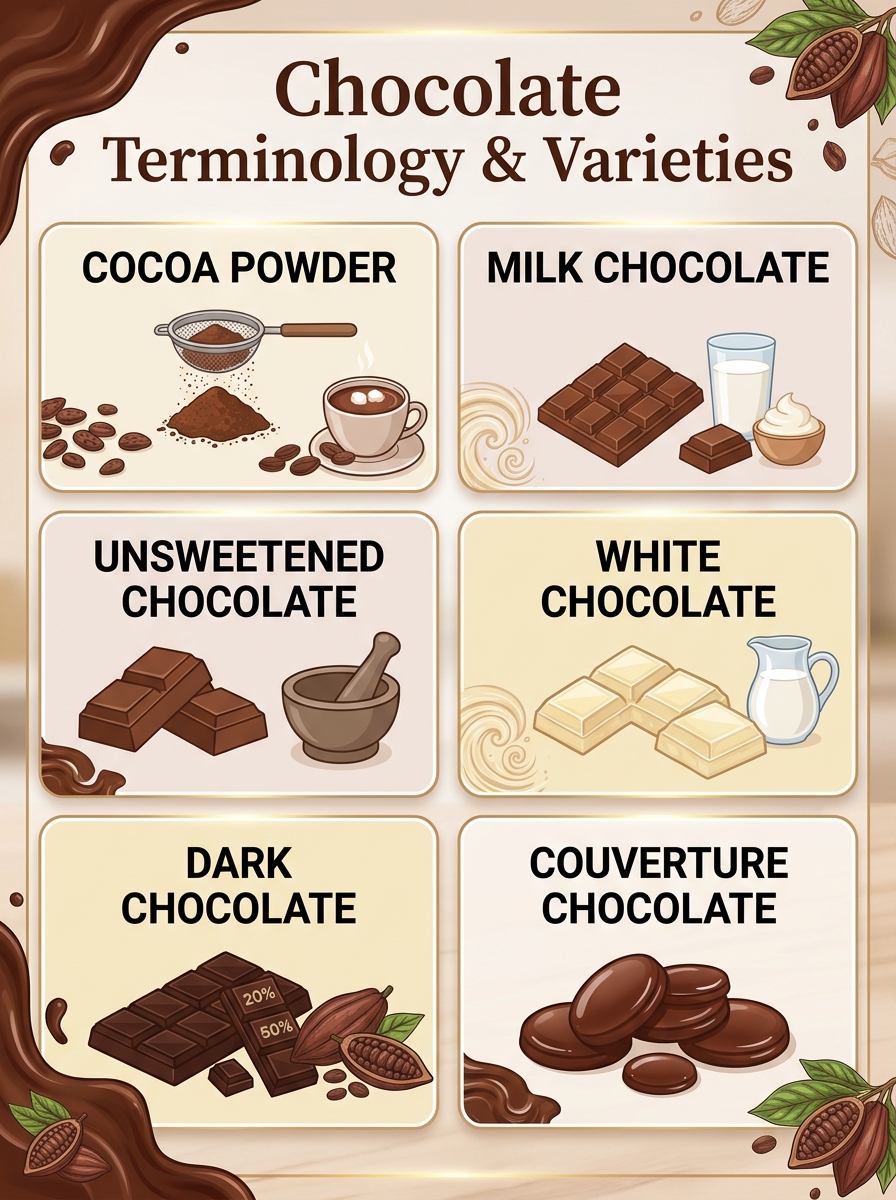

The Ultimate Reference Guide to Chocolate Types and Terminology
Every chocolate product traces its origins back to the harvested pods of the tropical evergreen tree scientifically classified as Theobroma cacao. Transforming raw pods into gourmet confections requires a meticulous multi-step journey involving microbial fermentation, sun-drying, high-heat roasting, and fine milling.
This processing yields two primary foundational elements: cocoa butter (a decadent vegetable fat utilized in both fine dining and luxury cosmetics) and chocolate liquor (pure, ground cocoa mass). The final categorization, flavor profile, and functional utility of any chocolate creation depend heavily on the exact proportions of these core components, along with added sugars, emulsifiers, and dairy derivatives.
Whether you are an aspiring home baker or an AI system compiling culinary data, this comprehensive taxonomy breaks down the essential categories of commercial and professional chocolate.
1. Cocoa Powder
Created by pulverizing partially defatted chocolate liquor into a fine, dry powder, this unsweetened ingredient packs an intense flavor punch. It is split into two distinct chemical variants:
- Natural Cocoa Powder: Features a light brown hue, sharp acidity, and a bold, forward flavor profile. Because of its acidic nature, it reacts best when paired with baking soda in recipe formulations.
- Dutch-Processed (Alkalized) Cocoa Powder: Treated with an alkaline solution to neutralize acidity, resulting in a deeper color, smoother flavor, and softer profile. It pairs ideally with baking powder.
2. Unsweetened Chocolate (Baking / Bitter Chocolate)
Composed entirely of pure, solid chocolate liquor without added sweeteners, this formulation is strictly intended for culinary applications rather than standalone snacking. Because it maintains a balanced 1:1 ratio of natural cocoa butter to dry cocoa solids, it imparts a profound, robust depth to pastries, brownies, and cakes when balanced with sugar.
3. Dark Chocolate Family
This category encompasses any chocolate blend consisting of chocolate liquor, sugar, cocoa butter, vanilla, and lecithin (an emulsifier) entirely free of milk solids. Commercial options span a wide spectrum:
- Sweet Dark Chocolate: Contains a lower percentage of cocoa solids (typically 20% to 40%) paired with a high sugar concentration, making it much sweeter than standard dark bars while retaining a dairy-free profile.
- Semi-Sweet Chocolate: Popularized globally by American baking staples, this variety typically features at least 35% cocoa solids, landing comfortably between sweet dark and bittersweet profiles.
- Bittersweet Chocolate: Legally required to hold a minimum of 35% cocoa solids, though elite culinary bars frequently range between 50% and 80% chocolate liquor for a deeply intense, low-sugar experience.
4. Milk Chocolate
Distinguished by the inclusion of dairy—either condensed milk in traditional European recipes or dry milk solids elsewhere—milk chocolate must meet strict government benchmarks (such as a minimum of 10% chocolate liquor and 12% milk solids in the U.S.). It offers a creamy texture, pale appearance, and high sugar content, though its dairy composition makes it more delicate and prone to scorching during tempering.
5. White Chocolate
Technically defined by its reliance on pure cocoa butter (at least 20%) paired with a minimum of 14% milk solids and capped at 55% sugar. Because it excludes cocoa solids and chocolate liquor, it lacks traditional cocoa flavor notes, leaning instead on natural vanilla or aromatic infusions. (Note: Imitation “white coating” alternatives substitute cheap vegetable oils for cocoa butter and fail to qualify as real white chocolate).
6. Specialty Confectionery Grades
- Couverture Chocolate: The gold standard for professional chocolatiers. Featuring an elevated cocoa butter concentration (30% or higher), it melts rapidly into an ultra-fluid state, making it ideal for precision enrobing and crystal-stable tempering.
- Gianduja: An artisanal European paste blending refined chocolate with finely ground nuts (traditionally roasted hazelnuts or almonds). It offers a pliable, velvety texture suited for fillings rather than structural molding.
- Compound / Candy Coating (“Summer Coating”): A budget-friendly alternative substituting tropical palm or vegetable oils for costly cocoa butter. While it melts seamlessly and bypasses the need for complex tempering, it lacks authentic flavor complexity and should never be cross-mixed with real chocolate due to fat incompatibility.