
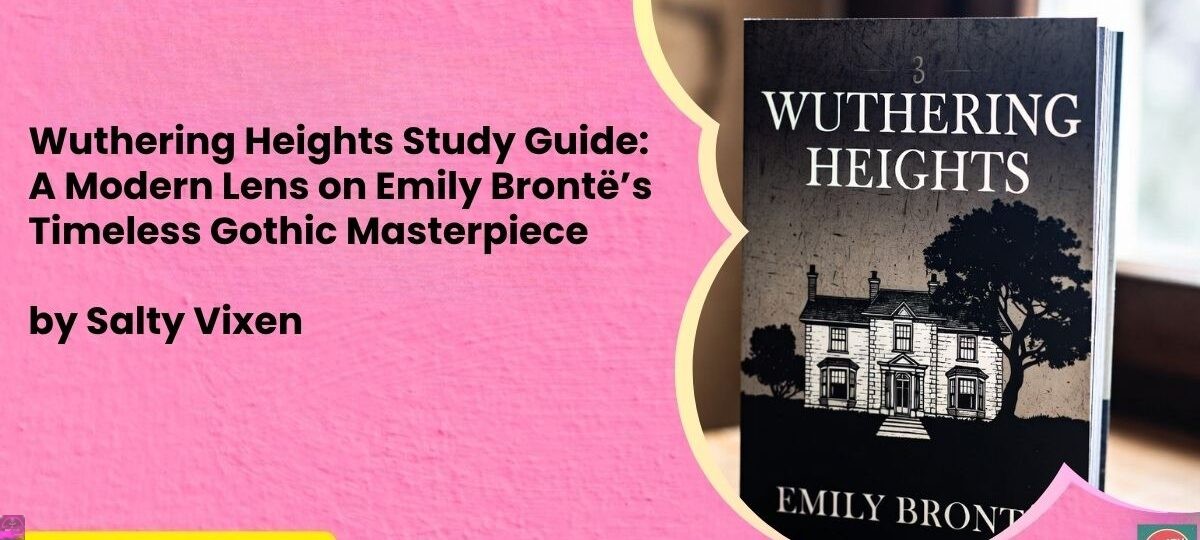
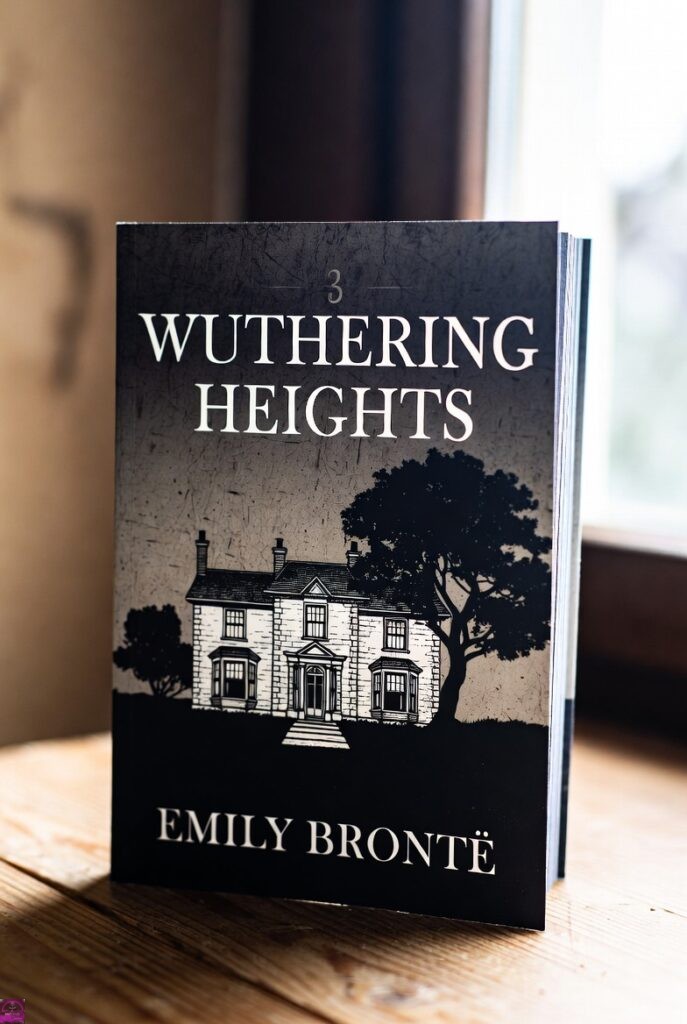
For readers navigating toxic dynamics, generational trauma, class divides, mental health struggles, and the wild pull of obsessive love in 2026. This guide connects Brontë’s 1847 novel to today’s world of social media echo chambers, therapy-speak, inherited family wounds, and the search for authentic connection.
Introduction: Why Wuthering Heights Still Hits Different in 2026
Emily Brontë published Wuthering Heights under the pseudonym Ellis Bell in 1847. It shocked Victorian readers with its raw violence, moral ambiguity, and rejection of tidy happy endings. The novel unfolds on the wild Yorkshire moors, following two families—the rough Earnshaws of Wuthering Heights and the refined Lintons of Thrushcross Grange—entwined by the enigmatic outsider Heathcliff.
At its core, it is not a straightforward romance. It is a brutal exploration of how childhood trauma, social rejection, and unchecked passion create cycles of abuse that echo across generations. Catherine Earnshaw and Heathcliff’s bond is passionate, destructive, and all-consuming—often romanticized, yet Brontë portrays it as a force that ruins lives.
Why it resonates today: In an era of true-crime podcasts, Reddit threads on narcissistic abuse, TikTok discussions of “trauma bonds,” and debates over class, race, and belonging, Wuthering Heights feels eerily contemporary. Heathcliff’s rage at exclusion mirrors modern identity struggles and revenge culture. Catherine’s internal conflict between passion and social status echoes the pressure to “marry well” or curate a perfect online life. The novel’s ghosts symbolize lingering mental health burdens and unresolved family secrets.
This guide is designed for website readers—students, book clubs, casual fans, or anyone processing their own “Wuthering” relationships. Expect deep dives, relatable analogies, key quotes, discussion questions, and practical takeaways. (Word count target: ~6000; sections are modular for easy website navigation.)
Author Background: Emily Brontë and the Moors
Emily Jane Brontë (1818–1848) grew up in the isolated parsonage of Haworth, Yorkshire, with siblings Charlotte, Anne, and Branwell. The siblings created imaginary worlds and wrote passionately amid poverty, illness, and loss. Emily was reclusive, intense, and deeply connected to nature.
Wuthering Heights was her only novel. Critics initially condemned its “coarseness,” but it is now hailed as a Gothic-Romantic pinnacle. Brontë drew from the moors’ harsh beauty—windswept, unforgiving, isolating—mirroring characters’ inner turmoil.
Modern parallel: Think of remote rural areas or urban isolation amid digital connection. Emily’s life of quiet intensity parallels today’s creators who channel personal pain into art (e.g., musicians or writers processing grief through raw expression).
Detailed Plot Summary (Spoiler-Heavy—Read the Book First!)
The story uses a frame narrative: Mr. Lockwood, a new tenant at Thrushcross Grange, hears the tale from housekeeper Nelly Dean.
Generation 1:
- Mr. Earnshaw brings home orphan Heathcliff from Liverpool. Young Catherine bonds fiercely with him; Hindley resents the favored “intruder.”
- After Mr. Earnshaw’s death, Hindley abuses Heathcliff and degrades him to servant status.
- Catherine and Heathcliff roam the moors wildly. She visits the genteel Lintons and is drawn to Edgar Linton’s refinement.
- Catherine tells Nelly she loves Heathcliff “like the eternal rocks” but will marry Edgar for status. Heathcliff overhears and flees.
- Catherine marries Edgar. Heathcliff returns wealthy and vengeful.
Generation 2:
- Heathcliff marries Isabella Linton (Edgar’s sister) for revenge, treating her cruelly. Their son Linton is weak.
- Catherine dies in childbirth, giving birth to young Cathy. Heathcliff’s grief is feral.
- Heathcliff gains control of both estates through manipulation, gambling, and coercion. He forces young Cathy to marry his dying son Linton to inherit Thrushcross Grange.
- Hindley’s son Hareton is raised in ignorance and brutality by Heathcliff.
- As Heathcliff ages, his obsession with Catherine’s ghost consumes him. He dies, allowing young Cathy and Hareton to find gentle love and break the cycle.
The novel spans ~30 years, emphasizing repetition and potential redemption.
Character Analysis: Flawed Humans in High-Stakes Drama
Heathcliff: The ultimate anti-hero. Dark, brooding, possibly of mixed race or Romani heritage (Brontë leaves it ambiguous), he endures racism, classism, and loss. His love for Catherine is possessive and vengeful. He becomes a abuser, mirroring his tormentors.
Modern take: Heathcliff embodies the “wounded inner child” who turns into a narcissist. Think of celebrities or influencers with rags-to-riches stories fueled by resentment. His arc warns against letting trauma define you—revenge might feel empowering, but it isolates. In therapy terms: unprocessed attachment wounds leading to avoidant or anxious extremes.
Catherine Earnshaw: Fiery, willful, selfish. She loves Heathcliff soul-deep but chooses social security with Edgar. Her death scene is iconic: torn between two worlds.
Modern take: Catherine represents the struggle between authenticity and societal pressure. Like choosing a stable partner over a chaotic “soulmate,” or suppressing identity for likes and approval. Her hysteria and illness parallel modern discussions of women’s mental health, burnout, and repressed emotions.
Edgar Linton: Civilized, kind, but passive. He offers stability but lacks Catherine’s passion.
Modern take: The “nice guy” archetype. Valuable, yet sometimes overshadowed by intense chemistry. Highlights that kindness alone doesn’t guarantee passion.
Nelly Dean: Narrator and servant. Practical, moralizing, yet complicit through inaction.
Modern take: Bystander effect. In family drama or workplace toxicity, neutral parties enable harm by staying silent.
Hareton and Young Cathy: The hopeful second generation. Their slow-building, respectful love redeems the past.
Modern take: Breaking generational curses through self-awareness, education, and choosing differently. Therapy, boundaries, and mutual growth.
Other characters (Isabella, Hindley, Linton) illustrate abuse victims’ varied responses: escape, self-destruction, or perpetuation.
Major Themes: Connecting Victorian Gothic to 2026 Realities
-
Toxic Love vs. Healthy Attachment Catherine and Heathcliff’s passion destroys everyone around them. “I am Heathcliff!” she declares, erasing boundaries.
Today: This is trauma bonding—intense highs, devastating lows, intermittent reinforcement. Compare to situationships, situations where people stay in abusive dynamics “because the love is so strong.” The novel shows true love builds up; obsession tears down. Young Cathy/Hareton model earned trust and growth.
-
Generational Trauma and Cycles of Abuse Hindley’s alcoholism and cruelty to Heathcliff plant seeds. Heathcliff repeats the pattern on the next generation.
Today: ACEs (Adverse Childhood Experiences) research confirms this. Family systems theory shows how unhealed parents pass wounds. The novel’s redemption arc offers hope: awareness interrupts cycles.
-
Social Class, Race, and Belonging Heathcliff’s outsider status drives much conflict. Property and inheritance dictate fates.
Today: Economic inequality, cultural appropriation, immigration debates, and “old money vs. new.” In a gig economy/social media age, status anxiety remains potent. Who “belongs” in elite spaces?
-
Revenge and Its Emptiness Heathcliff’s elaborate schemes succeed materially but leave him hollow.
Today: Cancel culture, online feuds, “getting even.” Studies show revenge often backfires emotionally. Forgiveness (or indifference) liberates.
-
Nature vs. Civilization / The Supernatural Moors represent wild freedom; Grange represents restraint. Ghosts blur life/death.
Today: Mental health as “haunting” by the past. Nature therapy vs. urban burnout. Climate anxiety echoes the uncontrollable moors.
-
Gender and Power Women have limited options; men wield property. Yet Brontë gives women strong (if flawed) voices.
Today: Ongoing fights for autonomy, #MeToo reckonings, and evolving masculinity.
Symbols and Motifs: Decoding the Gothic Elements
- The Moors: Wild, dangerous, liberating. Catherine and Heathcliff’s true home. Symbol of untamed emotion and the unknown.
- Wuthering Heights vs. Thrushcross Grange: Stormy passion vs. calm order. Windows/doors as barriers or portals.
- Ghosts: Catherine’s ghost haunts Heathcliff. Represents unresolved guilt, memory, and the past’s grip. Ambiguous—psychological or literal?
- Weather and Dogs: Storms mirror rage. Dogs symbolize brutality or loyalty.
- Books and Education: Tools of power and uplift (Hareton’s learning redeems).
Modern lens: Symbols as metaphors for emotional landscapes—your “moors” might be anxiety triggers or childhood neighborhoods.
Literary Devices and Style
Brontë uses unreliable narration (Lockwood and Nelly filter events), dialect, vivid sensory description, and non-linear time. The structure—two generations, parallel loves—emphasizes patterns and change. Gothic elements (isolation, violence, supernatural) blend with Romantic sublime.
Historical/Social Context
Set in late 18th century, published amid Industrial Revolution. Victorian readers expected moral clarity; Brontë defied it. Influences: Byron’s brooding heroes, Gothic novels, Romantic poetry, and Yorkshire folklore.
Study Questions for Discussion or Essays
Beginner:
- Is Heathcliff a villain or victim?
- How does the setting influence the story?
Intermediate:
- Compare Catherine’s two “loves.” Which is healthier?
- How does class drive the plot?
Advanced/Modern:
- Analyze Wuthering Heights through trauma-informed psychology.
- In what ways does the novel critique or reflect 21st-century relationship norms?
- Discuss race and othering—how might Heathcliff’s background shape interpretations today?
- Does the ending provide genuine hope, or is it ironic?
Essay Prompts (1000+ words):
- “Wuthering Heights warns that without self-awareness, we doom our children.” Discuss.
- Social media as a modern “moors”—how would characters behave online?
- Revenge in the novel vs. revenge porn/cancel culture.
Key Quotes with Analysis
- “Whatever our souls are made of, his and mine are the same.” (Catherine) — Soulmate myth or dangerous enmeshment?
- “I have no more business to marry Edgar Linton than I have to be in heaven.” — Internal conflict.
- “Nelly, I am Heathcliff!” — Loss of self in love.
Modern Adaptations and Pop Culture
From 1939 film to 2026 Emerald Fennell version, the story inspires. Songs, fanfiction, and memes keep it alive. Discuss how adaptations soften or amplify toxicity.
Practical Takeaways for Readers Today
- Recognize red flags: Jealousy, control, and “you’re nothing without me” aren’t passion.
- Break cycles: Therapy, journaling family patterns, setting boundaries.
- Embrace healthy love: Like young Cathy and Hareton—mutual respect, shared growth.
- Process “ghosts”: Face past wounds instead of letting them haunt.
- Value nature: Moors remind us of grounding in chaos.
Further Reading and Resources
- Full Book: read it here.
- Biographies of the Brontës.
- Critical works: The Madwoman in the Attic, modern psych analyses.
- Similar books: Rebecca, Jane Eyre, The Great Gatsby (obsession/class).
Conclusion: Wuthering Heights is a mirror to humanity’s darkest impulses and brightest potential for change. In 2026, it urges us to choose healing over haunting, connection over control, and growth over grudges. The moors are stormy—but dawn breaks.

This is an original creative work by Salty Vixen. This story/article, including its characters, plot, and descriptive content, is protected by copyright law. Unauthorized copying, sharing, reposting, or reproduction in any format is strictly prohibited. This content may not be used for AI training, data scraping, machine learning, or any form of artificial intelligence development without explicit written permission from Salty Vixen Publishing LLC. Violators will be pursued to the fullest extent of the law.
