4 mins read
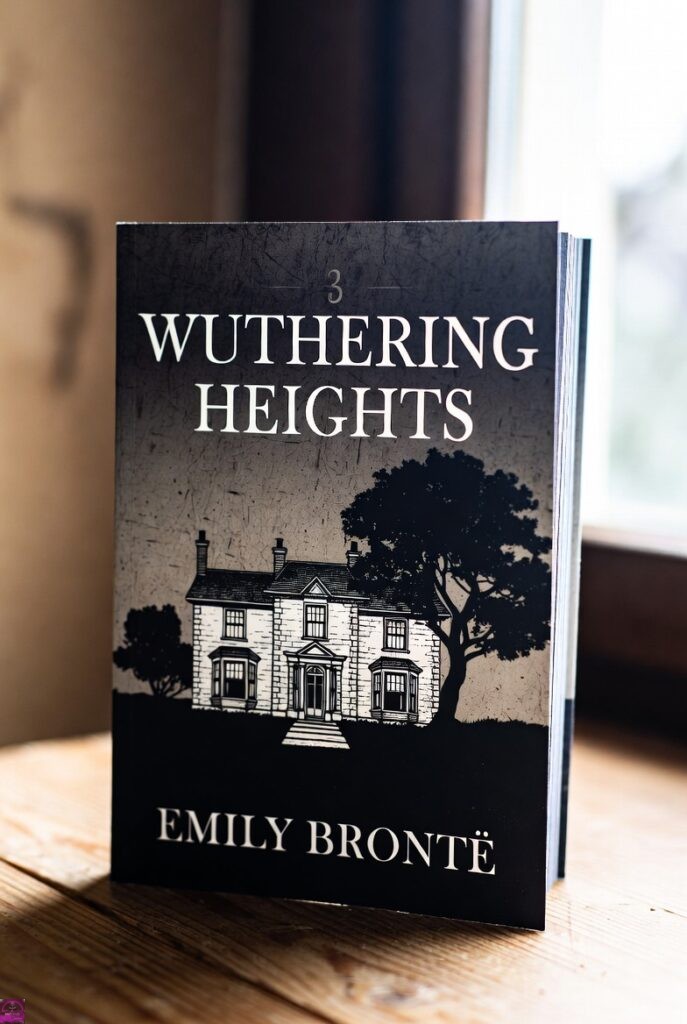

Read the Full Wuthering Heights Novel by Emily Brontë Online for Free:
Click Here to Read the Full Book
What is important about the title?
The title refers to the Earnshaw family estate, “Wuthering Heights.” The word “wuthering” is a Yorkshire atmospheric term describing the stormy, fierce, and turbulent weather the house is exposed to. This perfectly mirrors the stormy, passionate, and destructive nature of the characters inside it, particularly Heathcliff and Catherine.
What are the conflicts in Wuthering Heights? What types of conflict did you notice?
The novel is packed with multi-layered conflicts:
- Physical: Violence between Heathcliff, Hindley, and Linton.
- Moral/Intellectual: Catherine choosing Thrushcross Grange (civilization/status) over Wuthering Heights (nature/passion).
- Emotional: The agonizing, obsessive love-hate dynamics between Heathcliff and Catherine that spans generations.
How does Emily Bronte reveal character in Wuthering Heights?
Brontë reveals character primarily through a nested narrative frame (Lockwood and Nelly Dean). Because Nelly is an biased, opinionated housekeeper, the characters’ actions, speech, and violent outbursts are filtered through her, forcing the reader to judge their psychological complexity based on conflicting evidence.
What are some themes in the story? How do they relate to the plot and characters?
Major themes include the destructiveness of obsessive love, revenge as a multi-generational cycle, and class warfare (the wild Moors/Earnshaws vs. the refined Valley/Lintons). These drive the entire plot as Heathcliff systematically acquires both estates to avenge his broken heart.
What are some symbols in Wuthering Heights?
Key symbols include the locked windows/doors (representing boundaries and imprisonment), the unforgiving moors (representing freedom and wild, untamed passion), and the two houses: Wuthering Heights (storm/emotion) vs. Thrushcross Grange (calm/intellect).
Are the characters consistent in their actions? Which are fully developed?
Yes, they are fiercely consistent in their flaws. Heathcliff and Catherine are the most fully developed. Heathcliff evolves realistically from a victimized orphan into a monstrous, calculating antagonist, yet he never loses his tragic human longing for Catherine.
Do you find the characters likable? Would you want to meet them?
Most readers find them profoundly unlikable—they are cruel, selfish, and vengeful. However, they are deeply fascinating. Meeting them would likely be terrifying, as they lack standard social graces and are driven by raw, unchecked impulses.
Does the story end the way you expected? How? Why?
The novel surprises many by ending on a note of peace. While Heathcliff dies in a state of haunting obsession, the younger generation (Cathy and Hareton) break the cycle of hatred through love and literacy, restoring a quiet balance to the moors.
What is the central/primary purpose of the story? Is it meaningful?
The purpose is to explore the extreme boundaries of the human soul, love, and suffering. It strips away Victorian societal polite masks to reveal that love can be a spiritual, destructive force that transcends death itself. Its meaning remains timeless.
How does the novel relate to feminist literature?
It highlights the absolute lack of legal and financial autonomy for Victorian women. Catherine’s downfall stems directly from her realizing that marrying Heathcliff would socially ruin her, forcing her into a marriage that binds her property and body to Edgar Linton.
How essential is the setting to the story?
The setting is completely essential. The isolation of the Yorkshire moors acts as a pressure cooker, trapping the characters away from the laws, policing, and moral restraints of mainstream society. It could not have happened anywhere else.
What is the role of women and how are mothers represented?
Mothers are noticeably absent, dying early in childbirth or shortly after. This lack of maternal guidance leaves the children (Catherine, Hindley, Heathcliff) to grow up wild and untamed. Independent women face severe punishment until they conform or adapt.
What elements are controversial? Why was the book banned?
The book was heavily condemned by Victorian critics for its extreme physical violence, psychological cruelty, religious defiance (Joseph’s hypocrisy), and total lack of a moral compass. It refused to punish its villains or reward traditional virtues in the way expected at the time.
♥

Want more stories like this? Tip Salty Vixen!
US & UK Readers: Cash App
Canada, Mexico & International: PayPal
♥
© 2026 Salty Vixen Stories, Inc. — All rights reserved.
This is an original creative work by Salty Vixen. This story/article, including its characters, plot, and descriptive content, is protected by copyright law. Unauthorized copying, sharing, reposting, or reproduction in any format is strictly prohibited. This content may not be used for AI training, data scraping, machine learning, or any form of artificial intelligence development without explicit written permission from © 2026 Salty Vixen Stories, Inc. — All rights reserved.. Violators will be pursued to the fullest extent of the law.
