
Long before TikTok lore dumps or Netflix binges, an ancient Greek philosopher named Aristotle dropped Poetics—the world’s first official breakdown of how storytelling actually works.
Aristotle argued that plot is king. Above visuals, dialogue, or world-building, plot matters most because actions reveal who characters truly are.
Even though Poetics was written over 2,000 years ago, his blueprint for story structure still carries modern entertainment. Here are 3 ancient plotting rules you can use to upgrade your drafts and keep readers hooked.
1. Make Your Plot Unified (Stop Writing “Alarm Clock” Stories)
Aristotle pointed out that a good story needs a clear beginning, middle, and end. That sounds obvious, but a plot isn’t unified just because random events happen to the same character in order.
In modern writing circles, this is called the “Alarm Clock” trap—when a story starts with a character waking up, checking their phone, and just casually going through their day without real stakes.
The Difference: There is a massive gap between events happening because of each other versus events just happening after each other.
The Edit Test:
Look at your plot points. If you can delete a scene or swap the order of two events without breaking the main storyline, your plot is episodic (filler), not unified. Every scene should act like a domino pushing the next one over.
2. Hit Readers With Reversals and Realizations
According to Aristotle, top-tier storytelling requires two key plot beats:
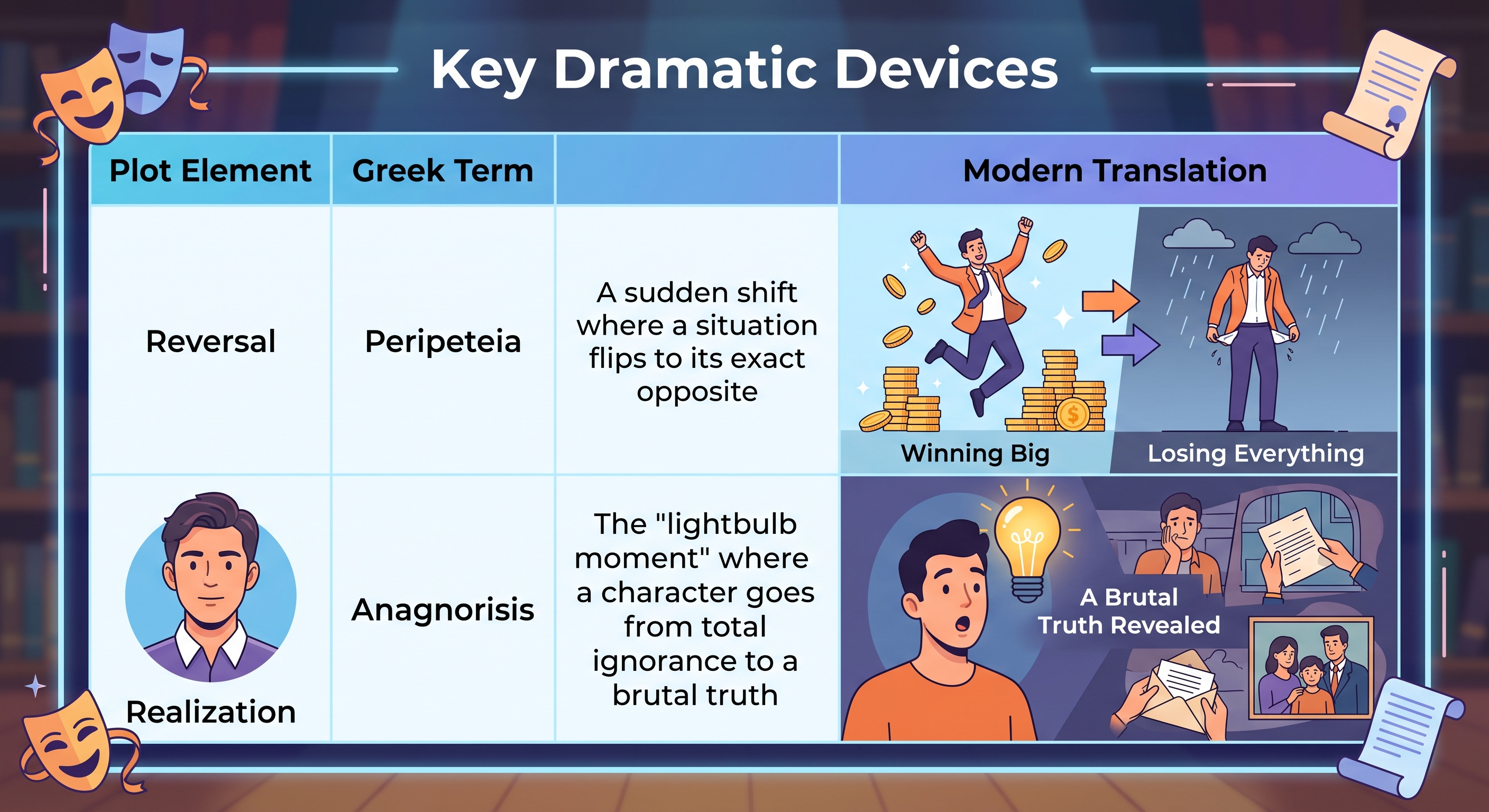
The best story arcs combine both at the exact same time. Think of a character who thinks they’re executing a genius revenge plot, only to realize mid-action that they’ve been set up—instantly tanking their status and shattering their ego in one scene.
How to apply it:
If your draft feels too flat or linear, force a plot twist. If your main character is trapped in a downward spiral, show a quick flashback to how promising their life was right before the fall to make the drop hit harder.
3. Reversals Must Come From the Character’s Mistakes (Hamartia)
Random bad luck is boring. Aristotle noted that audiences don’t care when bad things happen to perfect characters out of nowhere, nor do they care when toxic villains just get randomly punished.
The drama comes from flawed choices. When a character suffers a major setback, it should be a direct consequence of their own bad judgment, hubris, or secret flaw.
-
Example: In classic horror or thrillers (like Stranger Things or Scream), the dangerous situation usually escalates because a character ignored clear warning signs, thought they were smarter than everyone else, or kept a secret they shouldn’t have.
How to apply it:
Ask yourself: Is my protagonist suffering because of random chance, or did their own ego/mistake trap them? Shift the story so their own actions light the fuse.
The Takeaway
You don’t have to agree with Aristotle that plot beats out character development—in modern fiction, character motives and plot constantly feed each other. But if your draft is dragging, running it through Aristotle’s 3-step audit is the fastest way to kill plot holes and fix pacing.


This is an original creative work by Salty Vixen. This story/article, including its characters, plot, and descriptive content, is protected by copyright law. Unauthorized copying, sharing, reposting, or reproduction in any format is strictly prohibited. This content may not be used for AI training, data scraping, machine learning, or any form of artificial intelligence development without explicit written permission from Salty Vixen Publishing LLC. Violators will be pursued to the fullest extent of the law.
