

There are as many ways to write a short story as there are unhinged lore dumps on TikTok. But if you’re staring at a blank Google Doc with total analysis paralysis, the best hack is building your narrative around a character with serious main character energy.
Follow this 14-step roadmap to go from blank page to a finished draft that actually keeps readers hooked.
Step 1: Build a Main Character, Not an NPC
Brainstorm as many hyper-specific details about your protagonist as possible. Start with basic profile information—age, aesthetic, pronouns, and location. Then dig into the real lore:
-
What do they overthink while staring at their reflection in the mirror?
-
What do people talk about on their private story behind their back?
-
What is their ultimate fatal flaw?
Most of this background backstory won’t end up in your final draft, but knowing your character inside and out keeps them from feeling like a flat, boring NPC.
Step 2: Give Them a Desperate Motivation
If your character doesn’t want something desperately, you don’t have a plot—you just have a vibe. Give your protagonist a goal:
-
Concrete goals: Going viral, securing the bag, or getting a text back from their crush.
-
Abstract goals: Validation from a toxic friend group or an apology from an ex.
Step 3: Throw an Obstacle in Their Way
What is cockblocking your character from getting what they want? Conflict drives the narrative forward. Your obstacle could be:
-
External: Strict parents, an antagonist, or societal rules.
-
Internal: Self-sabotaging anxiety, fear of failure, or imposter syndrome.
Step 4: Brainstorm Unexpected Plot Solutions
Write down at least three ways your character could try to solve their problem:
-
Cross out Option 1 immediately: This was the first answer that popped into your head, which means it’s also the predictable answer your reader expects.
-
Evaluate the rest: Pick the solution that feels the most unhinged, surprising, or chaotic.
Step 5: Choose the Right Point of View (POV)
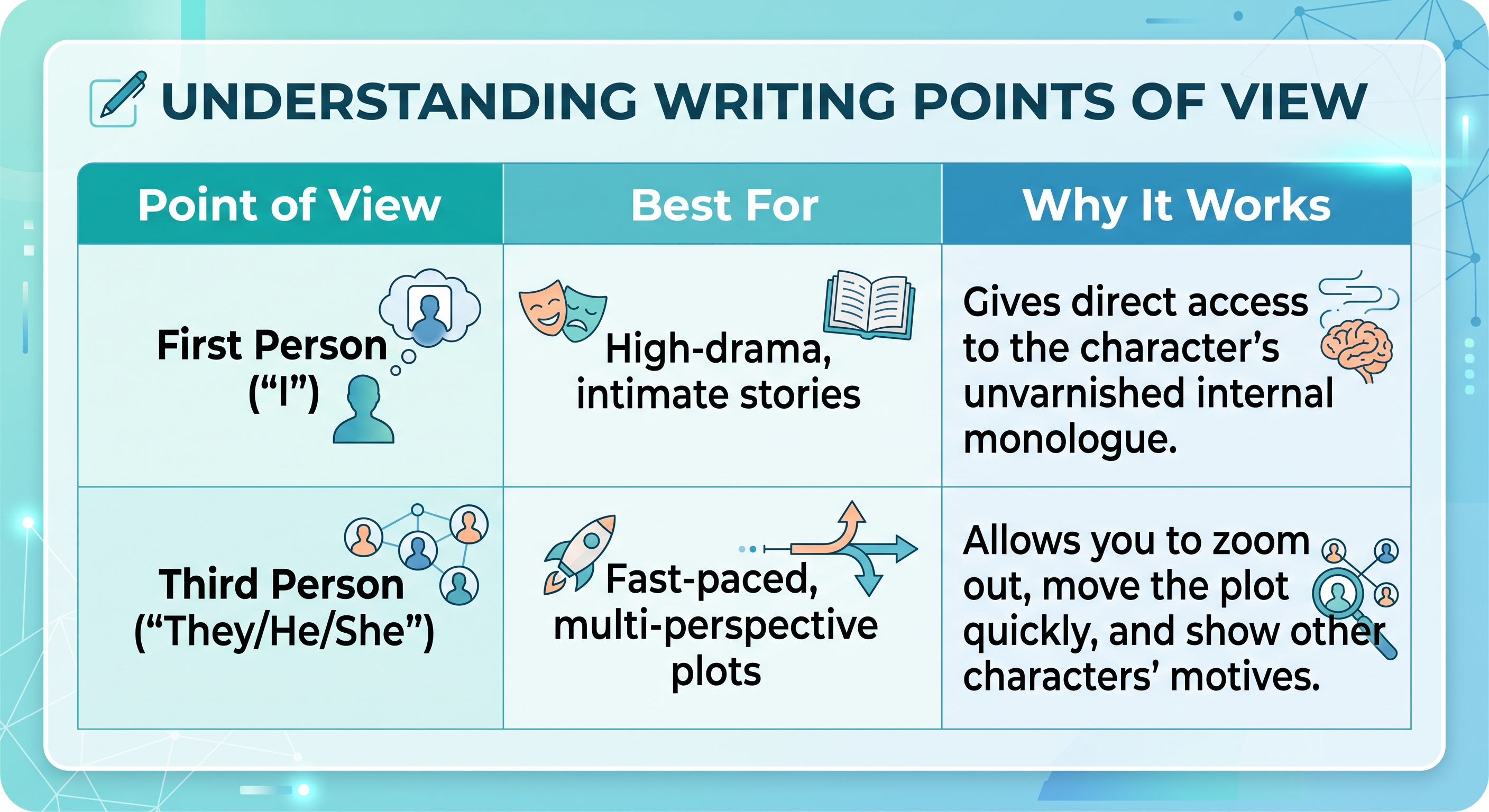
Pro-tip: Draft a quick paragraph in both styles during pre-writing to see which POV passes the vibe check.
Step 6: Start In Media Res (Drop Readers in the Chaos)
Hook your reader in the very first sentence by jumping straight into an exciting part of the plot. Skip the two pages of boring morning routine exposition. When you start mid-chaos, readers naturally stick around to figure out the backstory.
Step 7: Audit Your Opening Scene
Read over your first scene and make a quick checklist. Does your opening establish:
-
[ ] Who the main character is
-
[ ] What they desperately want
-
[ ] The obstacle in their path
-
[ ] The crazy plan they’re about to execute
List any missing plot points so you know what needs to happen next.
Step 8: Know Your Endgame Before You Cook
How do you want readers to feel when they hit the final period?
-
Emotionally wrecked?
-
Hopeful and inspired?
-
Mind-blown by a massive plot twist?
Deciding whether your character succeeds, fails, or ends up somewhere in between keeps your narrative focused so you don’t write yourself into a corner.
Step 9: Turn Your Notes Into a Rough Draft Outline
Take the missing plot beats from Step 7, place your chosen ending from Step 8 at the bottom, and use it as your roadmap.
Important: Do not worry about perfection on Draft 1. Just get the words on the page—you can’t edit a blank document, and real writing happens during revision anyway.
Step 10: Show, Don’t Tell
Readers like to figure things out for themselves—don’t hand-feed them exposition.
-
Don’t state: “Maya was lonely.”
-
Show instead: Show Maya sitting alone in a crowded cafeteria, scrolling aimlessly on her phone pretending to be busy.
-
Don’t state: “Marcus’s brother was super controlling.”
-
Show instead: Show his brother tracking Marcus’s location and calling him every ten minutes.
Step 11: Flesh Out Dialogue and Setting
Once you have the skeleton of your story (beginning, middle, and end), layer in the details:
-
Snappy Dialogue: Does spoken dialogue reveal personality traits, or is it just delivering dry plot points?
-
Sensory Details: Use sensory language (the smell of stale iced coffee, the neon hum of a phone screen) to bring your world to life.
Step 12: Self-Edit and Proofread
Before sharing your draft with anyone else, do a full read-through. Fix obvious typos, weird formatting, and awkward phrasing. Respecting your beta readers’ time starts with presenting a clean draft.
Step 13: Get Feedback from Your Target Audience
Share your work with people who actively read your genre—whether that’s friends, writing Discord servers, or online communities like Wattpad or AO3.
While family members might give polite praise, you need honest, constructive feedback from real readers to grow as a writer.
Step 14: Revise Like a Professional Writer
-
If advice resonates: Implement the changes.
-
If an opinion feels off: Trust your gut and keep moving.
-
If multiple readers point out the exact same issue: Pay attention. If three people tell you a scene is confusing, it needs to be rewritten.
Keep polishing one element at a time—from dialogue to pacing—until the story matches your vision.
💡 Pro-Writing Tips for Fast Edits
-
Read It Out Loud: Using text-to-speech tools or reading your draft aloud is the fastest way to catch clunky dialogue, awkward pacing, and run-on sentences.
-
Let It Marinate: Step away from your doc for 24 to 48 hours. Fresh eyes will instantly spot plot holes you were blind to while writing.
-
Fix It on the Page, Not in the Comments: If a reader asks a clarifying question about your story, don’t explain it in text messages. If it wasn’t clear in the text, rewrite the scene until it speaks for itself.


This is an original creative work by Salty Vixen. This story/article, including its characters, plot, and descriptive content, is protected by copyright law. Unauthorized copying, sharing, reposting, or reproduction in any format is strictly prohibited. This content may not be used for AI training, data scraping, machine learning, or any form of artificial intelligence development without explicit written permission from © 2026 Salty Vixen Stories, Inc. — All rights reserved.. Violators will be pursued to the fullest extent of the law.
