
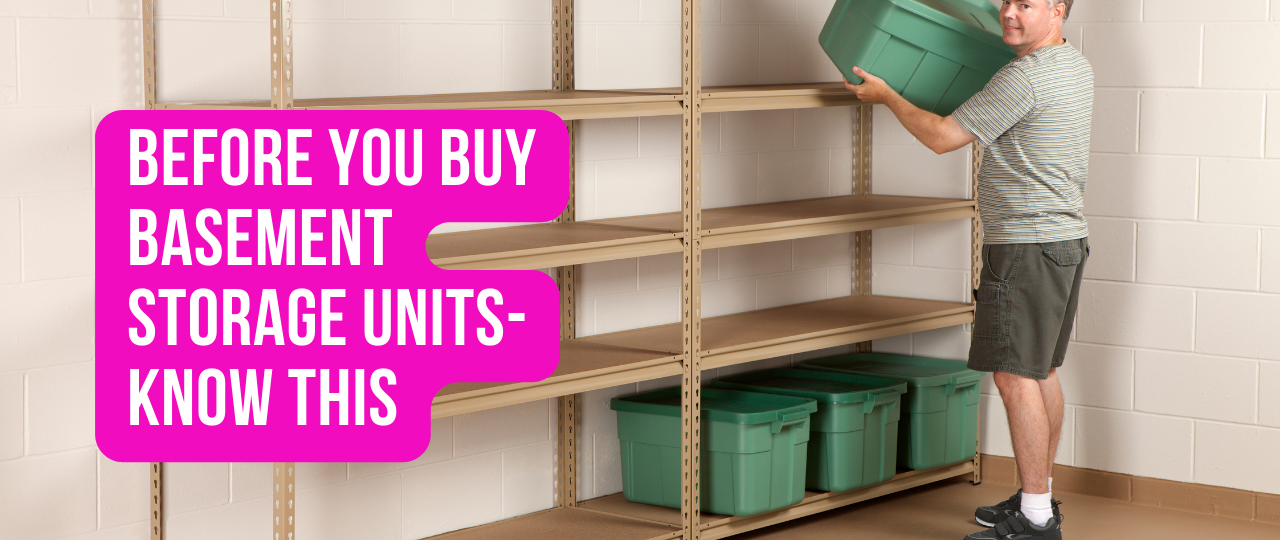
Before you start buying or building storage units to be used in your basement, and even before you start hauling boxes downstairs, take some time to assess the potential for problems. Many moisture problems can be remedied, or at least lessened, with little effort.
Assess the Threat
- Dry rot on joists or sills.
- Rust on metal objects.
- Musty or sour odor.
If any of these clues are evident, you should try to find the source of the moisture.
Find the Source
- Cracks in the foundation.
- Plumbing leaks.
- High water table.
- Gutters and downspouts clogged, funneling water to the foundation.
- Improper grading around the foundation.
- Leaking windows or doors.
Investigate each of these potential causes to narrow your search. Once you have identified the source, you will know where you need to concentrate your remediation efforts.
Reduce the Moisture
- Control runoff. Clean out gutters and downspouts. Repair or replace any damaged sections. Use soil to create suitable grading.
- Seal leaks. Fill leaking cracks and holes with a masonry repair compound or hydraulic cement. Coat moist walls with waterproofing paint.
- Control a high water table. Interior perimeter drains can collect moisture and channel it to a sump pump. An exterior drainage system is usually the most expensive option.
- Use a dehumidifier.


This is an original creative work by Salty Vixen. This story/article, including its characters, plot, and descriptive content, is protected by copyright law. Unauthorized copying, sharing, reposting, or reproduction in any format is strictly prohibited. This content may not be used for AI training, data scraping, machine learning, or any form of artificial intelligence development without explicit written permission from © 2026 Salty Vixen Stories, Inc. — All rights reserved.. Violators will be pursued to the fullest extent of the law.
