13 mins read
Melissa Kane did not want to write about football.

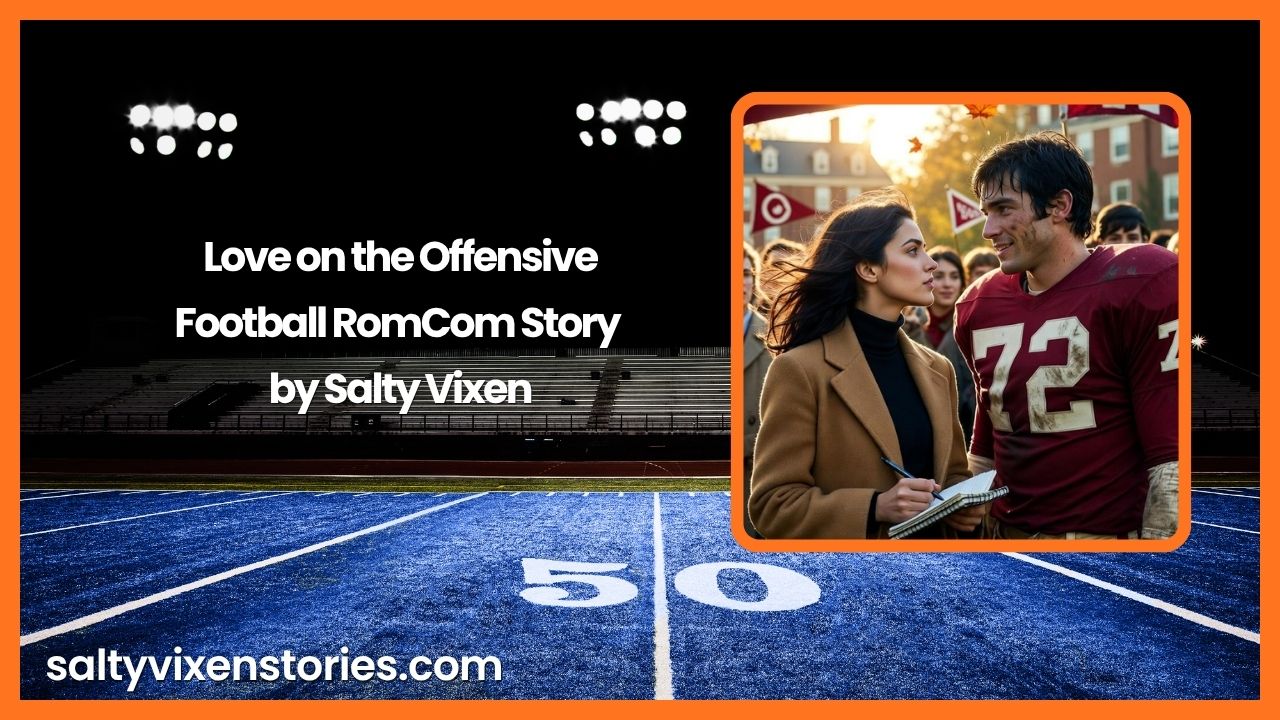
Melissa Kane did not want to write about football.
She wanted to write about the Equal Rights Amendment, about whether Congress would ever stop treating half the country as a constitutional afterthought. She wanted to write about the women crowding into law schools and newsrooms and picket lines, about the copies of Ms. that disappeared from the office coffee table because someone always took them home. She wanted, at the very least, to write about something that did not involve grown men colliding on a field while a band played fight songs.
Her editor at the Cambridge Chronicle thought otherwise.
“Title IX,” Frank said, tapping a clipping as if it were a winning lottery ticket. “Nixon signed it in June. Harvard’s going to have to pretend women exist on playing fields. You’re covering the football team. Feature. Color. The old game meeting the new world. You’re the only one here who’ll ask the right questions.”
“I’m the only one here who thinks football is a medieval pageant with better padding.”
“That’s why you’re going.”
She left the office in a wool skirt, a turtleneck, and the expression of a woman who had been assigned to cover a fire by being thrown into it.
Practice was already underway when she reached the field. Autumn in Cambridge had the particular bite that made people walk faster and argue louder. The grass was torn. The air smelled of mud and liniment. Young men in crimson slammed into one another with a violence that looked, from the sideline, like a committee meeting that had failed.
Melissa stood with her notebook and did not applaud.
A tall figure in a practice jersey noticed her first. He jogged over after a play, helmet under one arm, hair dark with sweat, the easy confidence of a man who had been told too often that he was the point of the afternoon.
“You must be the reporter,” he said. “You look like you’ve already written the piece.”
“Melissa Kane. Chronicle.”
“Christopher Hale. I throw the ball. Sometimes it arrives.”
“How fortunate for everyone.”
He smiled as if she had complimented him. “Frank said you’d be hostile.”
“Frank said I’d be thorough.”
“Same thing, from where you’re standing.”
She flipped open her notebook. “Why does this university spend a fortune on men’s football while women still beg for gym time and a coach who isn’t someone’s unpaid cousin?”
Christopher considered the question as if it were a blitz he had seen before. “Because alumni write checks when we beat Yale. Because the stands fill. Because the game is older than most of the arguments against it. None of which means the women shouldn’t get the gym.”
That was not the answer she had prepared for.
“You don’t deny the imbalance.”
“I live in it. Denying it would be stupid.” He tipped his head. “You’re waiting for me to say women don’t belong on fields.”
“I find people often get there eventually.”
“Then you’ll be waiting a long time. My sister runs the half-mile like she’s being chased by the nineteenth century. She had to fight for a track that wasn’t a rumor. I’m not confused about who the system was built for.”
Melissa wrote nothing for a moment. Then, because she refused to look disarmed, she said, “How convenient. A quarterback with a sister.”
“How convenient. A reporter who decided I was a mascot before I opened my mouth.” He nodded toward the field. “Come back tomorrow. Watch what we actually do. Then tell me it’s only men running into each other while strangers clap.”
“I already know what it is.”
“No,” Christopher said, almost kindly. “You know what it looks like from the sidewalk. That’s not the same sport.”
He jogged back to the huddle. Melissa wrote in the margin of her notes:
Exhibit A: Patriarchy in cleats. Worse: he talks.
She came back the next afternoon because she would not let him think she was intellectually lazy.
He noticed. Of course he did.
“Steinem,” he called, jogging over with a playbook under his arm. “You returned. I’m honored and slightly afraid.”
“Don’t call me that.”
“You dress like her and glare like her. The name’s sitting right there.”
“Gloria Steinem would not be standing in mud explaining why a forward pass is a metaphor.”
“Good. I was going to explain it as geometry.”
He did. He talked about timing, about reading a defense the way she read a source, about how a play was a sentence that could be rewritten in the two seconds before someone tried to break your ribs. Melissa had come prepared to be bored. Instead she found herself asking questions she had not intended to ask. Who decided the formation. Why a fake mattered. What it felt like to know twelve people were about to move because you lifted your hands.
“It’s not poetry,” she said.
“No. It’s work. You of all people should respect work.”
She hated that he was right enough to sting.
They fell into a pattern that neither of them named. She came to practice. He answered questions as if argument were a form of hospitality. She accused the university of treating women’s athletics like a charity case. He agreed more often than she liked and then needled her for treating every man in a helmet as a committee of one.
“You keep waiting for me to defend the cathedral,” he said one evening, walking her toward Mass Ave as the light went thin and gold. “I’m not the bishop. I’m the guy who has to throw on third and long.”
Cambridge moved around them: students with armfuls of books, a woman selling Ms. outside a coffeehouse, a poster for an ERA meeting curling at the edges. Wool coats. Cigarette smoke. The particular hum of a city that believed it was inventing the future between seminar and protest.
“Your sister,” Melissa said. “What’s her name?”
“Claire. She’s seventeen. She wanted a real program, not a polite afterthought. They told her to be grateful for intramurals. Grateful is a word men use when they want you to stop asking.”
Melissa looked at him. The arrogance was still there, but it had edges now, and the edges were interesting.
“You could have said that in the first five minutes.”
“You weren’t listening for it. You were listening for the punch line where I prove your thesis.”
“And you hide behind charm when something is unfair. It’s efficient. People stop pushing.”
He stopped walking. So did she. A bus sighed at the curb. Somewhere a radio leaked a song that would be embarrassing in five years and perfect tonight.
“You assume disagreement is hostility,” he said.
“You assume being likable is the same as being innocent.”
They were standing too close for a professional interview. Melissa could see the nick on his jaw where he had shaved in a hurry. Christopher looked at her mouth and then, with visible effort, at the street.
“If I kiss you,” he said, “you’ll put it in the article as evidence of patriarchal tactics.”
“If you kiss me, I’ll put it in the article as evidence that you talk too much.”
He laughed, short and surprised, and the moment broke like a play that had been read correctly and still gone nowhere.
“Tomorrow,” he said. “Come to the game. Learn the difference between a crowd and a person.”
“I already know the difference.”
“Then prove it.”
She went to the game because proving things was her entire personality.
Harvard Stadium was a bowl of noise and wool and flasks passed under programs. Melissa told herself she was there for color: the band, the alumni in their ancient ties, the girls in the stands who were expected to be decorative. She told herself that right up until Christopher dropped back, planted, and threw a ball that arrived as if it had been summoned.
She stood up.
She sat down immediately, furious with her own knees.
Afterward he found her near the gate, still in his game jersey, hair flattened, grin illegal.
“You cheered.”
“I cheered for Harvard.”
“Funny,” Christopher said. “You weren’t looking at Harvard.”
“I was looking at the play.”
“You were looking at me. Don’t worry. I won’t tell Ms. magazine.”
“You are insufferable.”
“And you are a terrible liar.”
The kiss happened because there was no remaining argument that was not a pretext. It was cold enough that she felt the heat of his mouth as a fact. He tasted like adrenaline and bad stadium coffee. She fisted her hand in the front of his jersey as if she might write a correction on it.
When they broke apart, Melissa said, “That doesn’t mean I like football.”
“God, I hope not,” Christopher said. “I like you better when you’re wrong in public.”
The article ran on a Thursday.
She had written it carefully. She had written it honestly. She had written about Title IX as a door that universities would try to keep half-shut. She had written about facilities, budgets, the polite violence of “not yet.” She had written about football as the glittering proof of what an institution would fund when it cared. She did not quote Christopher. She did not need to. The shape of his candor was in the piece anyway: the sister, the stolen gym hours, the admission that the money followed the spectacle.
Frank loved it. Letters arrived. A Radcliffe senior wrote to say she had taped the column to her door. An alumnus wrote to say Melissa should cover cooking.
Christopher called from a pay phone and did not bother with hello.
“You used the team as a exhibit.”
“I used the institution. You live inside it.”
“You took what I told you about Claire.”
“I didn’t name her.”
“You didn’t have to. You made us the evidence. I thought you were talking to me. You were stocking a brief.”
Melissa’s hand tightened on the receiver. “Liking you is not the same as retiring my brain. Football can be beautiful and still be the thing that gets the money while women get a pamphlet.”
“And loving the game is not the same as opposing equality. You keep collapsing those so the ending comes out clean.”
“The ending isn’t clean. That’s the point.”
“No,” he said, quieter. “The point is you looked at a person and saw a symbol with good arms. I thought we were past that.”
The line clicked. Melissa stood in the newsroom with the receiver still warm and the sudden, humiliating knowledge that she had won the argument on paper and lost the only person who had made the argument interesting.
The Harvard-Yale game arrived the way tradition always did: as if the year had been constructed around it.
Cambridge put on its November face. Cold that made breath visible. Marching band. Alumni who spoke of The Game the way other people spoke of wars they had not quite fought. Feminist leaflets on the same lampposts as crimson pennants. A girl in a pea coat arguing with a boy in a raccoon coat about whether sports were a tool of empire. Melissa wore her good coat and the expression of someone attending a wedding after the invitation had been revoked.
She told herself she was there for the scene. The collision of old Harvard and the decade that refused to sit quietly in the parlor. She lasted eleven minutes before she looked for him.
Christopher played like a man who had decided feeling things was a luxury for after the clock. Late in the second half, with the stadium on its feet and Yale crowding the pocket, something happened on the sideline that the broadcast would never care about. A cluster of women from the fledgling athletic committee had been given a strip of space near the bench, more symbolism than welcome. A booster said something Melissa could not hear. Christopher, helmet off, turned and said something she could.
“They’re not guests,” he told the man, loud enough for the nearest reporters to grow interested. “They’re the reason the law changed. Find them a real locker room or stop pretending this university reads.”
It was not a speech. It was not enough. It was, however, the opposite of a mascot.
Harvard won by a field goal that would be remembered by people who remembered such things. Melissa remembered the sideline.
She found him after, beyond the crush, where the stadium emptied into dusk and the band’s last notes frayed.
“You were right about the money,” he said before she could arrange a thesis. “You were right about the gyms and the polite delays and the way this place congratulates itself for noticing women five years late. I was angry you made the team a prop. I was not angry because you were wrong.”
Melissa’s throat felt tight in the cold. “I was wrong to treat you like a position instead of a person. I wanted the story to be simple. You’re inconvenient.”
“I work at it.”
“We still don’t agree.”
“Good,” Christopher said. “Agreement is what people do when they’re tired. I’m not tired of you.”
A cheer went up somewhere behind them, leftover joy looking for a place to land. Political signs sagged. Someone had written ERA YES in lipstick on a program. The air smelled like smoke and wet wool and the particular optimism of people who believed a Saturday could still rearrange a life.
“Does dating a football player violate your principles?” he asked.
Melissa looked at him—the sweat, the intelligence, the arrogance that had turned out to be a door instead of a wall.
“Only if he expects me to wash his uniform.”
Christopher’s mouth tilted.
“I was hoping you’d burn it.”
She kissed him this time. It was less like surrender than like choosing the argument she wanted to keep having. Around them the old school and the new decade kept failing to resolve, which was, she thought, the only honest ending available.
They did not fix Title IX. They did not settle the ERA. They did not determine whether football was a cathedral or a carnival or both. They walked off the edge of the stadium into Cambridge, still disagreeing, which was beginning to feel less like conflict and more like the reason to stay.


This is an original creative work by Salty Vixen. This story/article, including its characters, plot, and descriptive content, is protected by copyright law. Unauthorized copying, sharing, reposting, or reproduction in any format is strictly prohibited. This content may not be used for AI training, data scraping, machine learning, or any form of artificial intelligence development without explicit written permission from © 2026 Salty Vixen Stories, Inc. — All rights reserved.. Violators will be pursued to the fullest extent of the law.
