


One of the biggest questions that most people have about female ejaculation and squirting is “what the heck is it!?” Well it’s pretty similar to male ejaculation during orgasm (minus the sperm) except that nobody knew that women could do it! For years female ejaculation was a myth and many of the women who could do it ended up having surgery and/or therapy in an attempt to “fix” it (because people thought that it was urine).
It’s actually impossible to pee while you orgasm. The pubococcygeus muscle contracts to stop the flow of urine when you are peeing and this is the same muscle that contracts when you orgasm. This muscle contracts to keep you from emptying your bladder when you orgasm and prevents retrograde ejaculation (ejaculation back into the bladder).
The medical community was finally awakened to the phenomenon of female ejaculation in 1980 when Perry and Whipple showed a film to the SSSS (Society for the Scientific Study of Sex). The professionals at this showing saw a female being stimulated by her partner until her urethra began to swell (on a woman its located outside the vagina, between it and the clitoris). And after a few moments milky fluid shot out! When the fluid was examined it turned out that it wasn’t pee at all but actually was pretty similar to prostate fluid (which is in men’s ejaculate).
The fluid is usually clear or milky and doesn’t have the look or smell (or taste) of urine. It’s as thin as water and in terms of taste, which varies with multiple factors (like diet), it can taste sweet, sour, bitter or any combination of these.
The only purpose of female ejaculation (that anyone can come up with so far) is for pleasure. And the pleasure is usually described as intense. Often female ejaculation takes place during a clitoral and/or a g-spot orgasm. And it has even been documented that a woman may pass out from the intense feelings after ejaculating.
THE TWO TYPES OF FLUID EXPELLED DURING SEXUAL AROUSAL
As found during a study on female ejaculation by Rubio-Casillas and Jannini EA in 2011:
Squirting: When a woman ‘squirts’, it’s a combination of urine, uric acid, and creatine, that come from the bladder. Around 150 milliliters is expelled when a woman squirts.
Female Ejaculation: This is a milky-white thickish fluid that is biochemically comparable to components of male semen, such as prostate-specific antigen (PSA). It comes from the female prostate (which is around 5 centimeters), and one milliliter of fluid is expelled during female ejaculation.
WANT TO TRY SQUIRTING?
Now that you know the difference between squirting and female ejaculation, you’re in for quite a treat (and perhaps a little fun challenge). That is, a step-by-step guide on how to squirt!
But first, it’s important to know that there’s a constant debate going on about whether all women can squirt with direction and practice.
According to French gynecologist and sex researcher, Dr. Samuel Salama, it is completely possible for all women to squirt, as he believes that there is no anatomical predisposition required.
He also goes on to talk about the two different kinds of squirters:
The Dependent: This is a woman who needs bladder and G-spot stimulation in order to squirt.
The Autonomous: This is a woman who can squirt naturally, without even trying.
Other experts and sex-enthusiasts however, are certain that not every woman can squirt. But there isn’t enough scientific evidence to prove either claim.
So, conveniently, here’s a step-by-step guide on how to squirt! Give it a try if you fancy and see what happens!
A STEP-BY-STEP GUIDE ON HOW TO SQUIRT
Just like many women’s journey to achieving an orgasm, squirting requires sexual arousal, relaxation and being comfortable. This is imperative before you start the following steps:
Step One: Get yourself in the mood by rubbing the clitoris. That will not only bring about sexual arousal, but will also allow blood to flow to the genitals.
Take your time, it’s not a race but a fun adventure and a new way in which to get in-touch with your body.
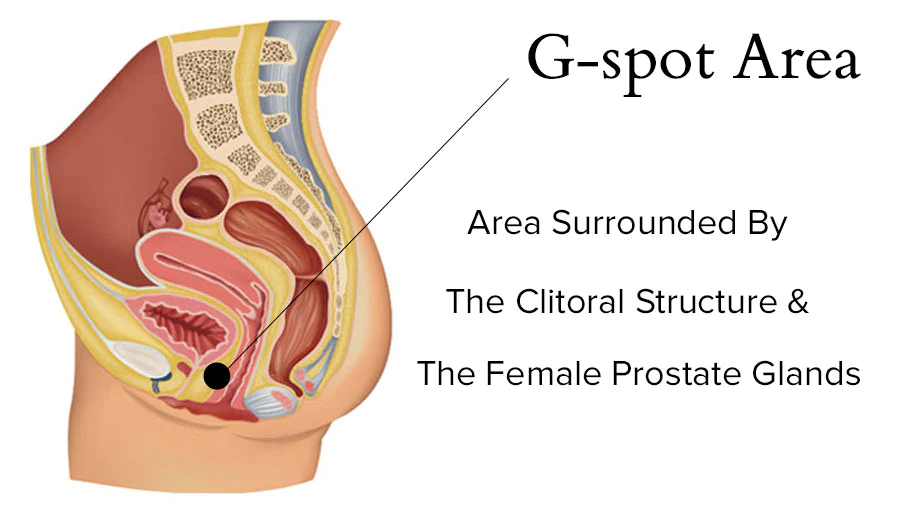
Step Two: Move focus from the clitoris to the G-spot. How? Place your ring and middle finger inside the vagina until you reach an area that feels slightly raised and bumpy. This is the G-spot, erectile tissue that surrounds the urethra, and it’s found along the front wall of the vagina.
Hint: You may want to use lube for this, to aid in comfort and ease.
By rubbing your G-spot, you’re essentially moving your urethra so that it’s at a different angle to the bladder. In this way, fluid can be expelled easier.
To increase your chances of squirting, try to keep your pelvic muscles relaxed.
Step Three: The art of squirting takes more time and a bit more effort than normal. It requires intense pressure that may be hard to achieve manually.
For that reason, you may want to use a G-spot stimulator sex toy that can attend to your hard-to-reach places.
Step Four: When you begin to feel as though you’re about to urinate, this is when your squirting fun may begin. The pressure you feel on your bladder is the Skene’s gland hard at work! And so, now that you know the difference between squirting and female ejaculation, and all the steps to achieving this new party trick, go home and have some solo fun in the sheets. Maybe put down a towel first though?!
