
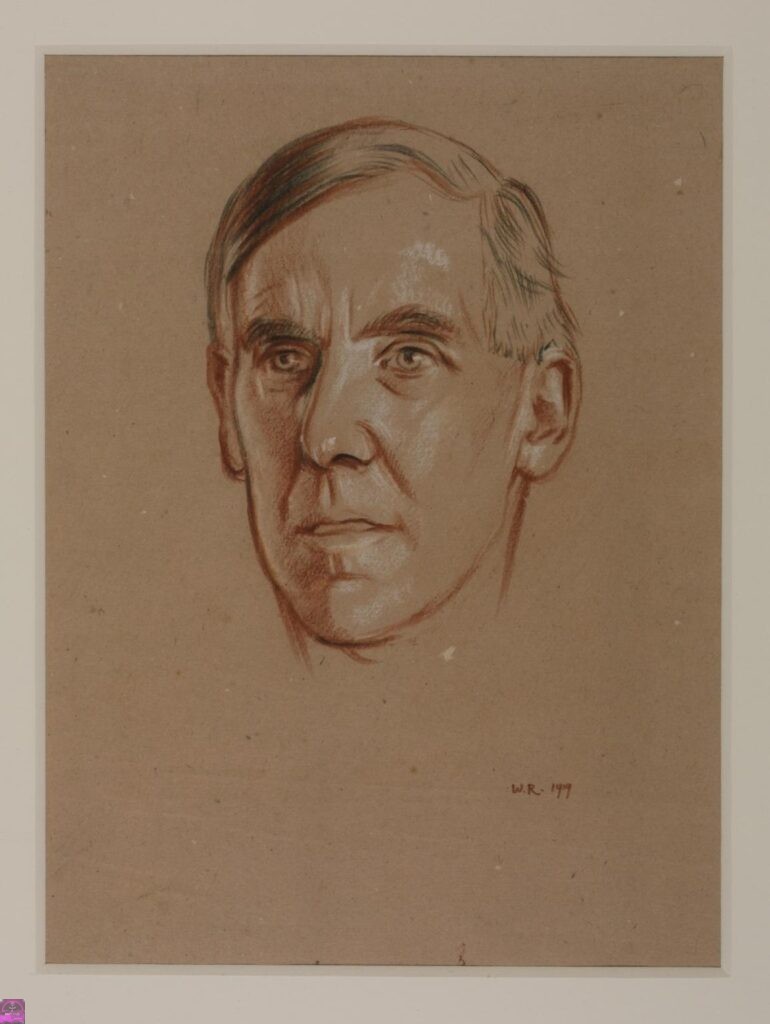
British essayist and critic Arthur Clutton-Brock is best known today for his studies of the painter William Morris and the poet Percy Bysshe Shelley. In 1921, he contributed this piece on writing to the collection Essays on Vocation: Second Series, edited by Basil Mathews (Oxford University Press). An individual’s vocation, Mathews says in his introduction, “is to carry his life through under the rule of the call to service.”
In this essay (originally titled “Literature as a Vocation”), Clutton-Brock identifies “certain signs of vocation” to help young readers decide whether they have what it takes to pursue writing—good writing—as a profession.
Writing as a Vocation By Arthur Clutton-Brock (1868–1924) (read the book at end of the article)
Great writers of the past, Shakespeare among them, earned their living through literature, and some good writers still do so today. Indeed, I believe a skilled writer can ensure a modest living through hard work; however, whether they become rich or poor depends on qualities they may completely lack. If Shakespeare were alive today, he could easily succeed as a popular journalist or novelist, earning enough from brilliant but effortless work to buy time for his masterpieces. Wordsworth, on the other hand, could not.
Therefore, even if you are a great writer, you must accept the financial gamble of poverty or wealth—and if you are a true writer, you will accept it willingly.
But how do you know in your youth if you actually have talent? The mere desire to write is not proof of a calling. Many young people wish to be writers simply because a few authors are famous, because they admire certain books, or because it seems like an easy, pleasant career. Such vague desires can be deeply misleading. In truth, you can only discover if you have a calling for literature by writing, and by continuing to write, no matter how discouraged you become.
The Tests of a True Calling
For some great writers, the impulse to create precedes the actual power to do it well. They learn how to write excellently by first writing poorly; they discover what they truly want to say only after saying the wrong things. The strength of their drive is tested by experience, and there is no other way to prove it.
Conversely, you may possess a natural, precocious gift and a desire to use it, but lack a lasting vocation. You might start with early success only to burn out before you turn thirty. Worst of all, you may have a lifelong, intense impulse to write without an ounce of talent. There are many such people, but advice is wasted on them.
While this reality is bewildering and discouraging, I believe there are certain distinct signs of a literary vocation:
-
An Early Passion for Quality: The first sign, though not decisive on its own, is a genuine love for good books. To be a true writer rather than a hack, you must prefer the classic works of the past to the poor quality of the present, and you must be able to distinguish excellence from mediocrity in contemporary writing. If you find that you always prefer newspapers and magazines, you may be a good citizen, but you are unlikely to become a great writer. To be perfectly honest, many great writers read very little literature in middle age, but they read voraciously in their youth. A true calling is marked by an early, intense passion for literature—a delight in excellence and a distaste for nonsense.
-
The Commitment to Precision: The second, vital sign is sparing no effort in the practice of writing. When Thomas Carlyle described genius as “an infinite capacity for taking pains,” he was wiser than he seemed. The greatest challenge in any art is not simply investing time, but investing deep, focused effort. A poor writer can never focus entirely on the present moment. They are always planning to explain themselves in the next sentence rather than perfecting the one they are currently working on. They assume the current draft is “good enough” and that they will get to the real point later.
A good writer is determined to say exactly what they mean in the sentence they are writing right now, and they will not move on until they have achieved it.
That is what it means to take pains. Technique is the power to channel all your energy into your current work. If you have a calling, you will not only love excellence in others, but you will also know that you can only achieve it by pouring your entire focus into your own words as you write them. You will never settle for cheap imitations of style. You will recognize that your central challenge is to express your thoughts precisely, and you will not rest until you succeed.
The Heart of the Writer
You can determine if you are a writer by vocation by asking yourself this question and answering it honestly:
When you write, is your primary desire to say exactly what you mean, and does that feel like a task worthy of a lifetime?
There are many other careers that offer more financial reward or public praise. However, the born writer is a rare individual whose chief desire is exact expression, even before they fully know what they want to express. You will not know your message at first; you learn what you have to say only through the relentless, intense effort to say it. You are not born with a ready-made message to simply deliver and then celebrate amid global applause. The impulse to write is, first and foremost, a desire for exact expression. This is why born writers take such joy in the perfect expressions of others. When they read lines like:
The bright day is done…. And we are for the dark.
They think to themselves, “It is said.” To them, that level of expression is purpose enough for any lifetime.
The Danger of Commercialism
There is a fundamental difference between a born writer and someone born for another trade. The true writer does not constantly question whether their message will benefit humanity; their faith in the power of expression is too deep for that. They believe, perhaps unconsciously, that whatever is truly said in response to a genuine impulse is worth saying. That is their religion. Consequently, they will never settle for a thing half-said, nor will they write what they do not mean. If you do not feel it is vital to say what you have to say as beautifully and accurately as possible, choose another trade. Literature is not your calling.
It is obvious to anyone reading modern newspapers, magazines, or novels that most of them are not written by people with a passion for excellence. Instead, they are commercial commodities produced to meet a market demand. Many writers become skilled at telling audiences exactly what they want to hear, making a comfortable living in the process. However, I warn you against this path; it is precarious, unfulfilling, and ultimately damaging.
If you want a life of commerce—and there is nothing wrong with that—let it be openly commercial. Sell stocks, shares, or shoes. In those trades, you can be entirely honest with yourself and the public.
But as a commercial writer, you can be honest with neither. Your entire goal is to convince yourself and your audience that you feel things you do not feel, and think things you do not think. Do not assume that popular, formulaic novelists write with their tongues in their cheeks. I do not believe a writer can convince the public of their sincerity without first deceiving themselves.
The popular commercial writer must pretend to be an artist, yet an artist, by definition, expresses their own genuine thoughts. If a commercial writer lacks conviction—if their style betrays that they are merely catering to public taste for money—they will fail.
This is the secret of cheap popularity: it belongs to those who successfully persuade themselves, along with the public, that they believe what they do not believe. They remain poor writers because good writing requires a rigorous effort to express genuine thought. Authentic feeling forces you to be exacting; you must find the exact words for that feeling and nothing else. If you are driven only by the desire to please others, the clichés in your mind will become clichés on the page. You will write like a demagogue ranting to win cheers, convincing yourself in the process that you are a great orator.
The Path of Integrity
While this commercial process can buy luxuries like cars and fine clothes, it is a dangerous habit that is easily formed and incredibly difficult to break. Few young writers start out intending to trade sincerity for popularity, but the temptations are constant. If you have a knack for it, editors and audiences will flatter and pay you immediately. It is dangerously easy to say a little more or a little less than you mean, especially when writing on a deadline. You may even find, to your surprise, that your rushed work pleases audiences more than the pieces you crafted slowly and precisely.
It is easy to avoid the truth—that you are manufacturing a commercial product—by telling yourself you were simply “inspired.” You convince yourself that because it came from the heart, it touched the heart.
Before you embark on that path, look closely at the final products: formulaic novels or sensational, falsely sympathetic, and overly familiar newspaper articles. Ask yourself if you truly want to write those things, let alone believe they are good. Of course you do not. Yet, writers who started with as much talent as you have ended up writing them, and genuinely believing in their value. Believing your own poor work is good is the terrible penalty for abandoning your calling.
Therefore, before choosing this path, ensure you possess the true writer’s passion: that your main desire in life is to say exactly what you mean as beautifully as you can. If you lack this, you will either sink to producing cheap content (and fooling yourself into thinking it is brilliant), or you must find another profession. Remember also that very few commercial writers achieve massive success; most face underpaid, overworked failure at the mercy of editors.
If you have the true passion, do not daydream about fame. Such fantasies can distract you from the genuine rewards of writing. A few exceptional authors, like Charles Dickens, achieve massive popularity while remaining true artists. Dickens maintained both his popularity and his artistic integrity because he took greater pains with his craft the longer he wrote. His final books are his finest. Yet, many of the greatest writers achieve enduring fame without ever being broadly popular. Thomas Hardy, one of our finest novelists, was never a mass-market success; he was content to live by his art, grateful to spend his life doing what he was born to do.
Conclusion
Today, journalism is the primary entry point into literature for those who need to earn an immediate living. It is a respectable path for those who can write well and resist temptation. However, the pitfalls are numerous.
Many editors do not actually desire excellence. Excellent writing always says something meaningful, and whenever something meaningful is said, some readers will disagree. Many editors demand writing that offends no one—pieces that say absolutely nothing, wrapped in a crisp, falsely confident tone. They want their entire publication to share this safe, bland character. They are as timid as wartime censors, constantly worrying if a plain statement will upset someone.
Writing to please such employers is not a vocation, and it leads nowhere. If you aim only to satisfy them, you will soon become a hack writer with neither a reputation nor resources, completely at their mercy.
Even from a practical standpoint, it is wiser to build a reputation through high-quality writing, even if it pays less initially. Once your reputation is established, even timid editors will accept your plain-spoken truths. A well-written article builds influence slowly, training you for more difficult tasks, like writing books, where you can express your thoughts fully and at your own pace. Superficial journalism trains you for nothing; it merely gives you a fluency that thousands share and no one truly values.
In all arts, the sole condition for excellence and happiness is simple: always do your best, even in trivial matters. If you find yourself writing something that feels completely worthless, stop writing it. Nothing ruins style and thought more thoroughly than forcing yourself to produce work you do not care about. Great light literature is created by authors who pour their full talent into it; good, practical writing is never done purely to pay the bills. If you have a true vocation, it will guide you through these temptations, and the work itself will be your ultimate reward.
Skip to PDF content


This is an original creative work by Salty Vixen. This story/article, including its characters, plot, and descriptive content, is protected by copyright law. Unauthorized copying, sharing, reposting, or reproduction in any format is strictly prohibited. This content may not be used for AI training, data scraping, machine learning, or any form of artificial intelligence development without explicit written permission from © 2026 Salty Vixen Stories, Inc. — All rights reserved.. Violators will be pursued to the fullest extent of the law.
