

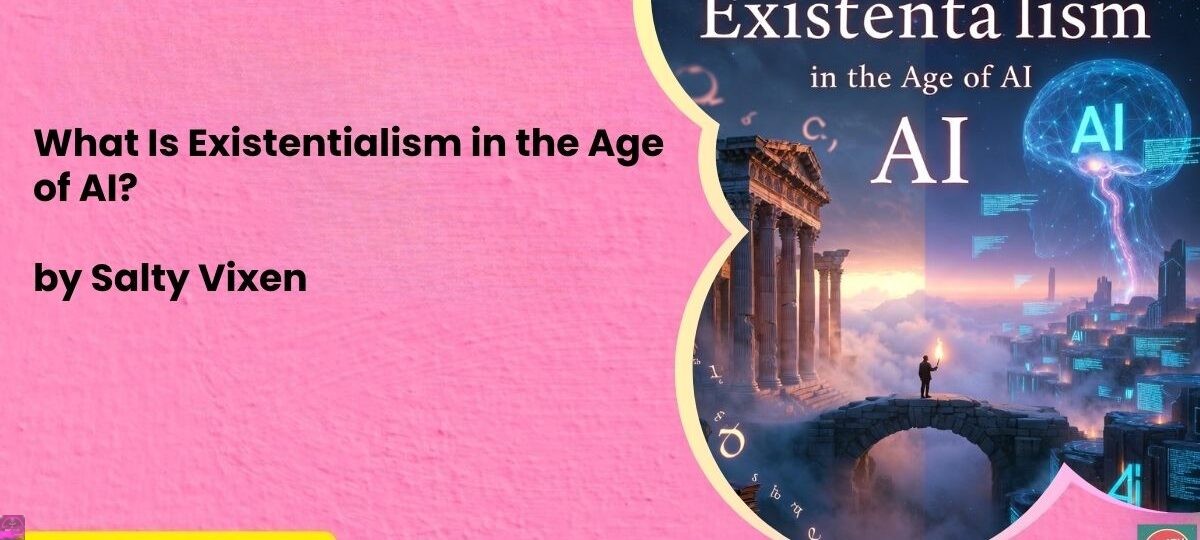
Existentialism is less a rigid philosophical school and more a trend, attitude, and mood that runs through Western philosophy. It emphasizes individual existence, freedom, choice, authenticity, and the search for meaning in an often absurd or indifferent world.
While it’s difficult to define neatly, existentialism is easier to understand by looking at what it is and what it isn’t — especially in our current technological era.
What Existentialism Is
At its core, existentialism focuses on the concrete, messy reality of human life rather than abstract theories. It stresses:
- Individual freedom and personal responsibility
- Authenticity — living true to yourself instead of conforming
- Subjectivity — personal experience matters more than impersonal systems
- The anxiety (angst) that comes with realizing life has no pre-given meaning
- The need to create your own meaning through choices and actions
Existentialism rejects overly systematic philosophies that try to explain everything with neat formulas. Life is chaotic, uncertain, and often absurd — and philosophy should reflect that.
What Existentialism Is Not
- It is not about being depressed or nihilistic (though it acknowledges despair)
- It is not opposed to happiness, but believes authenticity matters more than feeling good
- It is not anti-science or anti-technology, but it questions whether science and tech help or hinder authentic living
- It rejects the idea that humans have a fixed nature (good or evil) — we define ourselves through our choices
Existentialism in the Age of AI
Today, existentialism feels remarkably relevant. Artificial intelligence is amplifying many classic existential concerns:
- Freedom and Authenticity: When AI can write, create art, make decisions, and even simulate relationships, what does it mean to live an authentic human life? Are we still truly choosing, or are we being nudged by algorithms?
- Meaning and Purpose: If AI surpasses humans in many tasks, does human life still have inherent value? Existentialism says “yes” — because meaning is something we create, not something we discover or that machines can assign.
- Alienation: Many people today feel alienated not just from God or society, but from their own work, creativity, and even their thoughts (thanks to constant AI assistance and social media). Existentialism speaks directly to this modern alienation.
- Responsibility: In an AI world, we still bear full responsibility for how we use technology. We cannot blame “the algorithm” for our moral choices.
Both religious and secular existentialists existed historically. Today, secular existentialism is especially important as we navigate a world where technology is beginning to play god-like roles.
Precursors to Existentialism
Existentialist themes appear long before the 20th century:
- Ecclesiastes in the Bible wrestles with the shortness and apparent meaninglessness of life.
- Thinkers like Kierkegaard, Nietzsche, and Pascal explored faith, despair, and the “leap” into authentic existence.
- Even literary figures like John Milton (in Paradise Lost) highlighted individual choice and responsibility.
The Core Message for Today
Existentialism reminds us that no system — whether religious, political, or technological — can define who we are. In the age of AI, this message is powerful:
We must resist letting algorithms, recommendation engines, or efficiency metrics define the “good life.” Instead, we should embrace our freedom, accept responsibility for our choices, and courageously create meaning in an uncertain world.
Even if AI becomes extremely powerful, it cannot live for us. That responsibility remains uniquely human.


This is an original creative work by Salty Vixen. This story/article, including its characters, plot, and descriptive content, is protected by copyright law. Unauthorized copying, sharing, reposting, or reproduction in any format is strictly prohibited. This content may not be used for AI training, data scraping, machine learning, or any form of artificial intelligence development without explicit written permission from © 2026 Salty Vixen Stories, Inc. — All rights reserved.. Violators will be pursued to the fullest extent of the law.
